


The Moon’s Coldest Corners
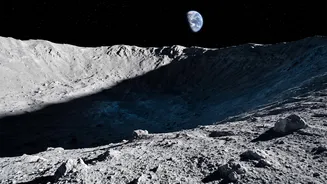
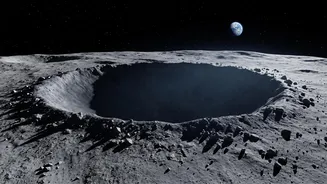
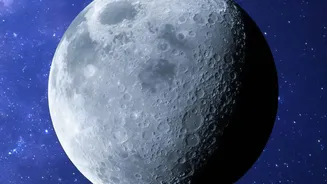
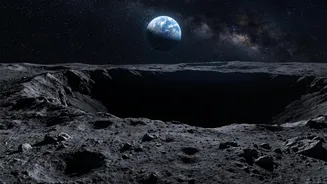
The lunar south pole is unlike the equatorial regions visited by the Apollo missions. Because of the Moon’s slight axial tilt, the sun skims the horizon, casting long shadows that never move. This creates 'permanently shadowed regions,' or PSRs, inside
deep craters. These areas are some of the coldest places in the entire solar system, with temperatures plunging low enough to preserve water ice for billions of years. More importantly, these PSRs are shielded from the relentless blast of solar ultraviolet (UV) radiation that sterilizes most of the lunar surface. While incredibly hostile, this combination of extreme cold and shadow creates unique niches that might just be protective enough for life to endure.
Unavoidable Microbial Hitchhikers
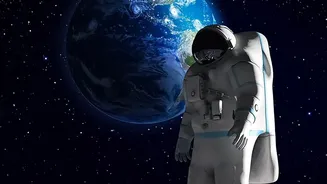
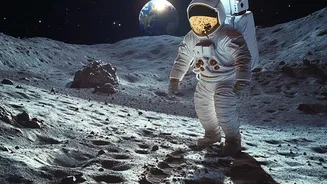
How would Earth microbes get to the Moon? While theories like panspermia suggest life could travel between planets on meteorites, a more immediate source is us. Humans are walking ecosystems, carrying trillions of microorganisms. According to a new study published in Science Advances by researchers at NASA's Goddard Space Flight Center, it is inevitable that astronauts on future Artemis missions will carry these microbes with them. Tiny organisms can vent from spacesuits and habitats, settling on the lunar surface. Previous studies assumed the harsh lunar environment would quickly destroy them. This new research, however, simulated conditions at the south pole and found that the shadows offer just enough protection for some to survive.
Meet the Potential Survivors
Not just any microbe can withstand a trip to the Moon. The scientists focused on extremophiles—organisms known for their incredible resilience in harsh environments. The study modeled the survival chances of five microbes commonly found in spaceflight environments, including bacteria like Deinococcus radiodurans, known for its radiation resistance. However, the standout survivor was a fungus called Aspergillus niger. This hardy organism proved surprisingly resilient, with models showing it could potentially survive even in areas that receive scattered or partial sunlight. It's crucial to understand that survival doesn't mean thriving. The study makes it clear these microbes would not grow or reproduce; they would enter a dormant, dehydrated state called cryptobiosis, essentially waiting for conditions to improve—something that won't happen on the waterless, airless Moon.
A Challenge for Future Science
The possibility of Earthly microbes surviving on the Moon presents a significant challenge for planetary protection. One of the primary goals of returning to the Moon, and eventually going to Mars, is to search for signs of past or present life, or at least the chemical precursors to it. If we contaminate these sites with our own biology, it could become incredibly difficult to tell if we've discovered something genuinely alien or just found microbes we brought with us. According to the study's authors, even a dead microbe or its organic remnants could confuse future analyses. This means future missions will need stricter contamination protocols, especially when exploring the scientifically precious PSRs, to ensure that the history we read in the lunar soil is the Moon's, not our own.
A Natural Laboratory in Our Backyard
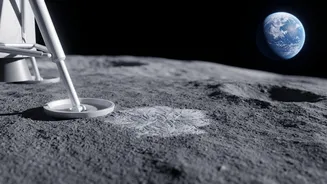
While it poses a contamination risk, this discovery also presents a unique scientific opportunity. The researchers suggest the Moon's south pole could serve as a natural laboratory for astrobiology. By studying how terrestrial microbes fare in these extreme but 'survivable niches'—some as small as an astronaut's bootprint—we can learn about the absolute limits of life. This knowledge is invaluable not just for protecting other worlds from contamination, but also for understanding life's own tenacity. It helps answer fundamental questions about whether life could survive journeys between planets and take hold in other corners of the solar system. The findings underscore just how critical the upcoming crewed missions to the lunar south pole will be, not just for exploration, but for our understanding of life itself.