

The Policy Shift That Opened the Skies
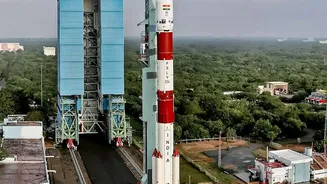
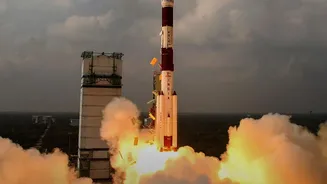
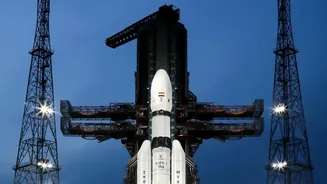
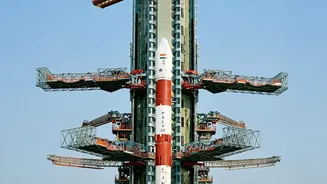
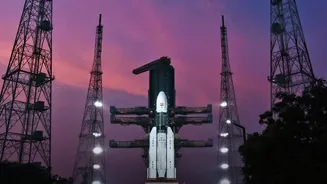
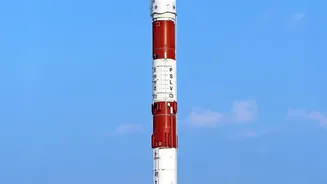
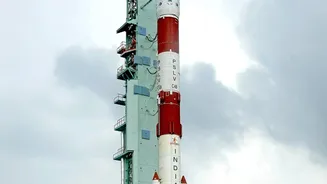
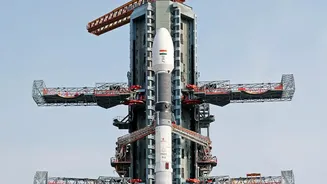
The turning point came in June 2020, when the Indian government announced historic reforms to open the space sector to private enterprise. This wasn't just a minor tweak; it was a fundamental rethinking of India's approach to space. For years, private companies
were largely limited to being suppliers for the Indian Space Research Organisation (ISRO). The new policies, solidified in the Indian Space Policy 2023, empowered private firms to build their own rockets and satellites, own their intellectual property, and operate end-to-end space missions. To oversee this new landscape, the government established the Indian National Space Promotion and Authorisation Centre (IN-SPACe). Acting as a single-window agency, IN-SPACe's mission is to promote, authorise, and supervise private space activities, effectively serving as the crucial bridge between ISRO's vast experience and the agility of the startup world. This move has dramatically reduced entry barriers and regulatory timelines, fostering a surge in entrepreneurial activity.
ISRO's New Role: From Pioneer to Partner
With the private sector now invited to innovate, ISRO's role has evolved from being the sole practitioner to a powerful enabler. Instead of seeing startups as competitors, ISRO is actively nurturing them as partners to accelerate national space ambitions. This support takes many forms. Through IN-SPACe, startups gain access to ISRO's world-class infrastructure, including testing facilities, launchpads, and tracking networks, which significantly reduces their capital expenditure. Furthermore, ISRO is facilitating the transfer of mature technologies to the private sector. A prime example is the transfer of its IMS-1 satellite bus technology to companies like Dhruva Space, providing them with a reliable platform for various applications. This collaborative framework allows ISRO to focus its own resources on frontier science, deep space exploration, and national security missions, while private players drive commercialisation and build a robust domestic space economy.
The Trailblazers: Meet the New Players
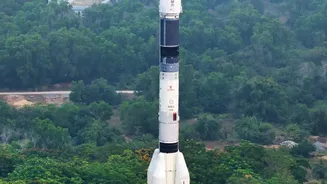
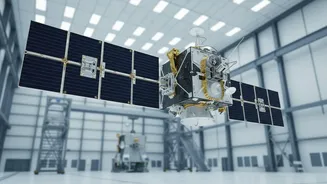
This new ecosystem has given rise to a dynamic cohort of startups, each carving out a niche in the space value chain. Hyderabad-based Skyroot Aerospace, founded by former ISRO scientists, became the first Indian private company to launch a rocket into orbit with its Vikram-1 vehicle in July 2026. Now a unicorn valued at over $1 billion, Skyroot is focused on making small satellite launches more affordable and frequent. Another key player, Agnikul Cosmos, has pioneered 3D-printed rocket engines. The Chennai-based startup successfully conducted a suborbital test flight of its Agnibaan rocket, a mission for which ISRO provided extensive ground and tracking support. Shifting from launch to data, Bengaluru's Pixxel is building a constellation of hyperspectral imaging satellites. These advanced satellites can monitor everything from crop health and deforestation to methane leaks, providing critical data for sectors like agriculture and climate monitoring.
An Ecosystem Beyond Launch
The momentum extends far beyond just launch vehicles. A true ecosystem requires a full stack of capabilities, and Indian startups are rising to the occasion. Dhruva Space, another Hyderabad-based company, exemplifies this trend. It offers vertically integrated solutions, from building satellite platforms and proprietary satellite deployers (DSODs) to providing launch and ground station services. The company has already flown multiple missions with ISRO's help and was one of the first to be authorised by IN-SPACe. Other companies like Bellatrix Aerospace are developing advanced propulsion systems for satellites. This diversification is crucial. It signals a maturation of the market from simply getting to space to creating a wide array of businesses that operate in space, from satellite manufacturing and in-orbit services to data analytics and communication. The number of space startups has soared from just a handful in the late 2010s to over 400 today, a testament to the depth of the ecosystem.
The Next Frontier: Challenges and Goals
The growth has been explosive, with private investment surging in recent years. Projections show India's space economy could grow from around $8.4 billion today to over $44 billion by 2033, increasing its share of the global market from 2% to around 8%. However, challenges remain. The industry is capital-intensive, and while funding has increased, it is still concentrated among a few leading companies. Scaling up manufacturing and competing with established international players will be the next major hurdles. Yet, the ambition is clear. With a supportive government, a collaborative national space agency, and a generation of bold entrepreneurs, India is not just launching rockets. It is launching a new, self-reliant industry poised to become a formidable force in the global space economy.