







Assess if the Trip is Necessary
The first and most important step is the one taken before you even turn the key. Ask yourself if the journey is absolutely essential. The National Weather Service in the US has a simple but effective slogan: 'Turn Around, Don't Drown'. This applies to
your vehicle's health as well. With many arterial roads and underpasses in Chennai prone to rapid flooding, the safest option is always to avoid driving through water altogether. Check local traffic updates and weather alerts before you leave; a delayed trip is always better than a damaged car.
Gauge the Water's Depth
If you must proceed, judging the water's depth is critical. It's often impossible to tell how deep a stretch of water is just by looking, especially at night. A common rule of thumb is to avoid driving through water that is deeper than the bottom of your car's doors or halfway up your tyres. Even six inches of standing water can be enough to stall many cars as it can reach the engine or exhaust. A foot of water can make some vehicles float, causing a total loss of control. If you cannot see the kerb or road markings, it is likely too deep to cross safely.
Master the Right Driving Technique
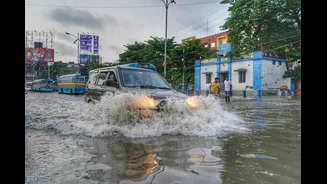
Should you decide it's safe to cross, your technique matters. Engage a low gear (first or second) and keep your engine RPMs consistently high. This helps prevent water from entering the exhaust pipe. Drive slowly but steadily, creating a small 'bow wave' in front of your vehicle. This wave pushes water to the side, creating a slightly shallower path for your engine's air intake. Do not speed; travelling too fast can splash water into the engine bay and critical electrical components. Avoid stopping if you can, but if you must, keep the engine running and the revs up. Once you are clear of the water, it is a good idea to gently tap your brakes a few times to dry the brake pads and discs.
Beware of Hidden Dangers
Waterlogged roads hide a multitude of threats. The murky water can conceal deep potholes, debris, and, most dangerously, open manholes. Hitting one of these can cause severe damage to your tyres, suspension, or undercarriage. Furthermore, driving through water can compromise the structural integrity of the road itself, meaning the surface beneath could be washed away. Stick to the centre of the road where possible, as the surface is typically higher there, and be extremely vigilant for any signs of submerged hazards.
Understand the Risk of Hydrolock
The most severe threat from driving through deep water is 'hydrolock'. This occurs when water is sucked into your engine's air intake and enters the cylinders. Since water cannot be compressed like the air-fuel mixture, the piston's attempt to complete its stroke meets a solid wall of liquid. The force can be immense, leading to bent connecting rods, cracked pistons, or a completely destroyed engine. This is an incredibly expensive repair, and often results in the entire engine needing to be replaced.
What to Do If Your Car Stalls
If your engine cuts out while in the water, there is one critical rule: do not try to restart it. Attempting to crank the engine when there is water in the cylinders is the fastest way to cause a catastrophic hydrolock failure. The engine may have stalled for a simple electrical reason, but you cannot know for sure from the driver's seat. The risk of guessing wrong is simply too high. Your only safe option is to put on your hazard lights, get yourself to safety if possible, and call for a tow truck.
After the Water: A Quick Check-Up
Once you've navigated a waterlogged patch, it's wise to perform a few checks as soon as you're safely parked. Pay attention to any unusual noises from the engine. Check your car's fluids, particularly the engine oil. Pull out the dipstick; if the oil looks milky or like a milkshake, it indicates water has mixed with it. In this case, do not drive the car further and have it inspected by a professional mechanic. Also, be aware that electrical problems caused by water can sometimes appear days or weeks later.