



The Core Problem with EV Costs
For years, the most expensive single component in an electric vehicle has been its battery pack. Traditional lithium-ion batteries, which power the vast majority of EVs on the road today, rely on a liquid electrolyte to function. While effective, this
chemistry has limitations. The materials can be costly, the required safety systems to prevent fires add weight and complexity, and the energy density—how much power can be stored in a given weight—is approaching its theoretical limit. This has kept the floor price of EVs stubbornly high, often placing them out of reach for budget-conscious buyers. To make EVs truly mainstream, the industry needs a fundamental change in how batteries are built and what they cost.
Enter the Solid-State Game-Changer
Solid-state batteries represent that fundamental shift. The core innovation is replacing the flammable liquid electrolyte with a thin, stable, solid material, often a ceramic or polymer composite. This single change has a cascade of benefits. Firstly, it dramatically improves safety by removing the volatile liquid, reducing the risk of thermal runaway and fires. This enhanced safety means engineers can remove some of the heavy, complex, and expensive cooling and protection systems required in current battery packs, immediately cutting down on weight and cost. The solid electrolyte also enables the use of a lithium metal anode, a long-sought-after goal in battery science that unlocks a huge jump in energy density.
Higher Density Means Lower Costs
The leap in energy density is where the most significant cost savings begin. Solid-state cells are targeting an energy density of 400-500 watt-hours per kilogram (Wh/kg), nearly double the 250-300 Wh/kg of current lithium-ion packs. This means manufacturers can achieve the same vehicle range with a battery pack that is significantly smaller, lighter, and contains fewer raw materials. A smaller pack doesn't just reduce battery cost; it has a ripple effect throughout the entire vehicle's design. A lighter car requires a less powerful motor, a less robust frame, and smaller brakes, all of which contribute to lowering the total manufacturing cost and, ultimately, the sticker price for the consumer.
Simplifying the Manufacturing Puzzle
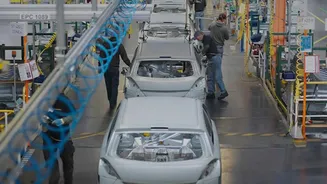
While current manufacturing of solid-state prototypes is expensive due to the precision and novel materials required, the long-term vision is a simpler production process. The goal is to adapt existing roll-to-roll manufacturing techniques, similar to those used in printing newspapers, to produce solid electrolyte layers at high speed. Furthermore, the design of solid-state packs allows for a 'bipolar' stacking architecture, where cells are stacked directly on top of each other without the bulky casings and wiring needed for individual modules in a liquid-based battery. This cell-to-pack efficiency further reduces material usage, assembly time, and factory footprint, all of which are key drivers in lowering the final cost per kilowatt-hour (kWh).
The Road to an Affordable EV
So, when can we expect these cheaper EVs? The transition is already beginning, but it will be gradual. Semi-solid batteries are already appearing in some high-end vehicles in the Chinese market. Major automakers like Toyota and Nissan are targeting the 2027-2028 timeframe for the first vehicles with true solid-state batteries, though these will likely be premium models. The consensus in the industry is that widespread adoption in affordable, entry-level vehicles will happen closer to 2030 and beyond, as manufacturing scales up and costs come down. While currently more expensive to produce than their liquid counterparts, the path for solid-state batteries to fall below the crucial $100/kWh mark—a key threshold for EV price parity with gasoline cars—is becoming clear.