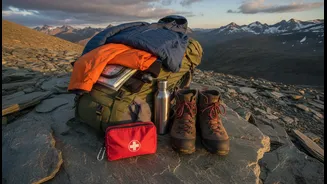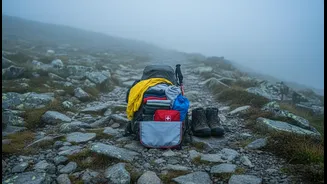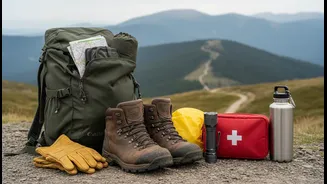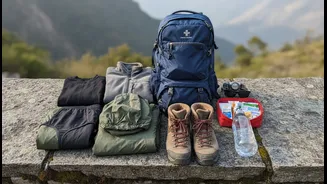






Layering: Your Core Clothing Strategy
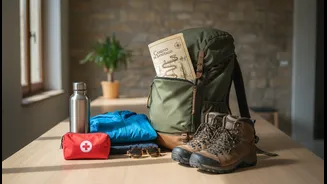
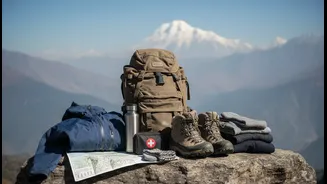
The weather on the Amarnath route can change from sunny to freezing in minutes. The key to comfort is a three-part layering system. Start with a moisture-wicking thermal base layer to keep sweat off your skin. Your mid-layer should be a fleece jacket
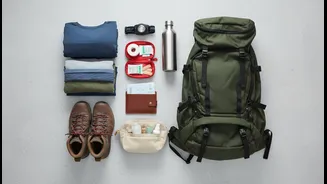
or a woollen pullover for insulation. Finally, a waterproof and windproof outer jacket is non-negotiable to protect your insulating layers from getting wet and becoming ineffective. For bottoms, quick-dry, water-resistant trekking pants are far superior to jeans, which get heavy when wet and take a long time to dry. Women are advised by the Shrine Board to wear salwar kameez, track suits, or pant-shirts instead of sarees for ease of movement.
Essential Rain and Cold Protection
As the headline suggests, rain gear is critical. The weather in the Himalayas is notoriously unpredictable, with rain showers common. You will need a full set of rain protection, including a waterproof jacket and waterproof pants or a sturdy poncho that covers you and your backpack. A waterproof cover for your backpack is also essential to keep your clothes and other belongings dry. To combat the cold, especially at night and at higher altitudes where temperatures can drop below 5°C, woollen accessories are vital. Pack a woollen cap or balaclava, waterproof gloves, and several pairs of woollen socks to protect your extremities.
The Right Footwear and Foot Care
The Amarnath Yatra involves extensive walking on uneven and often slippery terrain. Your choice of footwear is one of the most consequential packing decisions. Invest in a good pair of waterproof trekking shoes with high ankle support and a strong grip. It is crucial to break in your shoes for a few weeks before the yatra to prevent painful blisters. The Shrine Board specifically advises against wearing slippers or walking barefoot. Pack multiple pairs of woollen or synthetic socks to keep your feet warm and dry. It's also wise to carry foot care items like blister patches and antiseptic cream.
Health, Hygiene, and First-Aid Kit
High altitude can pose significant health risks, including Acute Mountain Sickness (AMS). It is mandatory to obtain a Compulsory Health Certificate (CHC) from an authorized doctor to be eligible for the Yatra. Your personal medical kit should contain any prescription medications you take, along with basic first-aid supplies like bandages, antiseptic wipes, and pain relievers. Also include medication for common ailments like colds, stomach upset, and motion sickness. Many pilgrims also carry Oral Rehydration Salts (ORS) to prevent dehydration. Always consult a doctor before taking any medication for altitude sickness. For personal hygiene, pack travel-sized toiletries, including hand sanitiser, wet wipes, and sunscreen, as UV exposure is stronger at altitude.
Essential Documents and Cash
Do not leave home without your essential paperwork. This includes your Yatra Permit, your Compulsory Health Certificate, and a valid government-issued photo ID like an Aadhaar card or passport. It is recommended to carry both the original documents and photocopies in a waterproof bag or folder. All pilgrims are also issued a mandatory Radio Frequency Identification (RFID) card, which must be carried at all times during the trek. While some facilities exist along the route, digital payments may not always be available. Carry sufficient cash in small denominations for expenses like food, porters, or small purchases.
Backpack and Trekking Accessories
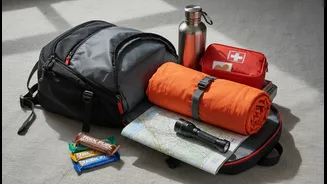
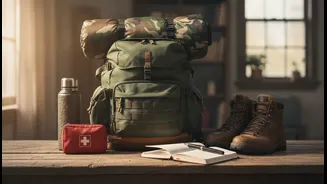
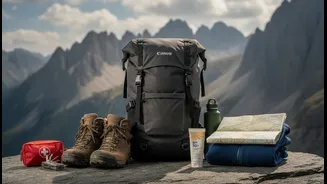
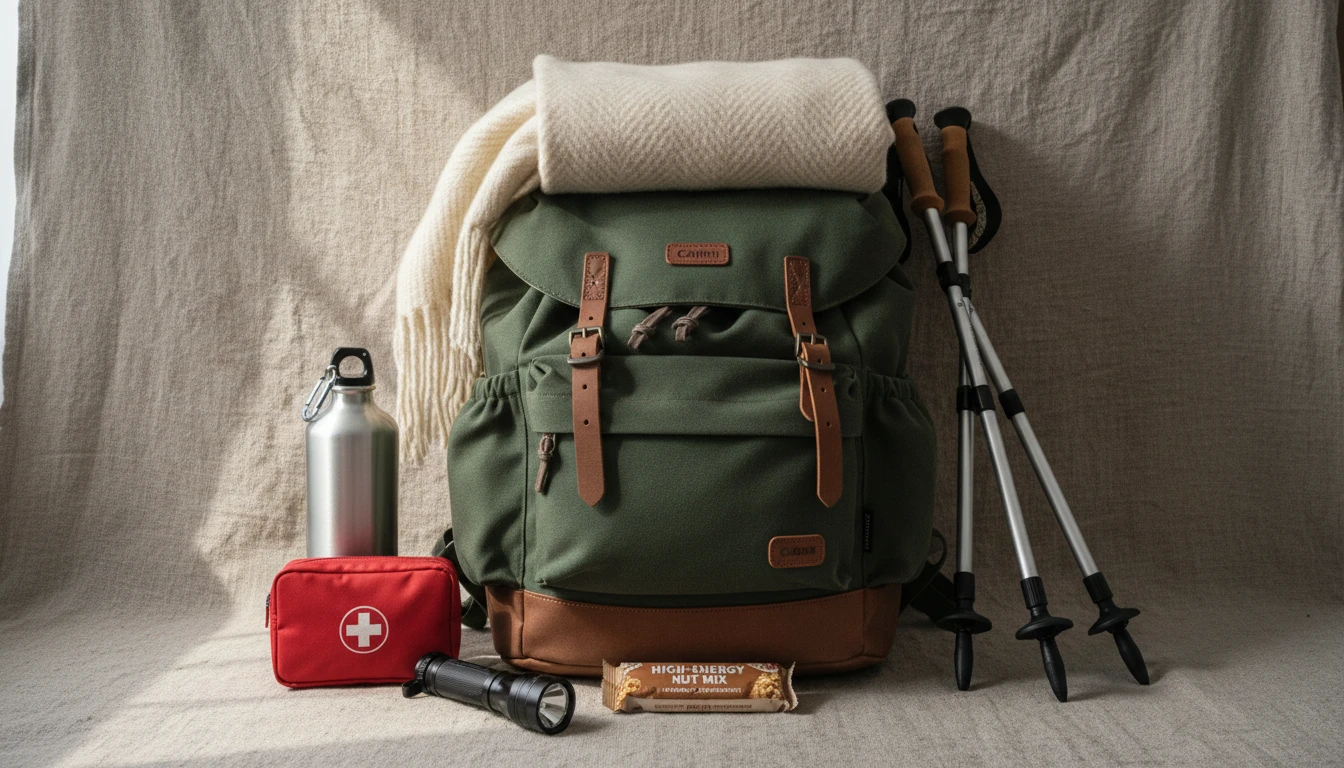
Choose a comfortable, waterproof backpack (40-50 litres is usually sufficient) with a rain cover. A walking stick or a pair of trekking poles can provide crucial support and stability on steep sections of the trail, reducing strain on your knees. A headlamp or a torch with extra batteries is a safety essential for low-light conditions. Other useful items include a reusable water bottle to stay hydrated, a power bank for your phone, and high-energy snacks like nuts, dry fruits, and chocolate to keep your energy levels up between meals.