




Meet Your Cosmic Neighbor
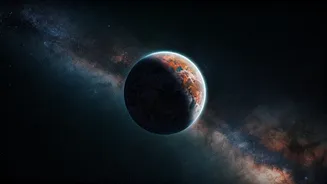
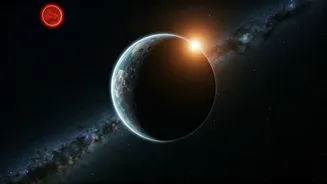
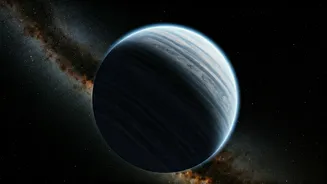
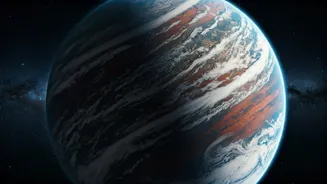
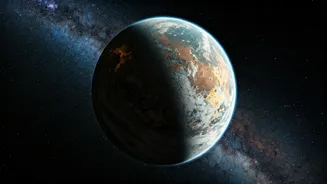
First, let's get acquainted. GJ 3378b is a planet orbiting a star named Gliese 3378, located a mere 25 light-years away in the constellation Camelopardalis. In galactic terms, that makes it practically a next-door neighbor. The planet orbits a red dwarf
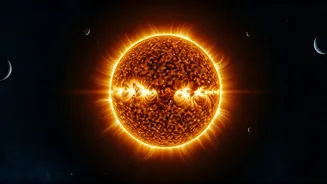
star, which is smaller, cooler, and dimmer than our sun but also the most common type of star in the Milky Way, making its planets prime real estate for study. When GJ 3378b was first discovered in 2024, it was already interesting. But new data has just made it fascinating.
A Surprising New Measurement
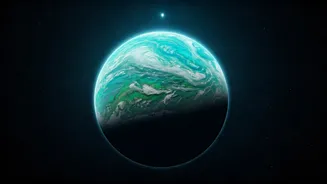
So, what changed? A recent study published in The Astrophysical Journal has significantly revised the planet's vital statistics. Initial estimates placed its mass at around five times that of Earth. However, new observations using powerful instruments like the Habitable-zone Planet Finder in Texas have provided a much more refined picture. Astronomers now calculate its mass to be only about 2.3 times that of our home world. This might seem like a small adjustment, but it has huge implications. The lower mass makes it far more likely that GJ 3378b is a solid, rocky planet like Earth, rather than a gas-shrouded 'mini-Neptune' with a thick, crushing atmosphere where life as we know it would be impossible.
The 'Goldilocks' Sweet Spot
The good news doesn't stop with its mass. The new research also confirms that GJ 3378b orbits squarely within its star's habitable zone—the so-called 'Goldilocks' region. This is the orbital band where temperatures are just right for liquid water to potentially exist on a planet's surface. In fact, this super-Earth receives about 90% of the radiation from its star that Earth gets from the sun, placing it in a thermal sweet spot. While its year is a swift 21.5 Earth days, this proximity to its cool star is what allows for the possibility of liquid water, a key ingredient for every form of life known to science.
The Lingering Atmosphere Question
Of course, this doesn't mean we've found aliens. A major piece of the puzzle is still missing: the atmosphere. Scientists don't yet know if GJ 3378b has an atmosphere, or what it might be made of. Its position puts it on the edge of the 'cosmic shoreline,' a theoretical boundary where a star's radiation can be intense enough to strip a planet's atmosphere away over time, much like what may have happened to Mars. Confirming the presence of a stable, protective atmosphere is the critical next step. If it has one, it could provide surface pressure for liquid water and protection from harsh space radiation.
What Happens Next?
Because of its proximity and newfound potential, GJ 3378b is now a top-tier target for future observation. The next generation of incredible technology, including NASA's planned Habitable Worlds Observatory and massive ground-based projects like the Giant Magellan Telescope, will be powerful enough to peer at this world more directly. These future observatories will be designed to analyze the light passing through the planet's atmosphere (if one exists) to search for biosignatures—gases like oxygen or methane that could hint at the presence of life. This recent update has moved GJ 3378b from being just another data point to a world of intense scientific interest.