





The Seven-Kilo Carry-On Conundrum
The 7kg (around 15 lbs) carry-on limit is the bane of many modern travellers. Once a generous allowance, it's now a strict rule for many budget airlines, especially across Asia and Oceania, forcing passengers to be ruthless with their packing choices.
A standard lightweight carry-on bag can weigh 1-2kg on its own, leaving you with just 5-6kg for everything else—clothes, toiletries, and electronics. Exceeding this limit often results in hefty fees at the gate, turning a budget-friendly flight into an expensive ordeal. This restriction forces a shift in mindset: it’s no longer about what you want to bring, but what you can mathematically fit without financial penalty. Every single item must justify its weight.
The Multi-Climate Packing Puzzle
The packing challenge intensifies when your destination list includes both tropical beaches and chilly mountain towns. A multi-climate trip requires a diverse wardrobe. You need lightweight shirts and shorts for the heat, but also sweaters, thermal layers, and a jacket for the cold. Bulky items are the enemy of the 7kg limit. A single puffer jacket or a cozy fleece, while essential for comfort in colder weather, can consume a huge amount of precious volume in your bag, even if it doesn't weigh much. This is the core puzzle: how to pack for warmth and for heat within the same limited space, when the items required for each have such drastically different physical footprints.
Enter the Compression Bag
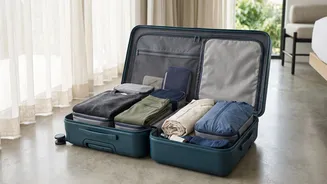
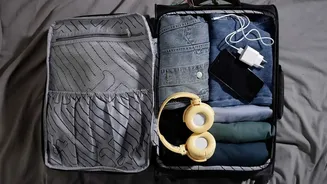
This is where compression bags prove their worth. Unlike packing cubes, which are primarily for organization, compression bags are designed for one main purpose: to dramatically reduce the volume of your clothing by removing excess air. By rolling or pressing the bag, you force out the air trapped between fabric fibres, shrinking a fluffy pile of clothes down to a dense, compact slab. For a trip requiring bulky winter wear, this space-saving capability is a game-changer. A jacket that might have taken up a third of your backpack can be compressed to half its original size or even less, freeing up critical space for other necessities.
Volume, Not Weight: A Crucial Distinction
It is critical to understand that compression bags reduce volume, not weight. The jacket, sweaters, and wool socks will still weigh exactly the same. However, by solving the volume problem, you create the possibility of fitting everything within your carry-on's dimensions. This allows you to then manage the weight. With the bulky items compressed, you gain a clearer picture of your total contents and can make more strategic decisions about weight distribution. You might, for example, wear your heaviest boots and jacket on the plane, a classic travel hack, while the rest of your now-compacted wardrobe fits neatly in your bag, safely under the 7kg limit.
Beyond Space: The Other Benefits
While volume reduction is their primary function, compression bags offer other advantages. They provide an airtight and often watertight seal, protecting your clothes from spills or rain. They are also excellent for separating dirty or damp laundry from clean clothes during your trip. Furthermore, by compartmentalizing your bulkiest items, they bring a degree of organization that makes finding what you need easier than digging through a loose pile of clothes. For multi-climate trips, you can dedicate one bag to cold-weather gear, keeping it separate and compact until you need it.
Smart Use and Potential Downsides
The main drawback of compression bags is the potential for wrinkles. Tightly compressing fabrics will inevitably cause creasing. To mitigate this, focus on using them for items that are less prone to wrinkling, like jackets, fleece, knit sweaters, and socks. For dress shirts or linen, traditional folding or using regular packing cubes is a better choice. Another risk is the temptation to overpack. Just because you can fit more doesn't mean you should, as the 7kg weight limit still looms. Be mindful and weigh your bag before heading to the airport. Quality also matters; cheaper bags can tear or their seals can fail after repeated use.