





A Cosmic Minefield Above
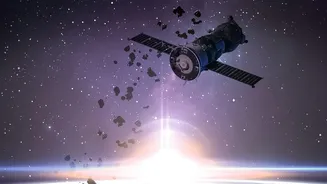
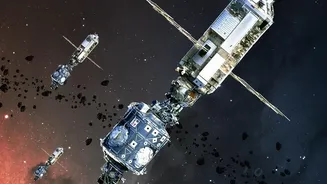
Space, particularly the low-Earth orbit where many satellites operate, is not as empty as it seems. It's littered with debris from over 60 years of space exploration. This junk includes everything from defunct satellites and spent rocket stages to tiny
paint flakes. Traveling at speeds of up to 28,000 km/h, even a centimetre-sized object can strike with catastrophic force, potentially disabling a multi-crore satellite. Experts estimate there are over a million objects larger than one centimetre posing a threat. This growing cloud of debris raises the risk of a chain reaction, known as the Kessler Syndrome, where collisions create more debris, leading to more collisions, potentially rendering entire orbits unusable for generations.
India's Proactive Defense Strategy
Rather than just reacting to this threat, the Indian Space Research Organisation (ISRO) is taking a proactive stance. The agency is increasingly integrating artificial intelligence (AI) and machine learning (ML) into its space situational awareness programs. This involves not only tracking potential threats but also enabling satellites to take autonomous action. The number of collision avoidance manoeuvres ISRO has had to perform has risen dramatically, underscoring the urgency. By developing autonomous systems, India aims to protect its critical space assets, reduce reliance on constant ground control, and ensure the continuity of services that depend on these satellites.
How AI Steers the Ship
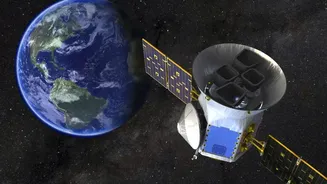
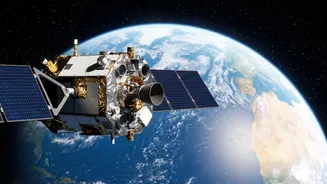
The new approach moves beyond simply warning of a potential collision. Future satellite systems will use AI and ML to process data directly in space. An AI-powered system can constantly analyse data from ground-based radar and its own sensors to predict the trajectory of nearby debris. When a threat is identified, the AI calculates the most efficient and safest evasive manoeuvre. It then autonomously fires the satellite's thrusters to slightly alter its orbit, dodging the incoming object without waiting for a command from a human operator on Earth. This split-second decision-making capability is crucial when a collision might be only minutes away, a delay that human-in-the-loop systems can ill afford.
Protecting Our Eyes in the Sky
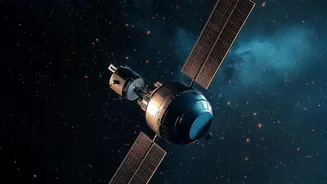
This technology is especially vital for India's fleet of Earth-observation satellites, such as those in the Cartosat and RISAT series. These satellites are the nation's eyes in the sky, providing invaluable data for disaster management, agricultural planning, urban development, weather forecasting, and national security. Losing one of these assets to a debris collision would not just be a financial loss but could disrupt services that millions of Indians rely on. By equipping these satellites with a smart, autonomous defence system, ISRO is ensuring the resilience and longevity of the country's critical space infrastructure.
A Step Towards Sustainable Space
This technological leap is part of a broader commitment by India to ensure the long-term sustainability of space activities. ISRO has publicly stated its goal for 'Debris-Free Space Missions by 2030'. This involves not only avoiding collisions but also ensuring that new missions are designed to minimize the creation of new debris, for example, by deorbiting rocket stages and defunct satellites so they burn up in the atmosphere. By developing and implementing technologies like AI-powered collision avoidance, India is not only safeguarding its own assets but also positioning itself as a responsible global leader in addressing the shared challenge of keeping space safe and accessible for all.