


The Soil Is Not Really Soil
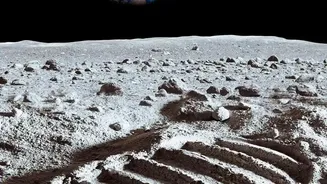
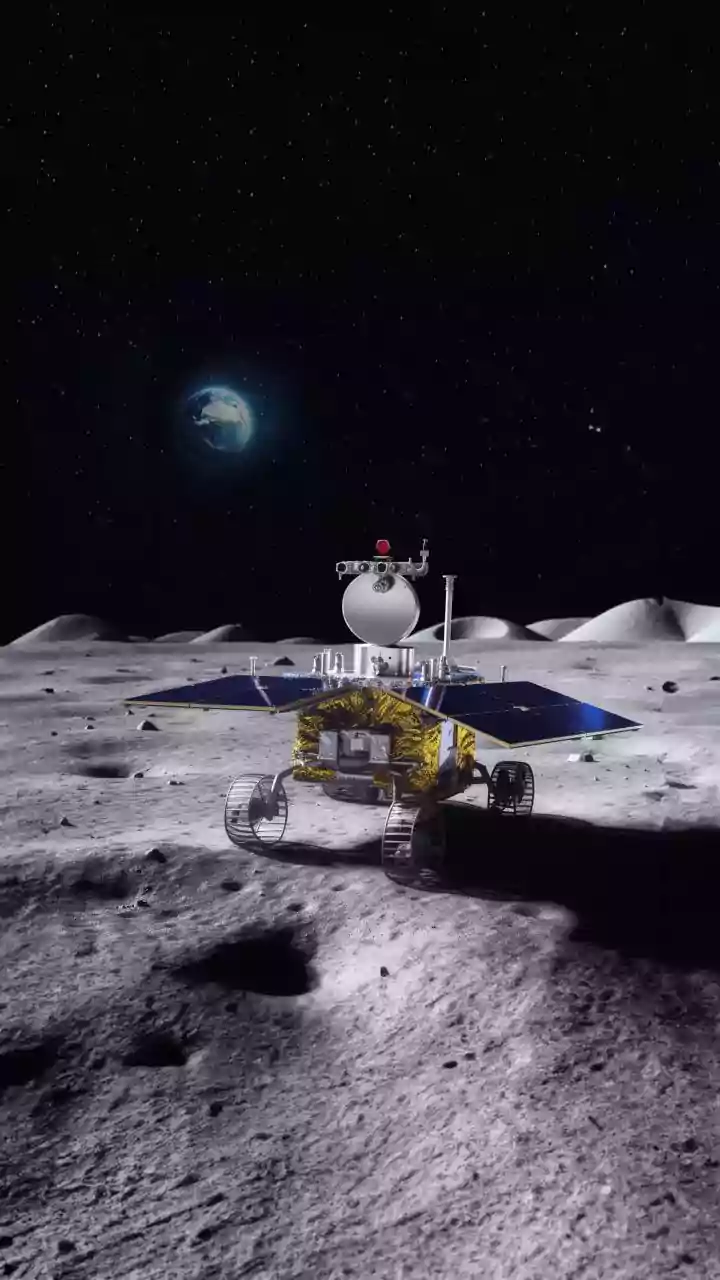
The powdery grey material covering the Moon is called regolith, and it's fundamentally different from terrestrial soil. It contains no organic matter, no microorganisms, and no nutrients that plants need to thrive. It’s essentially sharp, abrasive dust,
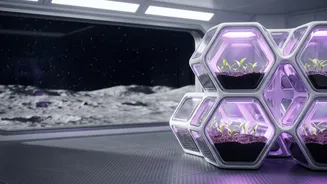
formed by billions of years of micrometeorite impacts. While a landmark 2022 NASA-funded study successfully sprouted seeds in actual Apollo lunar samples, the plants showed significant signs of stress. The seedlings were stunted and grew more slowly compared to control groups. The regolith also contains heavy metals and other compounds that can be toxic to plants. Overcoming this requires either heavily treating the regolith with nutrients and beneficial microbes or bypassing it altogether with hydroponic systems, which involves growing plants in nutrient-rich water.
The Crushing Lack of Atmosphere
On Earth, our atmosphere provides pressure, moderates temperature, and shields us from harm. The Moon has none of this. Any lunar farm would need to be housed inside a pressurized, climate-controlled greenhouse. This structure must be incredibly robust to maintain a breathable atmosphere and stable temperatures against the Moon's wild swings, from scorching highs of 127°C to frigid lows of -173°C. It would need to be a closed-loop bioregenerative system, recycling every drop of water and every molecule of air. Astronauts would provide the carbon dioxide the plants need, and in return, the plants would generate vital oxygen and help purify water through transpiration. Engineering such a perfectly sealed and self-sustaining system on a distant world is a monumental task.
A Constant Barrage of Radiation
Without a protective atmosphere or global magnetic field, the lunar surface is constantly bombarded with dangerous cosmic and solar radiation. This is not just a threat to astronauts; it’s a major problem for plants. High levels of radiation can damage plant DNA, leading to mutations and stunted growth. Some studies have shown that chronic exposure can reduce plant biomass and affect reproduction. To protect a lunar farm, greenhouses would likely need to be built underground or be heavily shielded, perhaps by piling several feet of regolith on top. But even then, high-energy galactic cosmic rays can penetrate several feet of rock, meaning some level of exposure is inevitable and its long-term effects on generational plant growth are still not fully understood.
The Ultimate Scarcity: Water and Power
Every greenhouse needs water and light. On the Moon, both are incredibly scarce resources. While we have confirmed the existence of water ice in permanently shadowed craters near the lunar poles, accessing and extracting it is a complex industrial process that has not yet been done. The alternative is to transport water from Earth, an astronomically expensive proposition. Once secured, every drop would need to be meticulously recycled from humidity, plant transpiration, and human waste. Furthermore, a lunar greenhouse needs a massive and constant supply of power for lighting, especially during the two-week-long lunar night. Solar power is an option, but the long nights necessitate enormous energy storage solutions or a power source that can operate in darkness, such as a small nuclear reactor.
The Strangeness of Low Gravity
The Moon's gravity is only about one-sixth of Earth's, and this has strange effects on plant biology. On Earth, gravity is a key signal that tells roots to grow down and shoots to grow up, a process called gravitropism. While experiments on the International Space Station suggest plants can adapt and find other cues like light and moisture to orient themselves, low gravity still introduces stress. It can alter cellular function, nutrient uptake, and how water and air behave in the root zone. Some studies have shown that the reduced gravity on the Moon could affect cell growth and proliferation in plants, potentially hindering their development in ways that we are still working to understand through simulations and space-based experiments.