





A Telescope Turned Time Machine
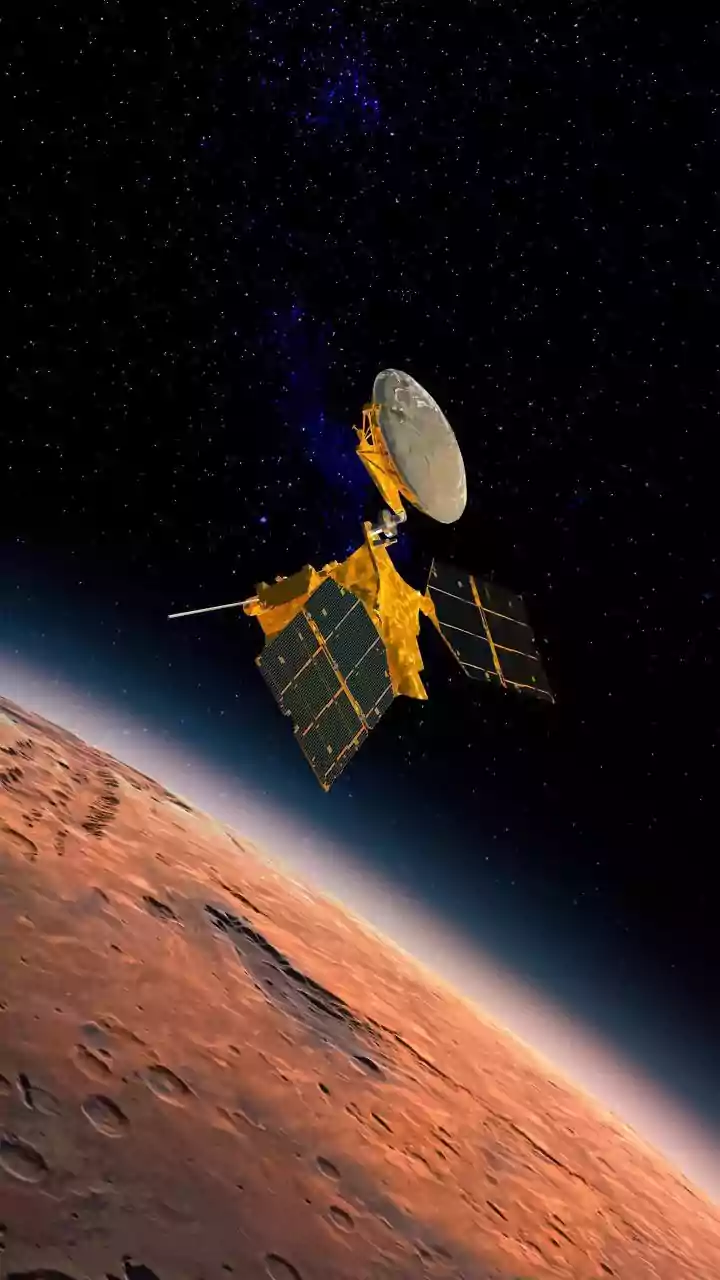
To understand where we come from, we have to look back—way back. For astronomers, looking back means looking deep into space, as the light from the most distant objects has taken billions of years to reach us. The James Webb Space Telescope (JWST) was
designed for this very purpose: to capture the faint, ancient light from the universe's infancy. One of its most profound quests is to witness the era just after the Big Bang, a time known as the 'cosmic dawn', when the very first stars ignited and began shaping the universe we see today. Before these first stars, the cosmos was a dark, neutral sea of hydrogen gas. Seeing how this darkness gave way to light is one of modern astronomy's biggest goals.
Finding the 'Sparkler' Galaxy
In one of its first deep-field images, the JWST spotted something remarkable: a galaxy nicknamed the 'Sparkler'. Seen as it was about 9 billion years ago, this galaxy was surrounded by a dozen shimmering dots of light. These weren't individual stars, but something much more significant. Thanks to a phenomenon called gravitational lensing, where a massive galaxy cluster in the foreground acts as a natural magnifying glass, Webb could see these 'sparkles' in stunning detail. Analysis revealed them to be globular clusters—ancient, densely packed families of stars. The discovery was a game-changer, suggesting some of these clusters formed just 500 million years after the Big Bang, making them some of the oldest structures ever seen.
Cosmic Fossils Hold the Key
Globular clusters are like cosmic fossils. Our own Milky Way galaxy has over 150 of them, ancient relics that orbit our galactic core. These clusters are thought to be the building blocks of galaxies, but pinpointing when and how they formed has been a long-standing puzzle. By finding and dating the clusters around the Sparkler galaxy, astronomers got a direct look at this process in the early universe. More recently, in 2024, Webb pushed the timeline back even further. It spotted what are believed to be proto-globular clusters in a galaxy called the Cosmic Gems arc, seen just 460 million years after the Big Bang. These findings provide direct evidence that the formation of massive star clusters was happening incredibly early and prolifically.
Ending the Cosmic Dark Ages
The discovery of these early, massive star clusters helps solve a major cosmic mystery: what ended the 'Dark Ages'? This refers to the period after the universe cooled enough for atoms to form but before the first stars ignited. For the universe to become the transparent, light-filled space it is today, something had to produce enormous amounts of powerful radiation to ionize the neutral hydrogen gas that filled space—a process called reionization. For a long time, scientists theorized that faint, small galaxies were responsible. The discovery of these incredibly dense and massive star clusters so early in cosmic history provides a powerful, viable engine for this transformation. They were bright enough and massive enough to be major contributors to lighting up the universe.
Our Galaxy's Origin Story
Studying these distant, ancient objects isn't just an academic exercise in cosmology; it's about understanding our own origins. The globular clusters found around the Sparkler galaxy bear a striking resemblance to the old, metal-rich clusters found in our own Milky Way. This suggests that our galaxy may have formed through similar processes—by accreting smaller galaxies and their star clusters over billions of years. By watching these 'sparklers' form in the early universe, we are essentially watching a replay of our own galaxy's birth. The JWST's findings are turning theory into observation, providing the first concrete pieces of a puzzle that began 13.8 billion years ago. We are, for the first time, not just imagining the cosmic dawn, but seeing it.