





Dune (2021)
Denis Villeneuve’s adaptation of Frank Herbert’s novel is a masterclass in scale and texture. Every frame is a painting, from the vast, sun-scorched deserts of Arrakis to the brutalist, monolithic architecture. Villeneuve and his team masterfully use
a muted, deliberate color palette to make the world feel tangible and imposing. The sheer size of everything—the sandworms, the spice harvesters, the cavernous palace halls—is designed to dwarf the human characters, emphasizing the monumental stakes of their struggle. The film's visuals are not just spectacle for its own sake; they are integral to the storytelling, conveying power, desolation, and mysticism. The sound design, a visceral companion to the visuals, rumbles through you. This is a film that demands a colossal screen and a powerful sound system to fully appreciate its detailed, immersive world-building.
Blade Runner 2049 (2017)
While the original 'Blade Runner' established the neon-noir future, Denis Villeneuve and legendary cinematographer Roger Deakins perfected it. 'Blade Runner 2049' is arguably one of the most beautiful science fiction films ever made. Its visual language is defined by sharp, geometric production design, haunting landscapes, and an extraordinary use of color and light to create mood. From the oppressive, hazy yellow of a desolate Las Vegas to the cold, sterile blues of Wallace Corp headquarters, every color choice tells a story. Deakins, who won an Oscar for his work here, composes shots that are breathtaking in their scope and detail, creating a world that feels simultaneously futuristic and decayed. It’s a slow, contemplative film that invites you to get lost in its melancholic beauty, and the sheer density of its visual information can only be truly absorbed on a large canvas.
Interstellar (2014)
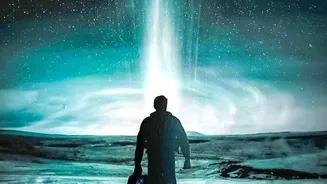
Christopher Nolan’s journey to the stars is an epic of both human emotion and cosmic wonder. What sets 'Interstellar' apart is its commitment to scientific realism, which paradoxically results in some of the most awe-inspiring visuals in modern cinema. Working with theoretical physicist Kip Thorne, the effects team at DNEG created a scientifically accurate representation of a black hole, Gargantua, that was groundbreaking. The film blends mind-bending practical effects with seamless CGI; many space sequences were filmed by projecting pre-rendered effects onto screens around the actors, creating a more tangible environment than a typical green screen. The result is a journey that feels perilous and real, from the silent, terrifying beauty of space to the dizzying complexity of the Tesseract. It’s a film that captures the terrifying majesty of the universe, making it a perfect candidate for an immersive, big-screen experience.
Gravity (2013)
Few films have replicated the feeling of being in space with the terrifying immediacy of Alfonso Cuarón's 'Gravity'. More of a survival thriller than a traditional epic, its visual storytelling is what earns it a place on this list. The film's long, unbroken takes and revolutionary cinematography create an unparalleled sense of immersion and vulnerability. You feel every moment of Dr. Ryan Stone's struggle as she tumbles through the void, with debris fields hurtling towards the screen in stunning 3D. The filmmakers essentially built the technology needed to make the movie, creating a 'Light Box' of LED panels to simulate the harsh, shifting light of Earth's orbit on the actors' faces. The experience is designed to be visceral and physically engaging, putting you right inside Stone's helmet. It’s a lean, 90-minute tension machine that uses the vastness of space to create suffocating suspense, an effect that is most powerful when it fills your entire field of vision.
2001: A Space Odyssey (1968)
No list of visual sci-fi epics is complete without Stanley Kubrick's monumental achievement. Decades before the advent of modern CGI, Kubrick and his team created visuals that are still breathtaking today. Using pioneering practical effects, intricate models, and bold cinematography, '2001' established the visual language for countless space films that followed. From the elegant, balletic dance of spaceships set to classical music to the psychedelic, mind-bending Star Gate sequence, the film is pure visual poetry. It trusts its audience to absorb its themes through imagery and sound rather than dialogue. '2001' was designed from the ground up to be an overwhelming sensory experience, a cinematic event that pushed the boundaries of what film could be. Seeing it on the largest screen possible remains a rite of passage for any film lover, a testament to its timeless power to inspire awe and wonder.