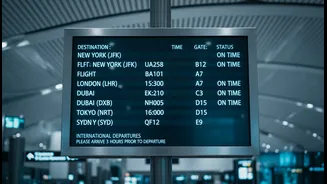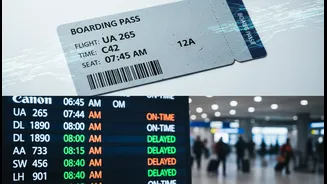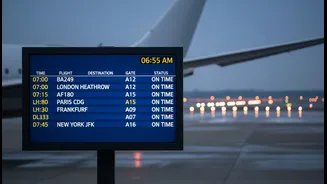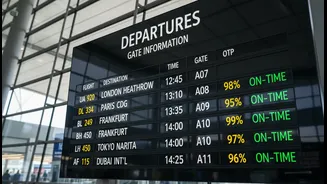






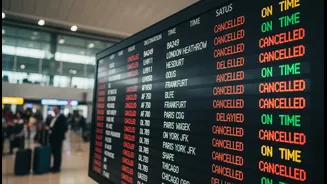


The Official Standard for 'On-Time'
In India, the Directorate General of Civil Aviation (DGCA) is the official scorekeeper for airline punctuality. According to the DGCA, a flight is considered 'on-time' if it departs from the gate within 15 minutes of its scheduled departure time. This
measurement, however, is currently limited to only a handful of India's busiest metro airports, including Delhi, Mumbai, Bengaluru, and Hyderabad, which collectively handle a majority of the country's air traffic. This means that performance data for flights operating exclusively between non-metro airports isn't part of this widely publicised monthly metric, leaving a significant portion of the network unanalysed.
What's New in Passenger Rights
While the core definition of OTP hasn't seen a major overhaul, recent regulatory changes in 2026 have focused on passenger rights when things go wrong. The DGCA has introduced rules mandating quicker refunds for cancelled tickets, with specific timelines of 7 days for credit card payments and 14 days for bookings via agents. There's also a new 48-hour 'look-in' period allowing passengers to cancel or amend bookings without facing cancellation charges, though this comes with conditions related to how far in advance the flight is. For significant delays, passengers are entitled to meals, and for very long or overnight delays, airlines must provide accommodation. However, it's important to note these compensation rules often don't apply to delays caused by factors outside an airline's control, like bad weather or air traffic control issues.
Why the Punctuality Metric Matters
On-Time Performance is the primary public metric for judging an airline's operational reliability. For passengers, it can be a useful, albeit imperfect, tool for choosing between carriers on a competitive route. Airlines with consistently higher OTP scores, like IndiGo and Akasa Air which have often led the charts in recent years, use this as a key marketing point to attract and retain customers. Internally, airlines monitor this data obsessively to identify inefficiencies in their schedules, maintenance, and crew management. Poor OTP can have a cascading effect across an airline's network, leading to crew scheduling issues and further delays, which ultimately impact profitability and passenger loyalty.
What the Data Doesn't Tell You
The biggest blind spot in the official data is what happens after the plane pushes back from the gate. The current DGCA metric is based on departure time, not arrival time. A flight can be considered 'on-time' even if it sits on the tarmac for an hour before takeoff and ultimately arrives late. This discrepancy between 'on-time departure' and 'late arrival' is a major source of passenger frustration and a significant gap in the data's usefulness. The official OTP figures also don't fully account for cancelled flights, which some data providers argue should be counted as 'not on-time' to provide a true picture of reliability. Furthermore, airlines can 'pad' their schedules, intentionally listing a longer flight time than necessary to create a buffer against potential delays and artificially boost their on-time arrival statistics.
The Unclear Picture of Delays
The data also struggles to capture the nuance behind delays. A 20-minute delay caused by a last-minute technical snag feels very different from a 20-minute delay due to congestion at a choked airport. The official cause of delay—whether it's attributed to the airline, weather, or air traffic control—is often not transparent to the passenger. While airlines are required to provide care like meals and refreshments for delays, monetary compensation is typically reserved for cancellations or denied boarding, not for delays themselves, unless they are exceptionally long. This leaves passengers often feeling that while the data shows an airline is punctual, their personal experience of waiting at the airport tells a different story.