



A Flawless Touchdown for 'Pushpak'
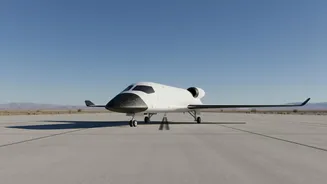
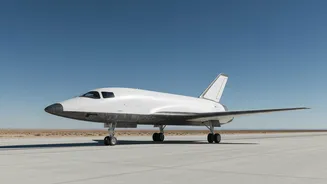
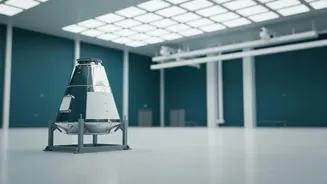
In a recent demonstration at the Aeronautical Test Range in Chitradurga, Karnataka, ISRO flawlessly executed the latest in a series of crucial landing experiments (LEX). The winged test vehicle, named 'Pushpak', was carried to an altitude of 4.5 kilometres
by an Indian Air Force Chinook helicopter and released mid-air. From there, Pushpak took over completely. It autonomously navigated, corrected its course against challenging wind conditions, and executed a perfect, high-speed landing on the runway. This test simulated the difficult conditions a vehicle would face when returning from space, proving the sophistication of ISRO's indigenous guidance, navigation, and control systems.
Why Reusability is the Holy Grail
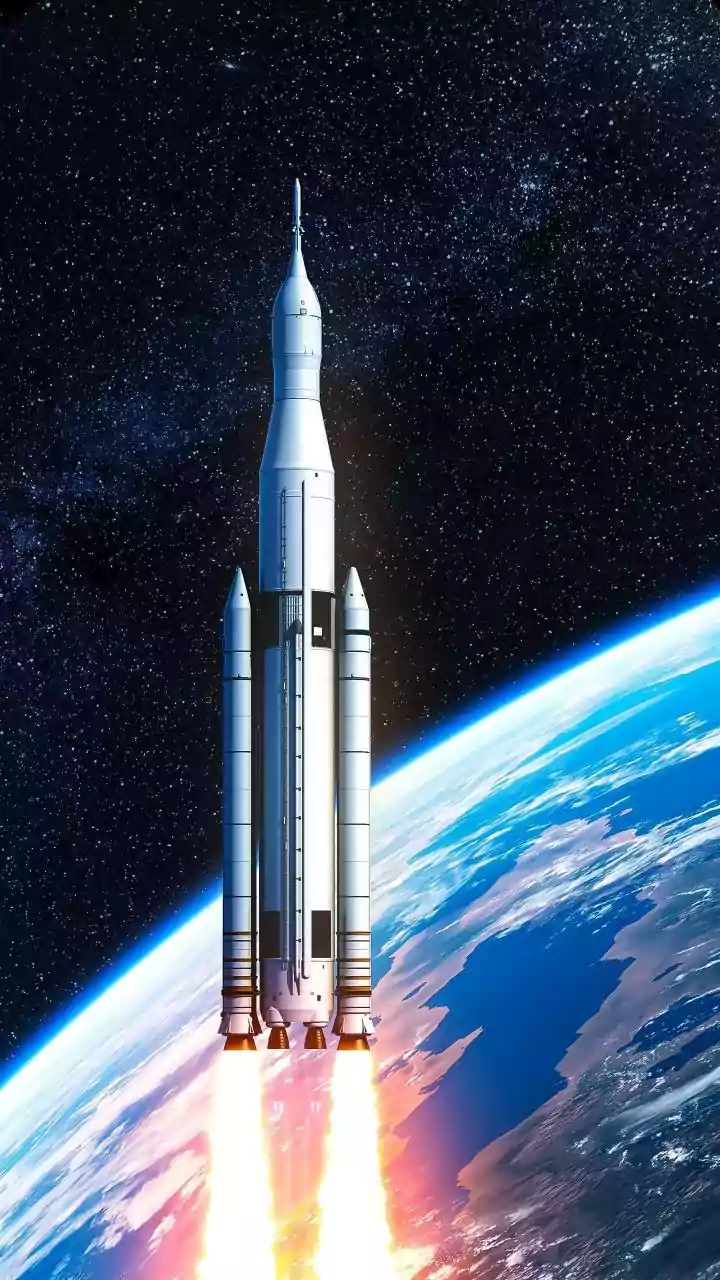
For decades, rockets have been single-use machines. The boosters and stages that propel a satellite into orbit either burn up in the atmosphere or fall into the ocean, making each launch an incredibly expensive affair. Reusable rockets change this entire paradigm. By designing the most expensive parts of the rocket to return to Earth and land safely, they can be refurbished and flown again. This drastically cuts the cost of sending payloads into space. ISRO aims to slash launch costs by up to 80 percent, a move that would make India a dominant player in the multi-billion dollar global satellite launch market. Cheaper access to space enables more scientific missions, more commercial satellites, and potentially, future ventures like space tourism.
India's Frugal and Phased Approach
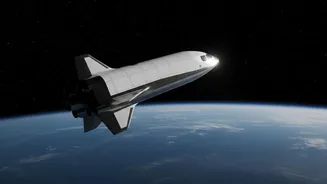
Unlike the vertical landing rockets popularised by companies like SpaceX, ISRO has opted for a winged vehicle design, similar in concept to the American space shuttle but unmanned and far more advanced. Pushpak is a technology demonstrator, a stepping stone towards a fully realised Two-Stage-to-Orbit (TSTO) launch vehicle. This phased approach is a hallmark of ISRO's strategy: master each complex technology one step at a time. The recent landing experiments have focused solely on the final, critical phase of atmospheric re-entry and autonomous landing. The success of the LEX series, with the same winged body being reused for multiple tests, demonstrates not just the vehicle's capability but also its robustness.
The Challenges and the Road Ahead
While the landing tests are a resounding success, the journey to a fully operational reusable rocket is still long. The next major step is the Orbital Re-entry Experiment (OREX). For this, a larger version of Pushpak will be launched into a 400-km orbit using a modified rocket. It will then perform several experiments in space before de-orbiting and attempting to survive the intense heat of re-entry and land back on a runway in India. This will test crucial systems like its thermal protection shield, which needs to withstand temperatures of thousands of degrees Celsius. Mastering this phase is the final piece of the puzzle before ISRO can integrate this technology into its next generation of launch vehicles.