
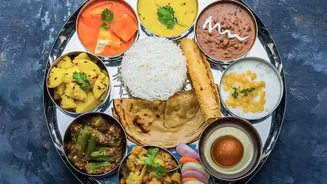
A Cuisine Forged by the Desert
The character of Rajasthani food is intrinsically linked to its geography. In a state dominated by the Thar Desert, water has always been a precious resource, and fresh green vegetables a seasonal luxury. This forced cooks to become masters of preservation
and resourcefulness. The cuisine relies heavily on ingredients with a long shelf-life: dried lentils, beans, grains like millet and wheat, and gram flour (besan). Instead of water, many dishes use milk, buttermilk, or yogurt, which were more readily available from household livestock and added a distinct tangy richness. Ghee (clarified butter) is another cornerstone, used not just for flavour but also for its preservative qualities and high energy content, which was essential for the region's historic warrior clans. This blend of constraints gave rise to a surprisingly diverse and flavourful vegetarian tradition, a fact owed in large part to the state's large vegetarian population, including Marwari and Jain communities.
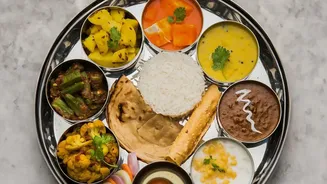
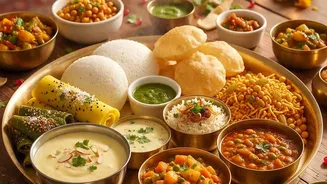
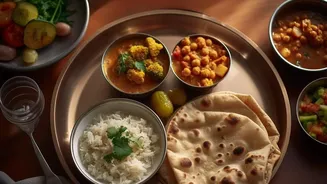
The Quintessential Thali: Dal Baati Churma
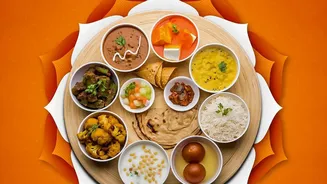
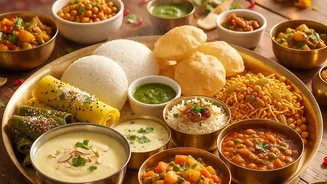
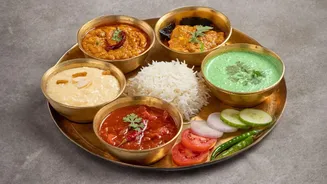
To understand Rajasthan on a plate, one must start with its most iconic dish: Dal Baati Churma. More than a meal, it is a complete culinary experience that reflects the region's history. The 'baati'—a hard, unleavened bread roll—is said to have been a staple for Rajput soldiers. They would bury balls of dough in the hot desert sand to bake during the day, returning to perfectly cooked, durable bread that could be eaten with yogurt or ghee. Today, these baatis are baked until golden brown and are traditionally crushed and drenched in ghee before eating. The 'dal' is a spicy, aromatic lentil curry, typically made from a mix of different lentils. The 'churma' provides a sweet counterpoint; it's made by crumbling the baked baati and mixing it with ghee and jaggery or sugar, often garnished with nuts. Together, these three components create a harmonious balance of textures and flavours—savoury, spicy, and sweet—that defines Rajasthani hospitality.
Dishes Born from Scarcity
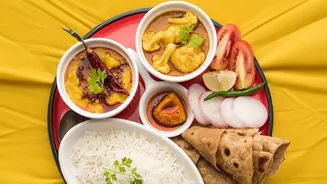
Beyond the famous trio, the Rajasthani thali showcases other marvels of desert cooking. Gatte ki Sabzi is a prime example. When fresh vegetables were unavailable, cooks created 'gatte'—steamed or fried dumplings made from gram flour—and simmered them in a tangy yogurt-based curry. This dish is believed to have roots in wartime, when soldiers needed to prepare meals with minimal, non-perishable ingredients. Another celebrated dish is Ker Sangri, a unique vegetable preparation that truly speaks of the desert. It is made from ker, a wild desert berry, and sangri, the bean from the native Khejri tree—two hardy plants that can withstand the harsh climate. This dish is said to have been discovered during a famine, when villagers foraged for anything edible and created a delicacy that is now a fixture at weddings and celebrations.
The Ritual of Evening Snacks
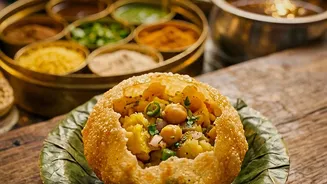
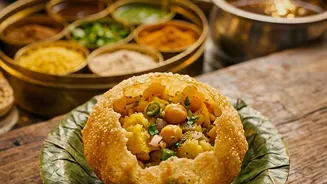
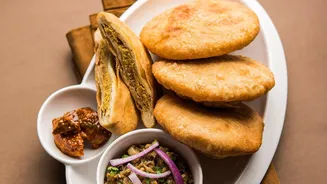
As evening descends, Rajasthan's culinary life shifts to its vibrant street food and tea-time snacks. Cities like Jodhpur and Jaipur are famous for their spicy, deep-fried treats that are the perfect accompaniment to a hot cup of chai. The Pyaaz ki Kachori is a local legend—a flaky, deep-fried pastry filled with a flavourful, spiced onion mixture. Another beloved snack is the Mirchi Vada, a large green chilli stuffed with a spicy potato filling, coated in gram flour batter, and fried to crispy perfection. These snacks are not for the faint of heart; they pack a punch of flavour and spice, offering an entirely different, yet equally authentic, taste of the region's culinary soul.