








The Problem of Digital Silos
The modern workplace is a collection of powerful but disconnected tools. Your team’s conversation happens in a chat app, the decisions are recorded in an email, the results live in a Google Doc, and the deadlines are tracked in a calendar. Each app is a silo,
holding a single piece of the puzzle. This fragmentation forces you to act as a human bridge, constantly switching contexts, searching for information, and manually connecting the dots. It’s not just inefficient; it's a significant source of cognitive load and a common cause of missed details and duplicated work. Information gets stuck in inboxes or buried in unstructured documents, making it difficult to maintain a single source of truth.
What Are Cross-App AI Integrations?
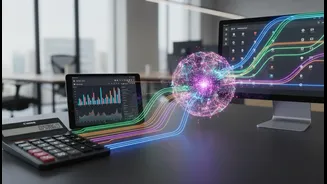
Enter cross-app AI integrations. Think of this technology as an intelligent layer that sits on top of all your workplace applications. Instead of you having to go to each app, the AI has access to the information across them. Platforms like Microsoft 365 Copilot and Google's Gemini for Workspace are designed to do exactly this. They don't just live inside one application; they work across them. This AI can understand the context and relationships between different pieces of information, whether it's an email, a document, a spreadsheet, or a meeting invitation. It essentially creates a central nervous system for your digital workspace, allowing information to flow seamlessly between previously isolated tools.
From Email to Doc, Seamlessly
Let’s look at a practical example. You receive an email thread discussing changes to a project proposal. In the past, you'd open the Google Doc, manually read through the email to find the requested changes, and then make the updates. With a cross-app AI assistant, the process is transformed. While viewing the email, you could ask the AI, "Summarize the requested changes from this thread and update the 'Project Phoenix' proposal doc." The AI, understanding the link between the email content and the document, can draft the updates for your review. Tools are emerging that can parse an email to automatically populate a document template or even compile an entire email thread into structured meeting notes. This automates the tedious transcription work that consumes a significant part of the workday.
More Than Just a Smarter Search
This capability goes far beyond a simple keyword search. Traditional search can find a document if you remember its name or a specific phrase within it. Cross-app AI understands semantics and context. It knows that an email from your manager about the "Q3 launch" is related to the Google Slides presentation titled "Third Quarter Go-to-Market Strategy." It can draw from your emails, files, meetings, and chats to provide answers that are tailored to what you are actually working on. This semantic understanding allows the AI to surface relevant information proactively, sometimes before you even know you need it. By understanding relationships, it bridges the gap between how we talk about work and where the work itself is stored.
The Future of a Unified Workspace
The ultimate goal of these integrations is to create a truly unified and intelligent workspace. By automating the routine tasks of finding, collating, and transferring information, AI frees up employees to focus on more strategic and creative work. This leads to enhanced productivity, better decision-making, and reduced employee burnout. As these AI systems evolve, they are becoming less like individual features within apps and more like proactive assistants that can manage complex, multi-step workflows across different services. The promise is a work environment where your tools anticipate your needs and the information you require is always at your fingertips, no matter where it originated.