






More Than a Meal, It's a Memory
Onam, Kerala’s state festival, commemorates the symbolic return of the benevolent King Mahabali. It is a harvest festival that transcends religion, uniting communities in a celebration of prosperity and harmony. Central to this ten-day event is the Onam sadhya,
an elaborate vegetarian banquet that embodies the very spirit of the festival. There's a famous Malayalam proverb, "Kaanam Vittum Onam Unnanam," which means one must have the Onam lunch even if it means selling one's property. This single phrase captures the profound importance of the sadhya. It is not merely a meal but a culinary ritual, a labor of love that brings families and friends together, reinforcing bonds of kinship and community.
A Symphony of Flavors
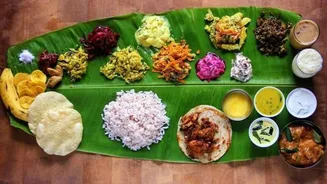
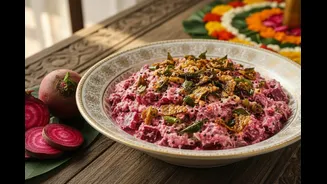
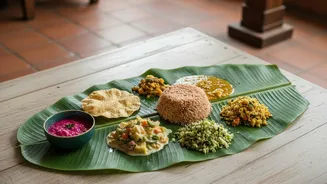
The sadhya is an art form served on a fresh banana leaf, which adds a subtle aroma to the hot food. It features a spectacular array of anywhere from 20 to over 30 vegetarian dishes, each with its designated place on the leaf. The spread is a masterful display of balance, designed to incorporate all six fundamental tastes: sweet, sour, salty, bitter, pungent, and astringent. This culinary philosophy is rooted in Ayurvedic principles, suggesting that a balanced meal leads to a balanced life. From the tangy 'puli inji' (ginger-tamarind chutney) and assorted pickles to the array of coconut-based curries, every item is intended to create a harmonious and wholesome dining experience.
The Stars of the Sadhya
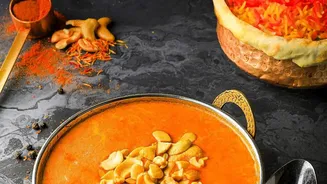
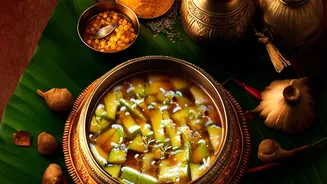
While every dish is significant, a few stand out as the heroes of the feast. 'Avial', a thick medley of seasonal vegetables in a coconut and yogurt gravy, is a quintessential Keralan innovation. 'Olan', a subtle and elegant curry made from ash gourd and black-eyed peas in a light coconut milk broth, provides a cooling contrast to the spicier dishes. 'Kalan' is a rich, sour curry typically made with yams or plantains in a yogurt-based sauce. And no sadhya is complete without a serving of 'parippu' (lentil curry) and ghee over a mound of Kerala's signature red rice. The meal traditionally concludes with 'payasam', a sweet dessert. Varieties like 'palada payasam' (made with milk and rice flakes) or 'ada pradhaman' (with rice flakes, jaggery, and coconut milk) provide a rich, sweet finale.
Connecting Generations, Old and New
In today's fast-paced world, the tradition of preparing the sadhya from scratch is where the festival finds its new meaning. For many families, the kitchen becomes the hub of Onam celebrations. Elders pass down recipes and techniques to younger generations, not just as instructions, but as stories and heirlooms. These recipes carry the taste of nostalgia, connecting Malayalis living far from home to their roots and childhood memories. The act of chopping vegetables, grinding coconut, and stirring pots together becomes a cherished act of bonding. This shared effort transforms the feast from a mere culinary exercise into a powerful expression of family history and cultural identity.
A Tradition for the Modern Age
While the core of the sadhya remains unchanged, its celebration has adapted to modern life. In urban settings, where time is scarce, families might order a 'sadhya in a box' from a caterer or attend community feasts in apartments and offices. However, far from diluting the tradition, this evolution has arguably made it more accessible. Social media platforms are now flooded with images of homemade sadyas and colourful 'pookalams' (floral carpets), as younger Keralites proudly showcase their heritage. This digital sharing ensures that the stories and flavours of Onam reach a global audience, giving these ancient traditions a vibrant and dynamic new life. The essence of togetherness and abundance remains, whether the feast is served on a traditional banana leaf at home or a convenient plate at a community gathering.