


Our Growing Reliance on Satellites
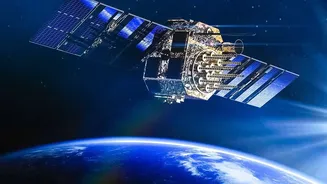
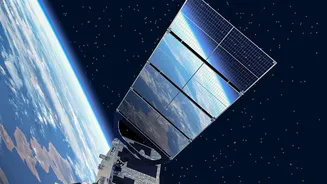
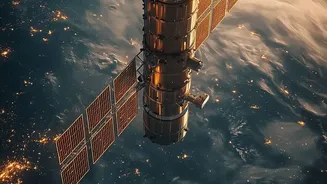
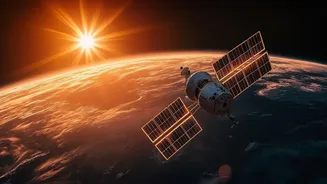
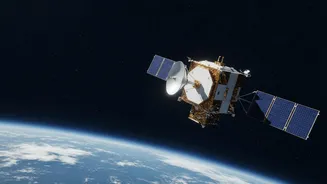
In India and across the globe, satellites have become the backbone of modern society. They are indispensable for everything from television broadcasting and weather forecasting to strategic defence surveillance and disaster management. For the average
person, this reliance is most tangible in services like GPS navigation, which guides our vehicles, and the satellite-based communication that underpins banking networks and credit card transactions. With the rise of satellite internet constellations, even our access to the web is increasingly tied to the health of orbital hardware. This growing dependence makes our infrastructure more vulnerable to disruptions from space.
What is a Coronal Mass Ejection?
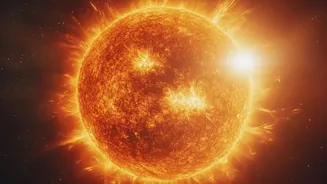
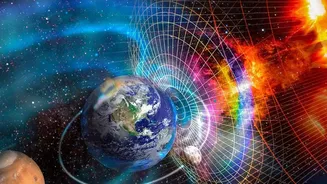
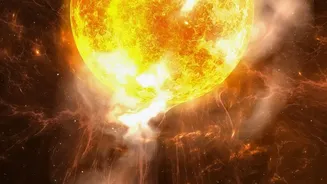
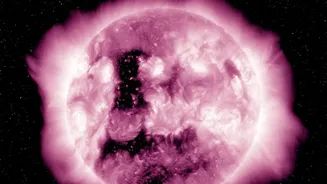
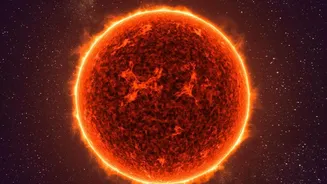
A coronal mass ejection, or CME, is one of the Sun's most powerful and disruptive phenomena. Think of it as a massive solar eruption. The Sun's outer atmosphere, the corona, sometimes releases enormous bubbles of magnetised gas, known as plasma. These clouds of charged particles can travel through space at speeds of up to two million miles per hour. While the Sun ejects CMEs in all directions, the ones aimed at Earth pose a significant threat. When a CME collides with Earth's magnetic field, it can trigger a geomagnetic storm, creating beautiful auroras but also wreaking havoc on technology.
The Threat to Our Orbital Infrastructure
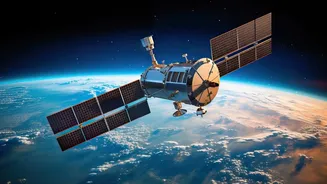
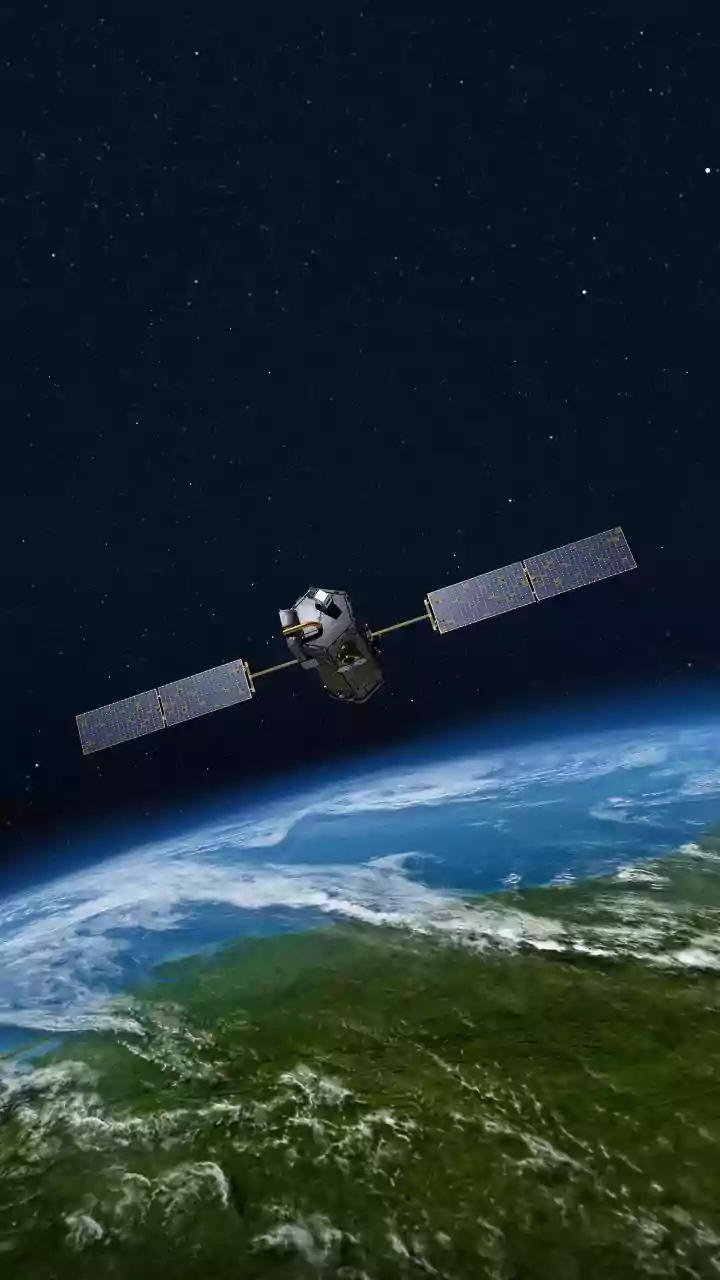
For satellites, a direct hit from a CME can be catastrophic. The influx of energetic particles can damage sensitive electronics and cause surface charging, leading to short circuits and malfunctions. Geomagnetic storms also heat and expand Earth's upper atmosphere. This increases atmospheric drag on satellites in low-Earth orbit, causing them to lose altitude and potentially shortening their operational lifespan, as was famously seen with a batch of Starlink satellites in 2022. Furthermore, the disturbances in the ionosphere can degrade or block the radio signals used for communication and GPS, reducing accuracy or causing a total loss of signal.
A New Era of Space Weather Forecasting
Until recently, forecasting the exact arrival time and impact of a CME was a major challenge. Warnings often came with large windows of uncertainty, sometimes as wide as five hours. This has changed with the advent of new observation missions and sophisticated computer models, many powered by artificial intelligence. Missions like NASA's PUNCH, which launched in 2025, use multiple spacecraft to continuously track a CME's journey from the Sun. By feeding this detailed 3D data into advanced models, scientists can now predict a CME's arrival at Earth with far greater accuracy. In a recent test, a new model predicted an arrival time that was accurate to within just 30 minutes.
The Power of Precise Alerts
This newfound precision is a game-changer for satellite operators, including organisations like ISRO which monitors over 50 Indian satellites. Instead of relying on broad, uncertain warnings, operators now receive timely and targeted alerts. This allows them to take specific protective actions, such as temporarily putting satellites into a protective "safe mode" to shield electronics, reorienting spacecraft to minimise exposure, or postponing critical manoeuvres until the storm has passed. These proactive measures not only prevent costly damage but also enhance the reliability of the communication and navigation services we all depend on. New instruments are also being developed to provide warnings hours in advance, a significant leap from the 15-minute warnings of the past.