



The Power of a Single Point
In yoga, the concept of a steady, focused gaze is called 'Drishti'. It's more than just looking at something; it's a technique for concentration that anchors your attention. When your eyes dart around the room, your brain constantly has to recalibrate
where you are in space, making balance incredibly difficult. By fixing your gaze on a single, unmoving point—like a spot on the wall or floor in front of you—you provide your brain with a stable reference. This simple act helps to quiet mental chatter and sends a signal of stability throughout your entire nervous system, which is the foundation for physical balance.
Your Body's Inner Conversation
While your eyes provide one stream of information, your body has its own internal GPS called proprioception. This is your body's innate sense of its position in space, managed by nerve receptors in your muscles, tendons, and joints. When you stand on one foot, these receptors are in constant communication with your brain, making micro-adjustments in the muscles of your standing foot, ankle, and leg to keep you from toppling over. Yoga poses, especially one-legged balances, are exceptional for training this system. The wobble isn't a sign of failure; it’s the physical manifestation of this complex conversation happening, strengthening the connection between your mind and body.
Finding Your Roots in Tree Pose
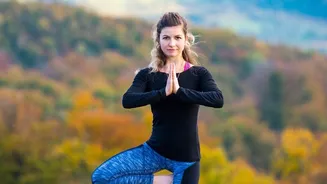
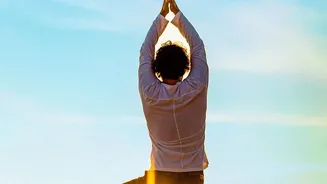
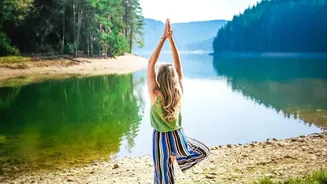
Vrikshasana, or Tree Pose, beautifully merges the principles of Drishti and proprioception. Before you even lift your foot, the practice begins. Start in Mountain Pose (Tadasana), standing tall with your weight evenly distributed. The very first step is to find your Drishti—that unmoving focal point at eye level. With your gaze locked, shift your weight onto one leg. Then, slowly bend the other knee and place the sole of your foot on your inner ankle, calf, or—if your hip flexibility allows—your inner thigh. It is crucial to avoid placing your foot directly on the knee joint to prevent injury. Press your foot into your leg and your leg back into your foot to create a stable, active connection. All the while, keep returning to your breath and your steady gaze.
Growing Your Branches With Variations
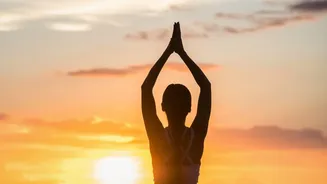
Once you feel stable in the basic pose, you can explore variations, each of which challenges your balance in a new way. The constant in every variation is your unwavering Drishti. You can bring your palms together at your heart or reach them overhead like branches. For a greater challenge, try a gentle side bend, which stretches the side body but requires your core and gaze to work harder to maintain stability. Another variation involves closing your eyes, which removes your primary tool for balance and forces you to rely entirely on your proprioception—a difficult but powerful way to deepen your inner awareness. More advanced practitioners might explore Half-Lotus Tree Pose, which demands more hip openness, or even balancing on an unstable surface like a yoga block to further engage stabilizer muscles.
Embracing the Sway
Remember that even trees sway in the wind. Losing your balance and having to reset your pose is a normal and necessary part of the learning process. Rather than getting frustrated, treat each wobble as feedback. Is your gaze steady? Is your standing leg engaged? Is your core active? Often, the moment our focus drifts, our physical balance follows. Use these moments as an opportunity to practice mindfulness. Calmly return your foot to the floor, re-establish your Drishti, take a steady breath, and begin again. The goal is not a 'perfect,' motionless pose but the resilience and focus developed by continually coming back to your center.