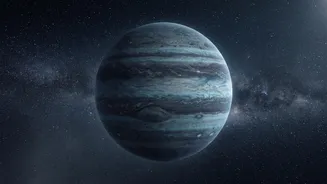








A Planet Found, Then Lost
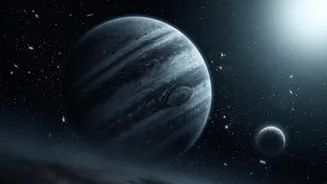
About 1,000 light-years from Earth, astronomers were tracking a 'hot Jupiter' named TOI-2535 b. This gas giant, similar in size to our own Jupiter, orbits its star in a blistering 8.25 days. Scientists found it using the transit method, where they detect
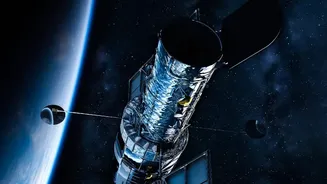
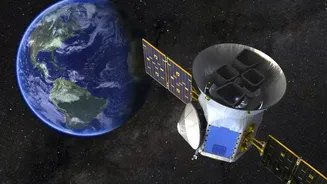
the tiny, regular dip in a star's brightness caused by a planet passing in front of it from our perspective. For seven years, between 2019 and early 2026, NASA's TESS space telescope observed these dips. But then, something strange happened. The transits grew shorter and fainter, and in March 2026, they stopped altogether. The planet, for all intents and purposes, had vanished from view.
The Cosmic Wobble
So, where did it go? The planet hasn't been destroyed or flung out of its system. Instead, its orbit has tilted. The phenomenon responsible is called nodal precession, which can be thought of like the slow wobble of a spinning top. The entire plane of the planet's orbit is rotating. For years, this orbital plane was perfectly aligned with Earth, allowing us to see it transit its star. But this wobble has now tilted the orbit just enough that, from our vantage point, the planet no longer crosses the star's face. It now passes just above or below it, making it invisible to the transit detection method.
The Unseen Neighbor
What's causing such a dramatic wobble? The clues point to a hidden companion. Astronomers believe there is another large planet in the TOI-2535 system, likely a gas giant of at least Saturn's mass. This unseen neighbor is also on a tilted orbit, and its powerful gravitational pull is yanking on TOI-2535 b. This constant gravitational tug-of-war between the two worlds is forcing both of their orbits to precess, or wobble, at an astonishingly fast rate. Before it disappeared, the transits of TOI-2535 b were already behaving erratically, sometimes arriving up to six hours early or late—a clear sign of another body's gravitational meddling.
A Decades-Long Disappearance
This is the most extreme and rapid example of such orbital interaction ever witnessed for a planet orbiting a single star. While astronomers knew this was theoretically possible, they expected such a change to take centuries, not just a few years. Based on current models of this cosmic dance, scientists predict that TOI-2535 b's orbit won't wobble back into a transiting alignment for at least 30 to 50 years. So while the planet is lost to our current detection methods, it's only a temporary disappearance on a cosmic timescale. Interestingly, its unseen companion might even precess into our line of sight and begin transiting its star sooner.
Why This 'Lost' Planet Matters
The case of TOI-2535 b is more than just a curiosity; it provides valuable clues about how planetary systems form and evolve. Hot Jupiters, which orbit incredibly close to their stars, are a puzzle. It's thought they form further out and migrate inward over time. The presence of a close, massive neighbour suggests TOI-2535 b may have followed a slower, gentler path of migration, spiraling in with its companion rather than being violently thrown into its current orbit. This 'disappearance' reminds us that solar systems are not static, clockwork mechanisms but dynamic, evolving places. Even a lost planet can illuminate new truths about the universe and refine our search for other worlds.