









The Blueprint: Baahubali's Mythic Spectacle
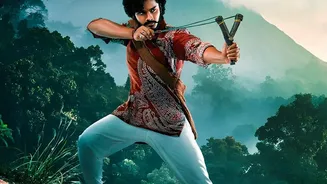
The modern pan-Indian phenomenon can be traced back to one name: Baahubali. When S.S. Rajamouli’s two-part epic was released starting in 2015, it didn't just break box office records; it shattered the very notion of a 'regional' film. The story of warring
royal brothers, rooted in Indian mythology and folklore, was universally resonant. By combining a deeply emotional core with unprecedented visual effects and grand-scale action, Baahubali created a template for a film that could appeal to everyone, irrespective of language. The cliffhanger at the end of the first part—“Why did Kattappa kill Baahubali?”—became a national question, proving that a Telugu film could capture the imagination of the entire country. It was the first true pan-Indian blockbuster of the modern era, demonstrating that audiences were hungry for culturally specific yet universally themed stories.
The Grit: KGF's Underdog Rebellion
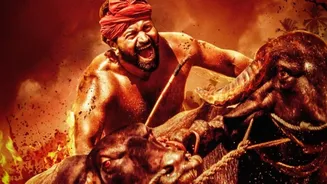
Following Baahubali’s mythic grandeur, Prashanth Neel’s K.G.F: Chapter 1 (2018) arrived from the Kannada industry with a completely different texture. It was dark, gritty, and relentlessly stylish. The story of Rocky, a young man rising from the slums of Mumbai to conquer the Kolar Gold Fields, was a classic underdog saga. Its hero was an angry, brooding anti-hero, a throwback to an archetype many viewers felt was missing from mainstream Hindi cinema. The film's success, especially in the Hindi belt, was driven by its raw action, swaggering dialogue, and a powerful narrative of fighting against oppression. K.G.F. proved that the pan-Indian formula wasn't limited to historical epics; a contemporary, stylized action film with a strong emotional anchor could also unite the nation's cinephiles.
The Bromance: RRR's Global Triumph
S.S. Rajamouli returned in 2022 with RRR, a fictionalized account of two real-life Indian revolutionaries. The film took the pan-Indian model and launched it onto the global stage. It was an explosion of creativity, featuring some of the most imaginative action sequences ever filmed, a powerful anti-colonial narrative, and a central bromance between its two leads that formed the movie's emotional soul. More than just a domestic success, RRR became an international phenomenon, culminating in an Oscar win for its electrifying song 'Naatu Naatu'. It showed that Indian stories, when told with conviction and spectacle, could transcend not just regional but also international borders, finding fans in audiences who had never watched an Indian film before.
The Swagger: Pushpa's Rustic Rebellion
The Swagger: Pushpa's Rustic Rebellion
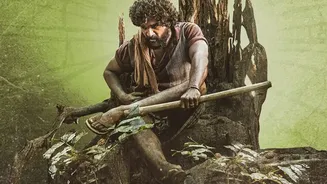
If Baahubali was regal and K.G.F. was grim, Pushpa: The Rise (2021) was all about rustic swagger. Starring Allu Arjun, the film followed a coolie involved in red sandalwood smuggling who rises through the ranks. Its appeal lay in its unapologetically 'massy' hero, catchy music, and highly quotable dialogues that went viral across social media. Pushpa's success demonstrated that pan-Indian appeal could be found in grounded, regional stories, not just larger-than-life epics. It proved that a charismatic anti-hero with a distinct, culturally rooted attitude could become a nationwide sensation, further solidifying the trend of South Indian narratives dominating the national conversation.
The Common Thread: Why These Films Work
So, what is the unifying factor? It's a potent combination of elements. These films offer high-stakes, large-scale spectacle and action that provides a theatrical experience many audiences felt was lacking. They are deeply rooted in their respective cultures, which paradoxically gives them a sense of authenticity and novelty that appeals to a national audience tired of formulaic plots. Crucially, they are built on strong, universally understood emotions: motherly love, friendship, rebellion against injustice, and the classic struggle of the underdog. They are unapologetically cinematic, designed to overwhelm the senses and deliver a powerful, shared emotional journey for everyone in the theatre, regardless of where they are from.