









An Iterative Approach to Spaceflight
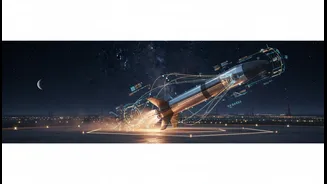
Unlike traditional aerospace projects that spend years in design and simulation before building, SpaceX employs a rapid iterative design process. The philosophy is simple: build, test, analyze, and repeat. This approach, often summarized as "if you're
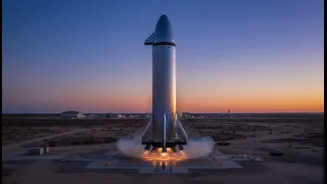
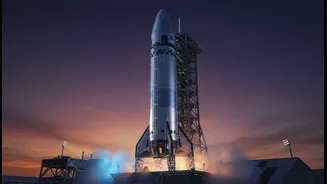
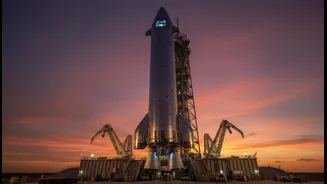
not blowing things up, you're not iterating fast enough," accepts spectacular failures as powerful learning opportunities. Every test flight, from early "hops" to high-altitude launches, is designed to push the vehicle to its limits and gather real-world data that computer models alone cannot provide. For the Starship program, this means each launch—including the thirteenth test flight targeted for this week—is less a final performance and more a rigorous experiment.
The Billion-Dollar Challenge of Recovery
Perfecting the recovery and reuse of both the Super Heavy booster and the Starship upper stage is the central economic driver of the entire program. A fully reusable Starship could slash the cost of sending a kilogram to orbit by over 95%, potentially to less than $50. This dramatic cost reduction is what makes ambitions like a self-sustaining city on Mars and a bustling low-Earth orbit economy financially viable. However, recovering a vehicle of this scale is immensely difficult. It must withstand extreme heat during reentry, execute a complex flip-and-land maneuver, and relight its engines with pinpoint precision just moments before touchdown. Every anomaly, like the engine relight issues on Flight 12's booster, provides critical data for engineers to refine hardware and software for the next attempt.
Data Is the True Payload
While the thirteenth test flight aims to deploy Starlink satellites for the first time, the most valuable payload is the terabytes of data collected from thousands of sensors across the vehicle. These sensors monitor everything from engine pressures and temperatures to the stresses on individual heat-shield tiles. During the previous flight, engineers gathered invaluable data on hypersonic reentry, even as the vehicle was lost. For the upcoming flight, SpaceX has even modified some satellites with cameras to scan Starship's heat shield during the mission, providing an external view of its performance. This firehose of information allows engineers to compare real-world performance against their models, identify weaknesses, and implement upgrades.
Learning From Every Anomaly
SpaceX’s process involves questioning every requirement and aggressively simplifying designs. Failures are not just tolerated; they are expected and analyzed. For Flight 13, engineers have already implemented changes based on lessons from Flight 12. These include modifying the engine startup sequence to prevent the booster from flipping in the wrong direction during separation and improving engine relight reliability. A launch attempt on July 16 was aborted moments before liftoff due to an engine ignition problem, which is itself a valuable data point. The automated abort system worked as intended, preventing a potential failure on the pad and giving engineers another system to analyze and improve. This process of finding and fixing issues, whether in flight or on the ground, is the core of perfecting the system for operational missions.
The Path to a Reusable Future
The analysis of each test flight directly feeds into the goal of creating a space transportation system with airline-like turnaround. While early Falcon 9 flights also ended in crashes, the data gathered was essential for achieving the routine booster landings that are common today. Starship presents a far greater challenge, as both its massive first stage and the orbital second stage must be recovered. Engineers are not just trying to land a rocket; they are trying to create a system robust enough for rapid and repeated use with minimal refurbishment. The painstaking, data-driven analysis of flights like the thirteenth test is the only way to build the confidence and reliability needed to carry crew and eventually establish humanity's presence beyond Earth.