







Understanding 'Molecular Ageing'
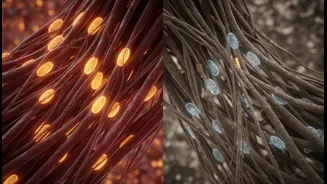
When we think of ageing, we often picture wrinkles or grey hair. But a more profound transformation happens deep inside our cells. This is 'molecular ageing.' It refers to the gradual decline in the function of our cells' components, especially in the mitochondria,
which are the powerhouses that generate energy. In muscles, this decline leads to sarcopenia—the progressive loss of muscle mass and strength. This process is a primary reason why physical tasks become harder and the risk of falls and injury increases as we age.. For years, scientists have seen a correlation between age and declining mitochondrial function, but recent findings are now showing how lifestyle interventions can directly influence this process.
Muscle: A Metabolic Powerhouse
Muscles do more than just facilitate movement; they are crucial metabolic organs. Healthy muscle tissue plays a vital role in regulating blood sugar, managing insulin sensitivity, and controlling inflammation throughout the body.. As muscle mass declines with age, so does our resting metabolic rate, which is why many people find it easier to gain weight in middle age despite their diet remaining the same.. By preserving and building muscle through exercise, we are not just maintaining our strength, but also supporting our entire metabolic system, which is essential for healthy ageing.
How Exercise Resets the Cellular Clock
This is where the news gets exciting. A growing and consistent body of research shows that exercise can reverse many of the molecular signs of ageing within our muscles.. Studies have found that after periods of regular resistance training, the gene expression profile—or 'molecular fingerprint'—of an older person's muscle can look remarkably similar to that of a much younger person.. A recent study highlighted a specific gene called DEAF1, whose levels rise in ageing muscles, disrupting the balance between building new proteins and clearing out damaged ones.. Exercise was found to lower DEAF1 levels, allowing the muscle's natural repair systems to function correctly, essentially helping the cells 'clean up and reset'.
The Undeniable Value of Consistency
The key to unlocking these benefits is not a single, heroic workout but a consistent, long-term routine. The headline's mention of 'consistency' is crucial. Research has consistently shown that it is regular physical activity that trains the muscle to maintain this 'younger' molecular state.. Studies following older adults over months and even years demonstrate that those who stick with a training programme gain significant strength and show marked improvements at the cellular level.. One six-month resistance training program found that while older adults were 59% weaker than their younger counterparts at the start, they closed that gap significantly after training, becoming only 38% weaker.. This proves the body's remarkable ability to adapt and rejuvenate, even late in life.
What Kind of Exercise is Best?
While all movement is beneficial, research points to specific types of exercise for the most profound anti-ageing effects. Resistance training (or strength training) is repeatedly highlighted as the most effective way to combat sarcopenia, build muscle mass, and reverse the molecular signs of ageing.. However, studies also show that high-intensity interval training (HIIT) can produce significant benefits in mitochondrial function.. The World Health Organization recommends a combination, advising adults to get 150-300 minutes of moderate aerobic exercise or 75-150 minutes of vigorous-intensity exercise, plus muscle-strengthening activities on two or more days a week.. The best routine is one that you can stick with consistently.