






The Lifespan Paradox
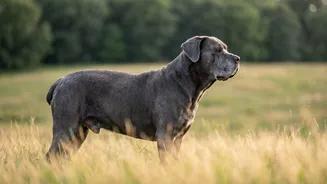
In the animal kingdom, size often correlates with longevity; an elephant lives far longer than a mouse. Yet, within the single species of domestic dog, this rule is flipped on its head. A tiny Chihuahua can live well into its teens, while a giant breed
like a Mastiff is often considered a senior by age six and may only live to be eight. This strange inversion has puzzled biologists for years, but recent studies are pointing to a compelling explanation. The secret isn't just about being big; it's about how quickly they get big.
A Life in Fast-Forward
Groundbreaking research suggests that the shorter lifespans of large breeds are a direct consequence of their accelerated growth. Scientists have found that large dogs don't just age faster in their senior years; their entire lives seem to be lived in fast motion from a biological perspective. To go from a small puppy to a 70-kilogram giant in just 18 to 24 months requires an incredible rate of cell division. This explosive growth puts an immense strain on the body, and researchers believe it comes with a significant, life-shortening trade-off.
The Cancer Connection
One of the most significant findings from these studies is that large breeds die from cancer at a much higher rate than smaller breeds. This appears to be a direct consequence of their rapid growth. Every time a cell divides, there is a tiny chance of a mutation occurring. Because large dogs undergo exponentially more cell divisions to achieve their size, their statistical risk of developing a cancerous mutation is simply higher. The very selective breeding that created these magnificent large breeds inadvertently also selected for a life strategy of 'grow fast and die young', prioritizing size over the cellular maintenance needed for a long life.
Unstable Genes Tell the Tale
A recent study published in the journal 'Science' dove even deeper, looking at the 'epigenome'—the chemical tags on DNA that regulate gene activity. Researchers found that as dogs age, they lose control over sections of DNA called 'jumping genes' or transposable elements. These genes can copy and paste themselves throughout the genome, causing damage and instability. The study revealed that larger dogs lose the chemical 'leash' on these jumping genes much faster than smaller dogs, providing a clear molecular signature of their accelerated aging. Giant breeds were found to lose about 35% more of these crucial chemical tags per year compared to their smaller counterparts.
More Than Just Genes
While cancer is a primary driver, it's not the only factor. The rapid growth and sheer mass of large breeds also place a heavy burden on their entire bodies. The heart has to work much harder to pump blood through a larger system, and their joints are under constant strain. This leads to a higher prevalence of cardiovascular issues and orthopedic conditions like arthritis and hip dysplasia, which can appear earlier in life and severely impact their quality of life, even if they aren't the direct cause of death.