


The Treasure in the Shadows
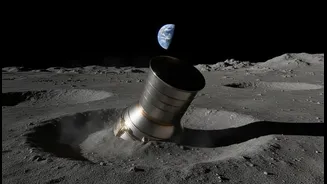
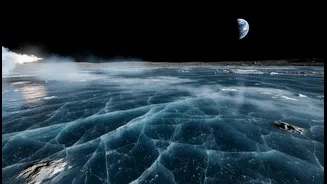
The focus of this new era of lunar exploration is on the Permanently Shadowed Regions (PSRs) near the Moon's poles. These are craters where the sun never shines, creating some of the coldest places in the solar system. For billions of years, these frigid
pockets have acted as cosmic cold traps, collecting and preserving materials like water ice. This ice is a scientific treasure chest. It may contain clues to the origin of water in our solar system and even the molecular precursors to life on Earth. For future explorers, this ice is also a critical resource. It could be processed into drinking water, breathable oxygen, and even hydrogen for rocket fuel, making it a cornerstone for establishing a sustainable human presence on the Moon and beyond.
An Unavoidable Contamination Problem
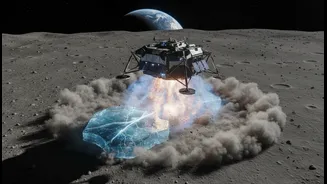
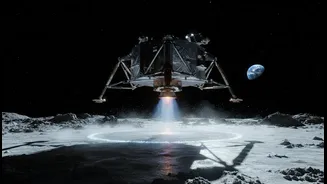
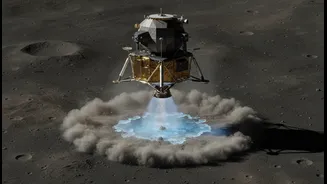
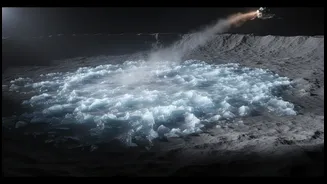
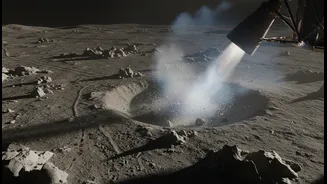
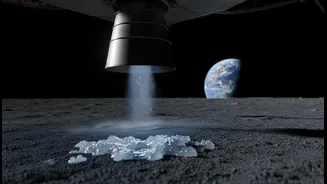
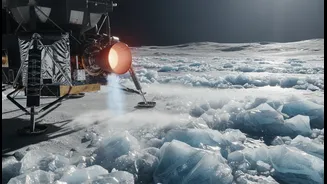
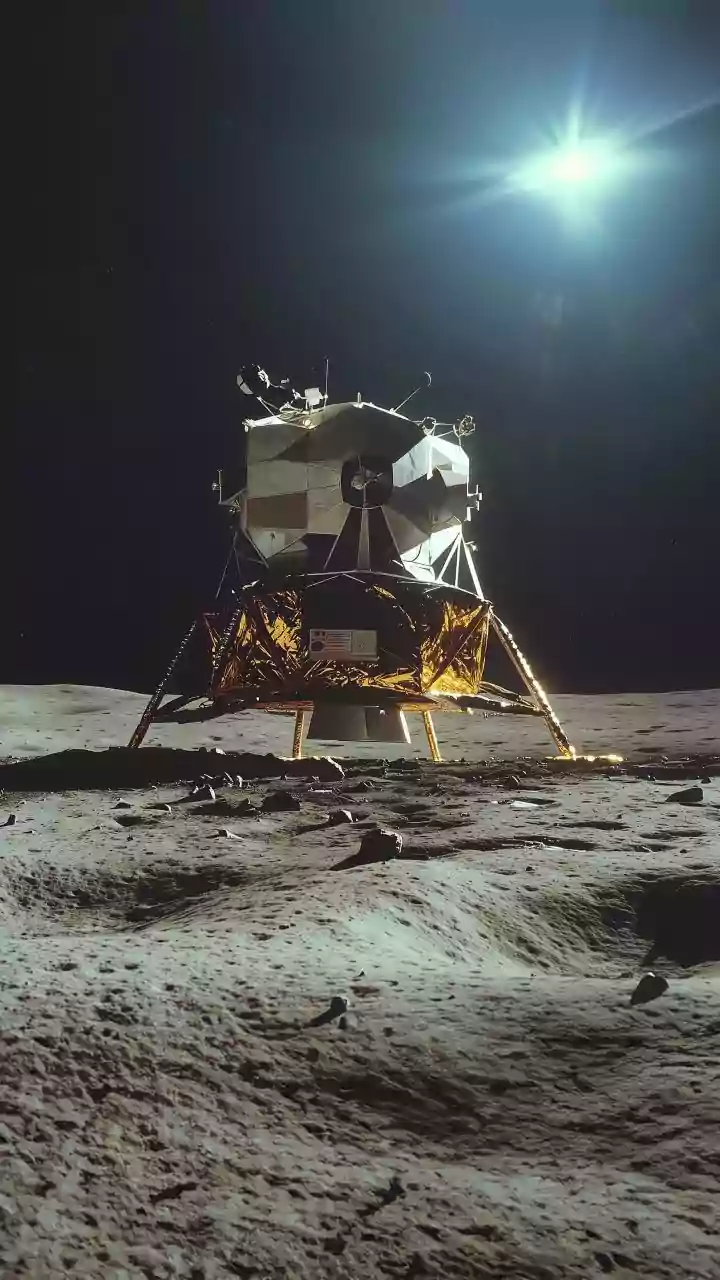
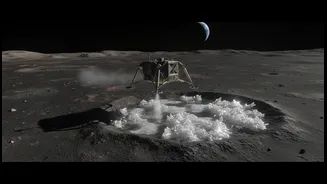
Herein lies the paradox: the very act of getting to these pristine sites threatens to destroy them. When a spacecraft lands on the Moon, its rocket engines blast the surface and release significant amounts of exhaust. A key component of this exhaust is water vapor, along with other chemicals like methane. Due to the Moon’s near-vacuum, these exhaust gases don't just settle around the landing site. Computer simulations show they can rapidly spread across the entire lunar surface in a matter of hours or days. A significant portion of this artificial water and chemical cocktail eventually gets trapped in the same cold PSRs that hold the ancient, native ice. This contamination could irrevocably alter the delicate chemistry of the lunar ice, making it impossible for scientists to distinguish between what is originally from the Moon and what we brought with us.
What is Planetary Protection?
The principle designed to prevent this kind of problem is called planetary protection. Its guidelines, maintained by the international Committee on Space Research (COSPAR), stem from the 1967 Outer Space Treaty, which calls on nations to avoid the "harmful contamination" of celestial bodies. Historically, the Moon has been considered a low-risk body because it's not thought to harbor life, so its planetary protection rules have been less strict than those for Mars. However, the discovery of polar ice prompted COSPAR to update its policy, creating a special sub-category for missions targeting these sensitive regions. While this is a step forward, the current rules mainly focus on documentation and reporting the inventory of organic materials on board, rather than placing hard limits on contamination.
The Questions We Should Be Asking
This brings us to the heart of the issue. The current debate is not just about how much water vapor a lander releases. It's about fundamental questions concerning our future in space. As the Artemis program and commercial entities plan for more frequent landings and even lunar bases, the cumulative effect of contamination is a major concern. The 'better questions' go beyond technical mitigation. Who gets to decide the acceptable level of contamination for a site that holds potential answers for all of humanity? Should some of the most pristine PSRs be declared 'scientific preserves' and placed off-limits to all landers, at least for now? How do we balance the immediate goals of resource utilization with the long-term imperative of scientific discovery? These are not just engineering problems; they are ethical and philosophical ones.
Setting a Precedent for the Solar System
The way we handle this challenge on the Moon will set a critical precedent. The same conflicts between exploration, resource extraction, and scientific preservation will be repeated on Mars, Europa, and other promising worlds. If we rush to exploit the Moon's resources without a robust and thoughtful framework for protection, we risk making the same short-sighted mistakes humanity has often made on Earth. The policies being debated and implemented now for lunar missions are not just about lunar ice; they are about defining our role and responsibility as a multi-planetary species. Protecting these ancient lunar deposits isn't about hindering progress; it's about ensuring that our exploration is sustainable, responsible, and serves the long-term interests of science and all humankind.