







1. Unified Seat Availability View
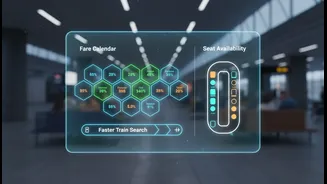
One of the most time-consuming parts of booking a ticket has been toggling between different travel classes like Sleeper, 3A, 2A, and 1A to find an available seat. A recent, and very welcome, update changes this. The new interface displays seat availability
across all classes on a single screen. This seemingly small change has a big impact, allowing you to quickly compare options and make a decision without endlessly clicking back and forth. It provides a comprehensive snapshot of the entire train in one go, helping you decide whether to upgrade to a different class or pick another train altogether if your preferred class is full.
2. AI-Powered Confirmation Probability
The uncertainty of a waitlisted ticket is a familiar source of anxiety for millions. To address this, IRCTC has integrated an AI-powered feature that predicts the confirmation probability of your ticket. When you search for a train and see a waiting list, the site now displays a “CNF Probability” with a percentage. This tool analyzes historical booking and cancellation trends for that specific train and route to give you an educated guess on your chances. A high percentage (often shown in green) suggests your ticket is very likely to get confirmed, while a low percentage (often in red) helps you decide whether to seek alternatives instead of waiting. While not a guarantee, it provides valuable data to make a more informed decision.
3. Conversational Booking with Ask DISHA 2.0
For those who find navigating the website complex, IRCTC’s upgraded AI chatbot, Ask DISHA 2.0, offers a new way to book. Instead of manually filling forms, you can now interact with the chatbot using voice or text commands in English, Hindi, and Hinglish to book tickets. You simply state your request, such as “Book a ticket from Mumbai to Delhi for tomorrow,” and the virtual assistant guides you through the process. The system uses a secure OTP for login instead of requiring you to remember your password, making it a more convenient, conversational experience. Beyond booking, it can also handle cancellations and check refund status.
4. A Cleaner Interface with Fewer Interruptions
Frequent travelers have long been frustrated by the number of pop-ups, flashing ads, and repeated CAPTCHA verifications that interrupt the booking flow. This is especially critical during the high-pressure Tatkal booking window, where every second counts. The redesigned website focuses on creating a cleaner, more intuitive interface that significantly reduces these distractions. The goal is to provide a smoother path from searching for a train to completing the payment, reducing the chances of errors or timeouts that lead to failed bookings. This streamlined experience is designed to make the entire process faster and less stressful.
5. Faster and More Reliable Payment Options
Payment failure at the last step is a common and infuriating problem. IRCTC has been working to solve this by integrating more reliable payment systems. The introduction of IRCTC iPay, the platform's native payment gateway, aims to speed up transactions and reduce failures. Another feature, Autopay, allows funds to be blocked but only debits your account once the ticket is confirmed, offering immediate refunds for unconfirmed or waitlisted tickets after chart preparation. For even faster checkouts, especially during Tatkal, the IRCTC eWallet is a powerful tool. By pre-loading money into the wallet, you can bypass slower external payment gateways and confirm your ticket with just a few clicks.