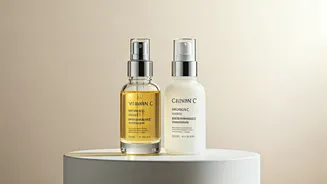









The Glow-Getter: Understanding Vitamin C
Think of Vitamin C as your skin's morning coffee—it brightens everything up. As a potent antioxidant, its primary job is to protect your skin from environmental stressors like pollution and UV rays. This defensive action helps prevent premature aging.
But its most famous benefit is its ability to create a more radiant complexion. Vitamin C inhibits the production of pigment in the skin, which can help lighten dark spots and fade hyperpigmentation, leading to a more even skin tone. Beyond brightening, it also plays a crucial role in encouraging the growth of new collagen, the protein that keeps skin firm and helps reduce the appearance of fine lines and wrinkles. It's a true multi-tasker for achieving a healthy, luminous glow.
The Guardian: Niacinamide's Strengthening Role
If Vitamin C is for offense, Niacinamide is for defense. This form of Vitamin B3 is a restorative hero, best known for its ability to strengthen the skin's natural barrier. A healthy barrier is crucial because it locks in moisture and keeps irritants out. Niacinamide does this by boosting the production of ceramides, which are lipids that form the skin's protective layer. The result is more hydrated, resilient, and less sensitive skin. But it doesn't stop there. Niacinamide also helps regulate oil production, which can minimize the appearance of pores and reduce breakouts. Its anti-inflammatory properties can calm redness associated with conditions like acne and rosacea. In short, Niacinamide creates a strong, calm, and balanced foundation for overall skin health.
Better Together: The Skincare Power Couple
For years, a myth circulated that you couldn't use Vitamin C and Niacinamide together. This was based on outdated research using unstable forms of the ingredients under conditions that don't apply to modern skincare. Today, we know they are not only safe to use together but can be a highly effective duo. While Vitamin C focuses on brightening and protecting from external damage, Niacinamide works on strengthening the skin's defenses and repairing from within. Using both can lead to faster and more noticeable results in achieving an even, smooth, and radiant complexion. Niacinamide can even help calm potential irritation from more potent forms of Vitamin C, making the combination beneficial for many skin types.
How to Layer Like a Pro
To get the most out of this power couple, application matters. The general rule of skincare is to apply products from the thinnest to thickest consistency. Many dermatologists recommend using Vitamin C in the morning to take advantage of its antioxidant properties, which help protect your skin from daily environmental damage. After cleansing, apply your Vitamin C serum and let it fully absorb. A wait time isn't strictly necessary with modern formulas, but giving it a minute can't hurt. Follow up with your Niacinamide serum or a moisturizer that contains Niacinamide. An alternative approach, especially for those with very sensitive skin, is to use Vitamin C in the morning and Niacinamide at night. This separation gives each ingredient its own space to work. Whichever method you choose, consistency and listening to your skin are key.