




The Burnout of a Calorie Counter
For many, calorie counting starts with the best intentions: to understand food better and manage weight. Apps make it seem simple. But over time, this hyper-vigilance can backfire. Life is messy; meals with friends, festive occasions, and simple cravings
don't fit neatly into a digital food diary. The constant tracking can foster a problematic relationship with food, where every eating decision is filtered through a lens of numbers, guilt, and anxiety. It can disconnect us from our body's natural hunger and satiety cues, outsourcing our intuition to an algorithm. Instead of asking, "Am I hungry?" we ask, "Do I have the calories for this?" This can lead to a cycle of restriction and overindulgence, moving us further away from a healthy, balanced approach to eating.
What Is Intuitive Portion Mapping?
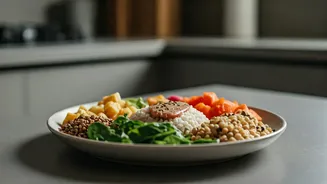
Intuitive portion mapping is not another restrictive diet. Instead, it's a framework that combines the principles of intuitive eating—honouring your body’s hunger signals and learning to recognise fullness—with a simple, visual guide for building balanced meals. It ditches the numbers and spreadsheets in favour of a more flexible, common-sense approach. The goal isn't to hit a precise caloric target but to consistently build plates that are nourishing and satisfying. By using your own hand as a measurement tool, you create a personalised, portable guide that adapts to your body's needs without the need for scales, apps, or calculators. It’s about building trust in your own judgment and reconnecting with the experience of eating.
Your New Toolkit: The Hand Guide
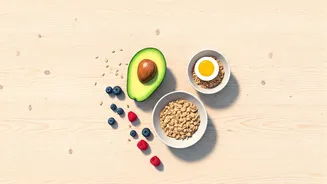
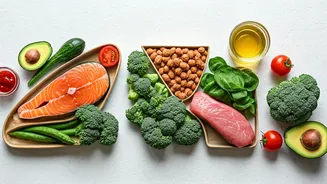
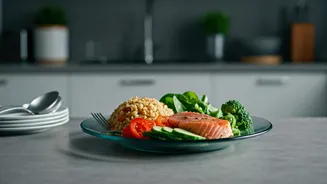
The most common method for portion mapping uses your hand as a simple and effective measuring device. It’s always with you, and its size is proportional to your body. Here’s a basic guide: * **Protein:** A serving of protein (like chicken, fish, or paneer) should be about the size and thickness of your palm. * **Carbohydrates:** A serving of starchy carbs (like rice, roti, or potatoes) should be about the size of your clenched fist. * **Vegetables:** Aim for one to two cupped handfuls of non-starchy vegetables. Think of filling a large portion of your plate with colour. * **Fats:** A serving of healthy fats (like nuts, seeds, or oils) is roughly the size of your thumb. This isn't a rigid rulebook. It's a starting point. Some meals will be different, and that's okay. The idea is to create a general template for balanced eating throughout the day.
The Freedom of Eating Intuitively
The biggest benefit of this approach is mental freedom. When you're no longer tethered to an app, you can be more present during meals, enjoying the flavours and textures of your food. It reduces decision fatigue and removes the moral weight assigned to certain foods. A piece of cake at a birthday party is just that—a piece of cake, not a catastrophic caloric event that needs to be 'worked off'. This method fosters sustainability. Because it’s flexible and based on principles rather than strict rules, it’s easier to maintain long-term, through holidays, travel, and everyday life. You learn to listen to your body, eating when you're hungry and stopping when you’re comfortably full, which is a skill that serves you for life.
How to Make the Switch
Transitioning away from a long-term habit like calorie counting can feel daunting. Don’t feel pressured to delete your apps cold turkey. You can start by trying portion mapping for one meal a day, like lunch. See how it feels. Pay close attention to your hunger levels before eating and your fullness levels after. As you get more comfortable, you can expand to more meals. The goal is to gradually shift your reliance from an external tool to your own internal cues. Be patient with yourself. It takes time to rebuild trust with your body after outsourcing your eating decisions for so long. Remember, the objective is progress, not perfection.