








The Quantity Question: Are You Using Enough?
One of the most widespread mistakes is not applying enough sunscreen. Most people use only 25-50% of the recommended amount. To achieve the Sun Protection Factor (SPF) stated on the bottle, you need to apply about two milligrams of product per square
centimetre of skin. For your face and neck, this translates to about half a teaspoon, or the amount that covers the length of your index and middle fingers. For the entire body, the general guidance is about one ounce—enough to fill a shot glass. Applying too little can drastically reduce your protection; for instance, a lightly applied SPF 50 might only give you the protection of an SPF 20.
Understanding the Label: Beyond the SPF Number
The SPF number primarily measures protection against UVB rays, which are responsible for sunburn. However, UVA rays penetrate deeper, causing premature ageing, pigmentation, and long-term damage. This is why choosing a 'broad-spectrum' sunscreen is non-negotiable. The term guarantees that the product protects against both UVA and UVB rays. For Indian skin, which is more prone to hyperpigmentation, this is especially critical. Dermatologists recommend a broad-spectrum product with an SPF of at least 30 for daily use.
The Reapplication Rule: Once Is Not Enough
Applying sunscreen in the morning and forgetting about it is a common pitfall. Sunscreen's effectiveness diminishes over time as it breaks down due to sun exposure, sweat, and friction from touching your face. The standard rule is to reapply every two hours when you're outdoors. If you've been swimming or sweating heavily, you should reapply more frequently, typically every 80 minutes. Even if you work indoors, UVA rays can penetrate window glass, so if you sit near a window, reapplication every four to six hours is still advised.
The Myth of Makeup with SPF
Relying solely on your foundation or tinted moisturiser for sun protection is a risky strategy. While makeup with SPF is better than nothing, most people don't apply nearly enough of it to get the stated SPF value. To get the labelled protection, you would need to apply a very thick layer of makeup, which is impractical for most. Think of the SPF in your makeup as a bonus layer of protection, not your primary shield. The correct way is to apply a dedicated broad-spectrum sunscreen first, let it set, and then apply your makeup on top.
Covering All Bases: Don't Miss These Spots
It's easy to miss spots during a quick application. Areas frequently forgotten include the ears, eyelids, the back of the neck, the hairline, and the tops of your feet and hands. These areas are just as vulnerable to sun damage and skin cancer. Make it a habit to consciously cover these zones. For your lips, use a lip balm with an SPF of 30 or higher. And don't think clouds are a free pass; up to 80% of the sun's harmful UV rays can penetrate clouds, so you need protection even on overcast days.
A Note for Indian Skin
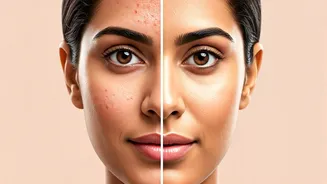
There's a persistent myth that melanin-rich Indian skin doesn't need as much sun protection. While the higher melanin content offers some natural defence (equivalent to a very low SPF), it is not enough to prevent damage. In fact, Indian skin is more susceptible to hyperpigmentation, melasma, and an uneven skin tone triggered by sun exposure. Using a broad-spectrum sunscreen daily is crucial not just for preventing burns, but for protecting against these pigmentation issues and premature ageing. Modern formulas are lightweight and designed to be worn without leaving a greasy feel or a white cast.