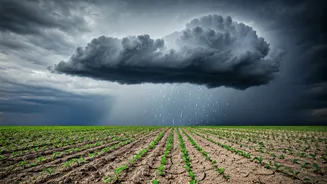









A Dry Start to a Crucial Month
The Southwest Monsoon is the lifeblood of India's economy, but its performance so far has been concerning. After one of the driest Junes in over a century, with a nationwide rainfall deficit of around 40%, all eyes are on July, the most critical month
for Kharif crop sowing. The India Meteorological Department (IMD) has forecast that rainfall in July will likely be "below normal," or less than 94% of the long-period average. This prediction is largely attributed to the strengthening El Niño conditions in the Pacific Ocean, a climate pattern historically linked to weaker monsoons in India. While some parts of northwest and east-central India might see normal rain, large swathes of central, western, and northern India are expected to face a deficit, creating a patchy and unpredictable start to the core monsoon period.
From Faltering Fields to Anxious Farmers
The immediate impact of erratic rainfall is being felt in the agricultural heartland. The sowing of key Kharif crops, which typically peaks in July, is already significantly behind schedule. As of late June, the total area sown with Kharif crops was down by over 22% compared to the same period last year. The planting of crucial crops like paddy (rice), pulses, oilseeds, and cotton has seen a significant lag. Farmers are reportedly delaying sowing, waiting for substantial, consistent showers to ensure seeds germinate properly and to avoid the cost of re-sowing. This delay and the potential for lower yields if rains don't pick up put rural incomes under direct threat. With nearly half the workforce dependent on agriculture and a large portion of farmland still rain-fed, a weak monsoon directly translates to lower farm cash flows.
The Ripple Effect on Your Kitchen Budget
The connection between the farm and your food bill is direct and sensitive. A reduction in agricultural output inevitably tightens the supply of essential commodities, from rice and dal to vegetables and oils. Economists and the Reserve Bank of India (RBI) have flagged that a deficient monsoon is a key risk for food inflation. With food items making up a large portion of the consumer price index (CPI) basket, even a small spike in the prices of staples can have a significant impact on overall inflation and household budgets. While the country has comfortable food grain stocks from previous good monsoons, which provides a buffer, the prices of perishable items like vegetables are highly susceptible to seasonal shortages and could see sharp increases. This could force families, particularly in lower and middle-income brackets, to allocate a larger share of their spending to basic food needs.
Urban and Rural Wallets Feel Different Pinches
The financial strain of a weak monsoon is not felt uniformly. In rural areas, the impact is immediate through lower incomes from farming and related labour, which could depress demand for consumer goods, from two-wheelers to other discretionary items. For urban households, the primary impact comes from rising food prices. Higher grocery bills can shrink the funds available for other expenses like transport, education, and entertainment. Furthermore, deficient rainfall can affect more than just crops. It can strain water resources, leading to water cuts in cities, and reduce hydropower generation, potentially putting upward pressure on electricity costs as reliance on more expensive thermal power increases. This combination of higher food and utility costs can squeeze urban budgets from multiple directions.
A Cautious Economic Outlook
Beyond individual households, the monsoon's performance has macroeconomic implications. The RBI, while maintaining its policy rates, is closely watching the situation, noting that weather-related shocks could weigh on agricultural activity, rural demand, and the overall growth-inflation outlook. Projections for GDP growth have already been moderated, with a weak monsoon cited as a significant downside risk. While India's economy has become more resilient over the years with increased irrigation coverage, the monsoon remains a powerful force. A season of patchy and below-normal rainfall complicates economic management, forcing policymakers to prepare contingency plans for everything from agricultural support to inflation control. For the average household, it serves as a reminder that in India, financial planning often means keeping an eye on the sky.