





The Stratosphere: A Delicate Dry Zone
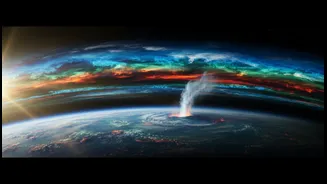
To understand why this matters, we first need to look up—way up. Above the weather-filled troposphere where we live lies the stratosphere, a layer extending from about 10 to 50 kilometres above Earth. This region is critical, housing the ozone layer that
protects us from harmful UV radiation. Crucially, the stratosphere is naturally very, very dry. This dryness is maintained by a 'cold trap' at its boundary, which freezes most water vapor before it can enter. This delicate balance is vital because water vapor, when present in the stratosphere, acts as a potent greenhouse gas, trapping heat. Recent discoveries show that this balance is being disrupted from below.
Volcanoes: Nature's Stratospheric Humidifiers
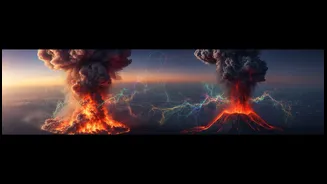
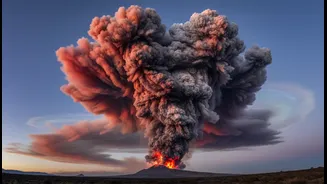
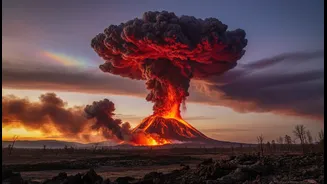
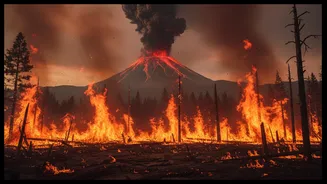
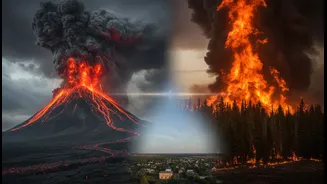
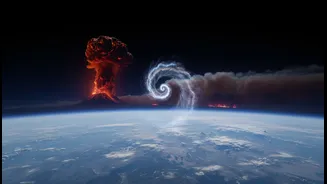
Volcanic eruptions have long been known to affect climate, primarily by injecting sunlight-reflecting sulfate aerosols that cause temporary cooling. However, scientists are now paying closer attention to the water they inject. The 2022 eruption of the Hunga Tonga-Hunga Ha'apai submarine volcano was a game-changer. Because it erupted under the ocean, it blasted an unprecedented amount of water vapor—an estimated 150 million metric tons—directly into the stratosphere, increasing the total global amount by about 10%. Unlike land-based eruptions that are often rich in cooling sulfates, this massive injection of water vapor is expected to have a net warming effect that could persist for several years, altering atmospheric chemistry and potentially harming the ozone layer.
Wildfires Join the Culprit List
More recently, science has revealed a newer, and increasingly frequent, culprit: extreme wildfires. The intense heat from megafires can generate their own storm clouds, called pyrocumulonimbus (pyroCbs). These powerful storm systems act like elevators, punching through the troposphere's ceiling and injecting a cocktail of smoke and water vapor directly into the pristine stratosphere. The 2019-2020 Australian bushfires, for instance, injected a smoke-and-water plume comparable to a moderate volcanic eruption. This process, once considered rare, is becoming more common as climate change fuels more intense and frequent wildfires, creating a concerning feedback loop.
A New Wrinkle for Climate Models
The discovery that both volcanoes and wildfires can systematically moisturize the stratosphere is forcing a rethink of climate calculations. Climate models are complex simulations that try to predict future warming, but they have historically struggled to perfectly account for these episodic injections. The water vapor has a dual effect: it directly traps heat, contributing to surface warming, and it alters atmospheric chemistry, which can affect the rate of ozone recovery. Failing to account for these events risks underestimating future warming trends and misinterpreting atmospheric changes. As one study noted, the added water vapor from past increases may have contributed an additional warming effect on top of that from other greenhouse gases.
Why This Changes Our Climate Outlook
This emerging science adds another layer of complexity to our understanding of the climate system. It highlights that natural events, which are themselves being amplified by human-induced climate change, have unexpected and powerful effects on the upper atmosphere. The increased moisture from these events doesn't just warm the planet; it can also lead to stratospheric cooling at certain altitudes and changes in circulation patterns, with knock-on effects for weather systems below. Scientists now recognize these injections as a crucial and previously overlooked driver of stratospheric variability that must be integrated into future climate projections for them to be accurate.