



Why the Renewed Focus on Vendors?
For years, passengers have voiced concerns about being overcharged, the questionable hygiene of food served on trains, and the lack of accountability from vendors. Unofficial sellers, operating without licenses, often source meals from unregulated kitchens
that do not comply with Food Safety and Standards Authority of India (FSSAI) guidelines. In response to thousands of complaints, Indian Railways and the Indian Railway Catering and Tourism Corporation (IRCTC) have launched a significant crackdown. This initiative involves regular and surprise inspections to ensure that all food service, from pantry cars to e-catering deliveries, adheres to strict standards. Recent actions have included imposing crores of rupees in fines and even terminating contracts of non-compliant caterers, signaling a serious commitment to improving the passenger experience.
How to Identify an Official Food Vendor
Distinguishing an authorized vendor from an unauthorized one is your first line of defense. Official catering staff are required to carry proper identification. Look for an IRCTC ID card, which may have a QR code for verification. They should also be equipped with a Point of Sale (POS) machine for generating bills. A key policy to remember is Indian Railways' official stance: "No Bill, The Food is Free." If a vendor cannot provide a printed bill for your purchase, you are not obligated to pay. This policy was specifically designed to curb the rampant issue of overcharging. Authorized staff often wear uniforms, and on some trains, these uniforms may even display the "no bill, free food" slogan to increase passenger awareness.
The Rise of E-Catering Scams
The crackdown isn't limited to vendors walking through coaches. IRCTC is also tackling a growing number of unauthorized e-catering websites and apps. These platforms often mimic official branding to trick passengers into placing orders. They not only pose a food safety risk but also a cybersecurity threat, as they require users to share sensitive data like PNR numbers and payment details. To stay safe, passengers are strongly advised to book meals exclusively through the official IRCTC e-Catering website, the 'Food on Track' mobile app, or via the official WhatsApp number. Legal action has already been initiated against over a dozen fraudulent e-catering operators, highlighting the scale of the problem.
Your Rights and How to Complain
As a passenger, you have the right to safe, hygienic food sold at the prescribed rate. If you encounter any issues—be it overcharging, poor quality, or a vendor refusing to provide a bill—you have several channels for redressal. The most effective tool is the 'Rail Madad' integrated grievance platform. You can lodge a complaint using the Rail Madad app, the helpline number 139, or through its web portal. When filing a complaint, it is helpful to provide your PNR number, coach and seat details, and if possible, a photograph of the issue. This system ensures your complaint is officially logged and directed to the relevant officials for action, often in real-time.
Beyond the Pantry Car
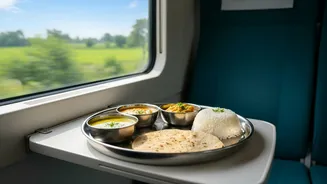
Improving food service extends beyond the train itself. IRCTC is continuously upgrading its base kitchens, which are the source of most cooked meals served on board. Many of these kitchens are now equipped with CCTV cameras to allow for real-time monitoring of food preparation and packaging processes, ensuring hygiene from the start. Furthermore, the e-catering ecosystem connects passengers with hundreds of FSSAI-approved restaurants at stations across the country, offering a wide variety of meals that can be pre-ordered and delivered directly to your seat. This integrated approach aims to create a more reliable and transparent food environment for all travelers.