
India’s Watchful Eye on the Sun
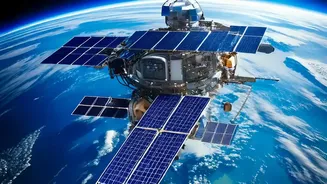
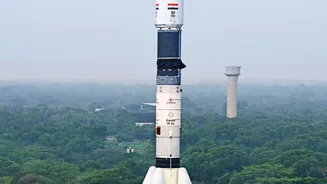
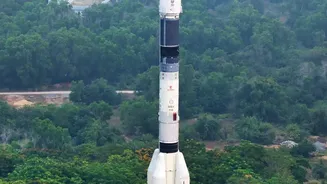
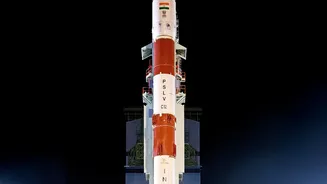
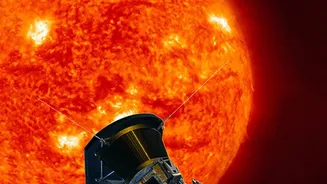
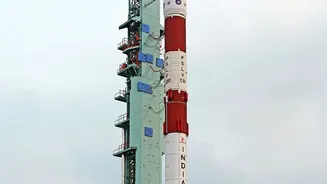
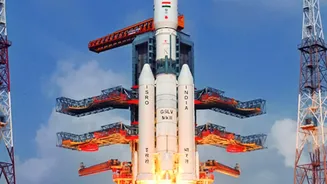
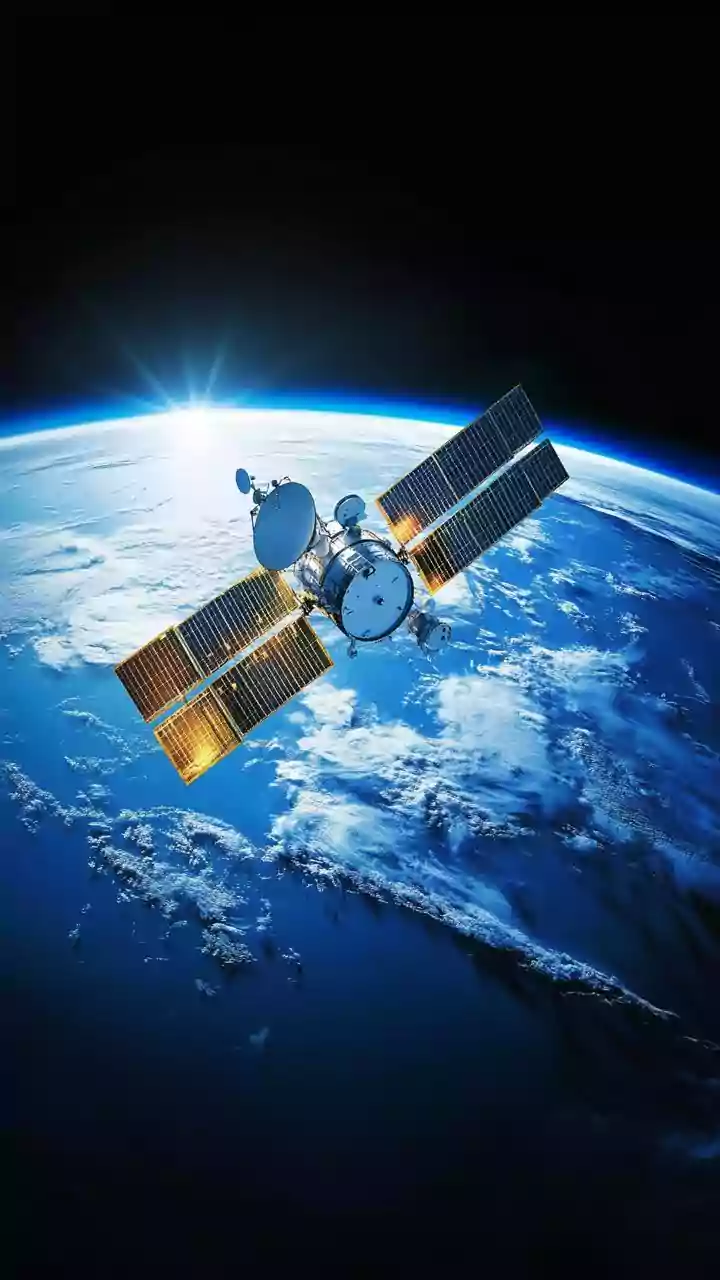
Positioned 1.5 million kilometres from Earth, the Aditya-L1 observatory is a testament to India's growing prowess in space science. Launched by ISRO, its mission is to continuously observe the Sun without any interruption. This unique vantage point at Lagrange
Point 1 (L1) allows its seven sophisticated payloads to study everything from the Sun's outer atmosphere, the corona, to the streams of charged particles it ejects across the solar system. Among the most critical of these are the instruments designed to 'taste' the solar wind itself, providing direct measurements of the space environment between the Sun and Earth. These in-situ measurements are fundamental to understanding the dynamics that drive space weather.
Decoding the Solar Wind
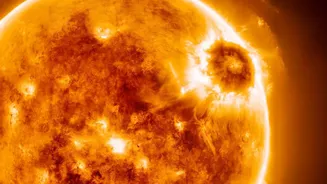
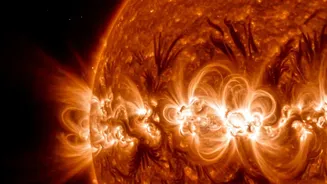
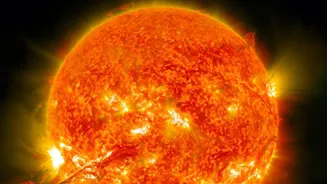
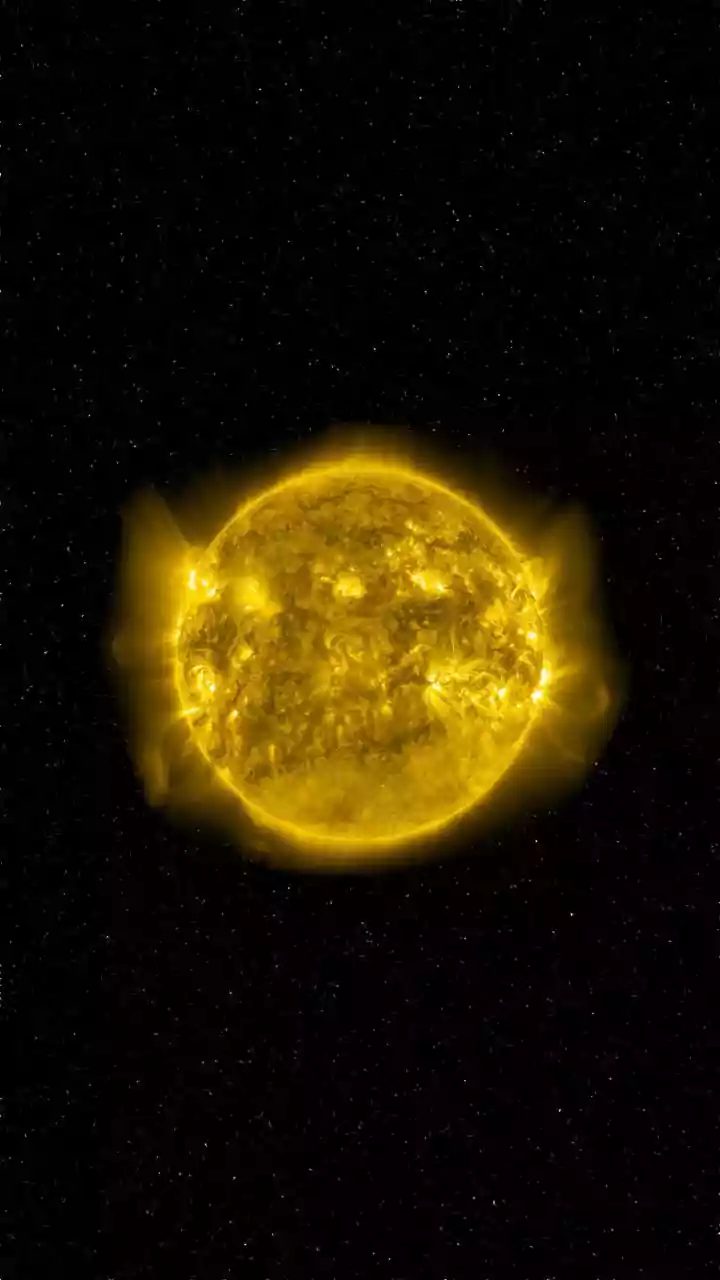
Think of the solar wind as the Sun's constant breath, a stream of plasma—mostly protons and electrons—flowing outwards in all directions. This isn't a gentle breeze; it travels at incredible speeds and comes in two main varieties: slow and fast. The slow solar wind moves at around 400 kilometres per second, while fast solar wind can reach speeds of up to 800 km/s. This fast wind typically originates from 'coronal holes,' which are cooler, less dense regions on the Sun where magnetic field lines open out into space, acting like nozzles. Understanding the properties of this wind, such as its speed, density, and temperature, is crucial because it directly interacts with Earth's magnetic field and can cause significant disturbances, collectively known as space weather.
The Plasma Detectives: PAPA and ASPEX
Two key experiments on Aditya-L1, the Plasma Analyser Package for Aditya (PAPA) and the Aditya Solar wind Particle Experiment (ASPEX), are designed to study this wind. PAPA's sensors, SWEEP and SWICAR, measure the energy, mass, and direction of incoming electrons and ions. These instruments essentially count the particles and determine their characteristics. ASPEX performs a similar role, with its SWIS (Solar Wind Ion Spectrometer) instrument also analysing ions like protons and alpha particles. Together, they provide a comprehensive picture of the solar wind's composition and behaviour in real-time. Since becoming operational, these payloads have successfully detected the impact of major solar events, like Coronal Mass Ejections (CMEs), which are massive eruptions of plasma from the Sun.
Surprising Fluctuations in the Fast Wind
One of the key observations emerging from Aditya-L1 relates to the density of these solar wind currents. While fast solar wind is generally known to be less dense than its slower counterpart, Aditya-L1's instruments have been observing significant variations. During events like the CMEs of December 2023 and February 2024, the PAPA payload detected an abrupt increase in the total count of electrons and ions. This showed that even within a fast-moving stream, the density can spike dramatically when it carries the material from a solar eruption. These findings were consistent with data from other international satellites, confirming the accuracy and effectiveness of ISRO's instruments in monitoring space weather conditions.
Why These Variations Matter
These density fluctuations are more than just a scientific curiosity. The density of the solar wind, combined with its speed, determines its dynamic pressure—the force it exerts on whatever it hits. When a high-density wave of solar wind strikes Earth's magnetic shield, the magnetosphere, it can compress it significantly. Such events can trigger geomagnetic storms, which have the potential to disrupt our technology-dependent world. They can damage satellites, interfere with GPS and communication signals, and even induce harmful electrical currents in power grids on the ground. By providing more detailed data on these density variations, Aditya-L1 helps scientists build better models for space weather forecasting. Observing changes in particle ratios, for instance, can serve as an early warning for the arrival of a CME, giving operators time to protect valuable infrastructure.