





From Confusion to Clarity
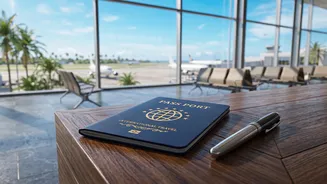
In a move designed to boost tourism, medical travel, and foreign student enrollment, the Ministry of Home Affairs has streamlined its complex visa framework. Previously, applicants navigated a maze of up to 22 main visa categories and over 60 sub-categories,
often leading to confusion and uncertainty about which one to select. This comprehensive rationalisation has consolidated the main visa types into just nine, a change that promises greater clarity and efficiency for everyone from business professionals to holidaymakers. The government's goal is to make the visa regime more compact, coherent, and responsive to the needs of foreign nationals.
A Simpler Application Process
Beyond just reducing the number of categories, the simplification extends to the application form itself. The number of fields that applicants need to fill out has been slashed by 65-70% across all sub-categories. This significant reduction in required information is expected to make the application process faster and more user-friendly. Officials state this will not only cut down the time and effort for applicants but also allow for more focused and efficient processing by visa authorities. The updated IT systems to support these changes are expected to be fully operational by the end of 2026.
Introducing the New 'Visitor Visa'
One of the most significant updates is the renaming of the 'Tourist Visa' to the more encompassing 'Visitor Visa'. This category is now split into two sub-types. The V-1 visa is for short-term stays of up to 30 days with multiple entries and covers activities like business meetings, wellness retreats, and brief medical consultations. The V-2 visa caters to longer-duration visits, with validity for one, five, or ten years, and includes all activities under V-1 plus pursuits like mountaineering. This change acknowledges that modern travel often involves a blend of leisure, wellness, and casual business that didn't fit neatly into the old 'tourist' box.
Clearer Paths for Students and Businesses
The business and student visa categories have also been reorganised for better clarity. Business Visas are now divided into B_1 for long_term ventures, like establishing a company in India, and B_2 for short_term, contract_based activities like attending conferences, participating in sporting events, or film production. Similarly, Student Visas are consolidated into S_1 for school and university education and S_2 for research scholars, PhD students, and academic exchanges. This purpose_based grouping is intended to remove ambiguity and help applicants confidently choose the correct visa for their specific needs.
The Nine Main Visa Categories
Under the new framework, all travel purposes will fall under one of these nine primary visa types: Visitor, Business, Student, Medical, Work, Diplomatic, Official, Journalist, and Miscellaneous. The Medical Visa framework, for instance, provides a default one_year, multiple_entry visa and has distinct categories for conventional (M_1) and AYUSH (M_3) systems of medicine, along with corresponding visas for medical attendants. The overarching goal of this consolidation is to create a system that is easier to navigate, supports legitimate travel, and enhances India's position as a global destination for education, healthcare, and economic engagement.