
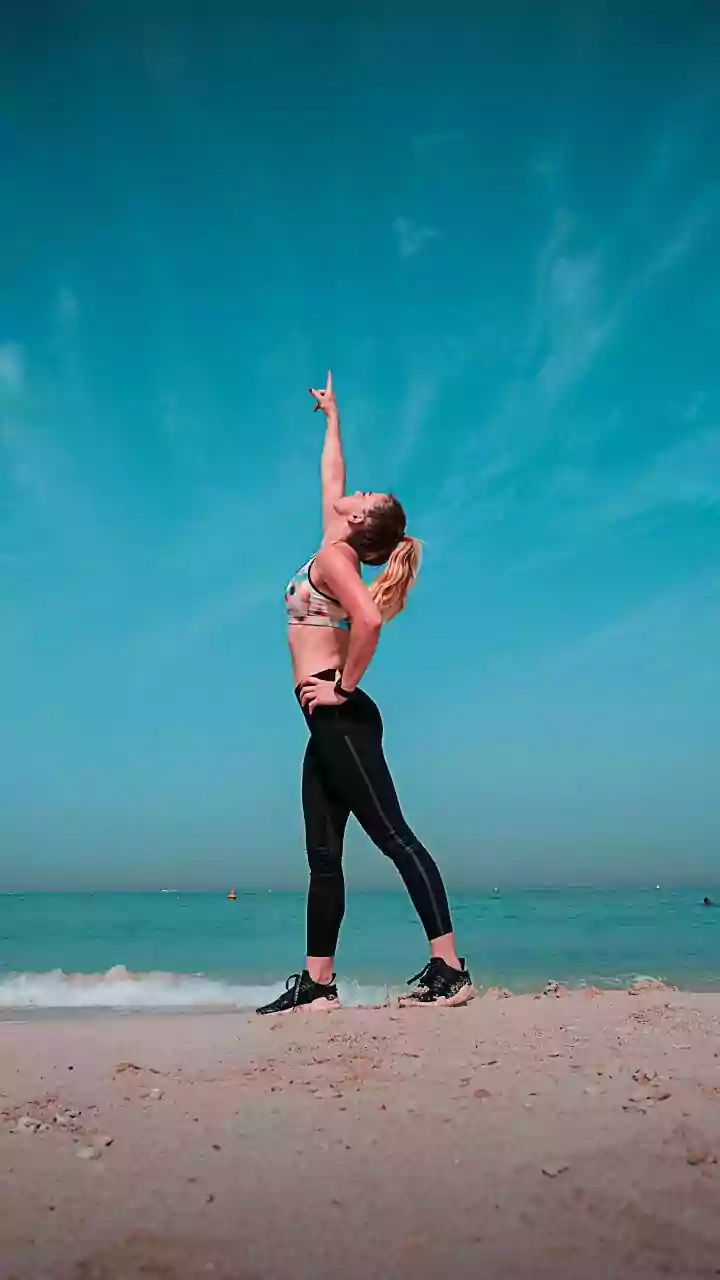

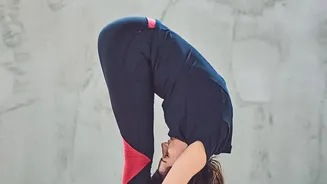

Tadasana (Mountain Pose)
It may look like just standing, but Mountain Pose is the foundation for all other poses and a masterclass in alignment. It teaches you how to stand tall, engage your muscles correctly, and find your body's natural, optimal posture. By practising Tadasana,
you build awareness of how your body should feel when properly aligned, which you can then carry into your daily life. It strengthens thighs, engages the core, and helps realign the spine. How to do it: Stand with your big toes touching and heels slightly apart. Ground down through all four corners of your feet. Engage your thigh muscles and gently draw your lower belly in and up. Roll your shoulders down and back, opening your chest. Let your arms relax by your sides with palms facing forward. Lengthen your neck and tuck your chin slightly, as if a string is pulling the crown of your head toward the ceiling. Hold for 5-10 deep breaths.
Marjaryasana-Bitilasana (Cat-Cow Pose)
This gentle, flowing sequence is excellent for warming up the spine and increasing flexibility. Cat-Cow Pose relieves tension in the neck, shoulders, and back while improving circulation to the spinal discs. The movement between arching and rounding the back helps to counteract the stiffness that comes from prolonged sitting and encourages a healthy spinal curvature. How to do it: Start on your hands and knees in a tabletop position, with wrists under shoulders and knees under hips. As you inhale (Cow), drop your belly, lift your chest and tailbone, and look forward. As you exhale (Cat), round your spine toward the ceiling, tuck your chin to your chest, and press the mat away. Continue flowing between these two poses for 5-10 breath cycles.
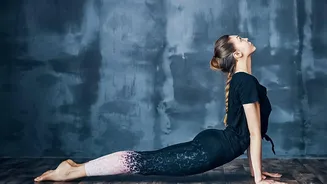
Bhujangasana (Cobra Pose)
Cobra Pose is a gentle backbend that specifically targets rounded shoulders by strengthening the back and opening the chest. It counteracts the effects of slouching by encouraging the shoulders to roll back and down while lengthening the spine. This pose strengthens the muscles that support your spine, making it easier to maintain good posture throughout the day. How to do it: Lie on your stomach with your legs extended and the tops of your feet on the mat. Place your hands under your shoulders, hugging your elbows close to your body. On an inhale, press lightly into your hands and lift your head and chest off the floor, keeping your lower ribs on the ground. Roll your shoulders back and down. Keep your neck long and avoid crunching your lower back. Hold for a few breaths, then release back down.
Adho Mukha Svanasana (Downward-Facing Dog)
A foundational pose in yoga, Downward-Facing Dog provides a full-body stretch that is fantastic for posture. It lengthens the spine, which helps decompress the vertebrae and relieve back tension. It also stretches the hamstrings and calves, which, when tight, can contribute to lower back pain. The pose strengthens the arms and shoulders, building the upper body stability needed to support an upright posture. How to do it: From a tabletop position, tuck your toes and lift your hips up and back, forming an inverted 'V' shape with your body. Press firmly into your hands, keeping your fingers spread wide. Work on straightening your legs and lowering your heels toward the mat, but keep a slight bend in your knees if your hamstrings are tight. Let your head hang freely between your upper arms. Hold for 5-10 breaths.
Salabhasana (Locust Pose)
Locust Pose is a powerful backbend that strengthens the entire back of the body, including the muscles of the spine, glutes, and legs. This is crucial for building the muscular support needed to hold the spine in proper alignment and prevent slouching. By lifting the chest against gravity, you actively work to reverse the pattern of rounded shoulders and open up the front of the body. How to do it: Lie on your belly with your arms alongside your body, palms facing down. On an inhale, lift your head, chest, arms, and legs off the floor. Keep your neck long by looking down and slightly forward. Reach back through your fingertips and toes, focusing on length rather than height to avoid compressing the lower back. Hold for 3-5 breaths, then release.