





A Sudden and Dramatic Shift
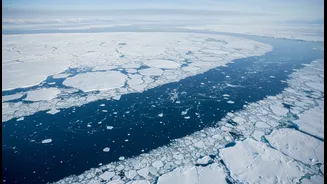
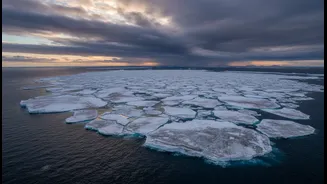
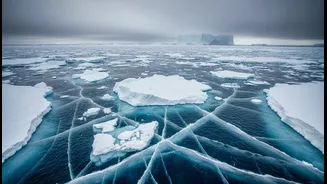
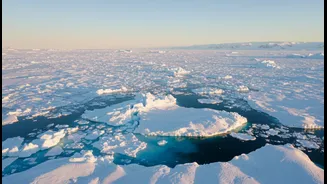
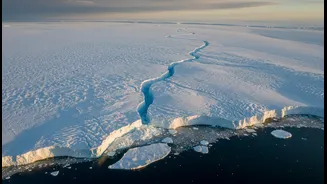
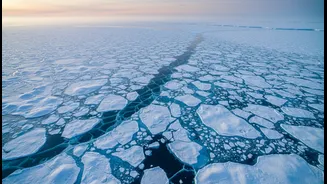
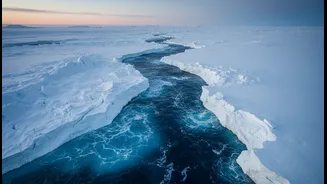
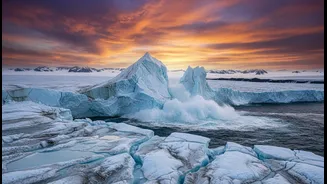
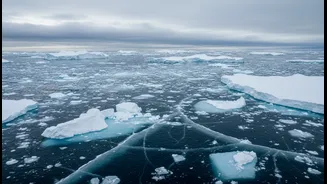
After years of relative stability and even slight expansion, Antarctic sea ice has experienced a dramatic and rapid decline since the mid-2010s. Scientists have noted that after hitting record lows in previous years, the continent is behaving like a new
system. For a long time, the frozen continent seemed to be a buffer against global warming, but researchers now worry it could be shifting to an amplifier of it. This isn't just a minor fluctuation; it represents one of the most significant and sudden climatic shifts in the modern record, with an area of missing ice at times larger than Western Europe. While there was a slight rebound in the 2026 summer minimum, the overall trend remains significantly below the long-term average, keeping scientists on high alert.
The Engine of Global Climate
To understand the global risk, it helps to think of the Southern Ocean as a vital engine for the entire planet. It drives a massive system of currents often called the global ocean 'conveyor belt'. This circulation is powered by the formation of incredibly dense, salty, and cold water that sinks to the ocean floor and spreads northward. This process transports heat, carbon, and essential nutrients around the world, regulating climate patterns far and wide. But as ice melts, it releases vast amounts of freshwater into the ocean. This less dense freshwater disrupts the sinking process, effectively throwing a wrench into the gears of the world's climate engine.
A Predicted 20% Slowdown
The consequences of this disruption are profound. Recent research and advanced modeling suggest that this influx of freshwater from melting Antarctic ice could slow down the planet's strongest ocean current, the Antarctic Circumpolar Current, by as much as 20% by the year 2050. This slowdown is not a distant, abstract possibility; it's a projected change within the next few decades. A weaker current is less effective at storing excess heat and carbon from the atmosphere, which could accelerate global warming. It creates a dangerous feedback loop: as the current weakens, more warm water can penetrate south, leading to more ice melt, which in turn weakens the current further.
From Pole to Equator: The Impact on India
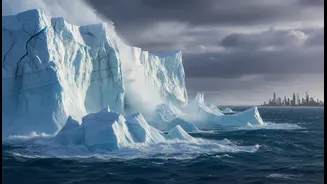
What happens in the frigid waters of Antarctica has tangible consequences for India. The global ocean conveyor belt is deeply interconnected with atmospheric patterns that influence weather worldwide. Changes in polar climates are known to affect the variability of the Indian monsoon. While most recent direct research has linked Arctic ice melt to monsoon patterns, the fundamental principle remains: large-scale disruption of polar systems can alter atmospheric waves and temperature gradients that are critical for the monsoon's stability. A slowdown in the global overturning circulation could eventually alter the heat and moisture transport that underpins India's life-giving rains. Furthermore, accelerated melting of Antarctic ice sheets directly contributes to global sea-level rise, posing a direct threat to India's vast and densely populated coastline, including major cities like Mumbai and Kolkata.
An Uncertain Future
Scientists are working to understand the full implications of this new phase for Antarctica. The dramatic shift was reportedly triggered by a combination of stronger winds stirring up warmer ocean layers and feedback loops from the initial melting. As the bright, white ice disappears, the darker ocean absorbs more sunlight and heat, further preventing new ice from forming. While researchers are cautious to declare that the continent has passed a definitive tipping point, the system is now described as being 'completely out of whack'. The key question is whether this is a temporary state or the beginning of a long-term, irreversible change that will reshape our climate for centuries to come.