







A Match Made in Dessert Heaven
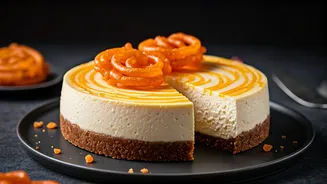
Imagine a classic, velvety cheesecake. Now, picture it studded with or sitting atop a base made from crushed biscuits and, in some variations, crushed jalebi bits. The real magic, however, happens on top: glistening, golden rings of freshly made jalebi,
often drizzled with their signature sugar syrup, creating a stunning visual and textural contrast. The first bite is a revelation. The cool, tangy smoothness of the cream cheese filling perfectly cuts through the intense, sugary sweetness of the jalebi. You get the soft crumble of the base, the rich body of the cheesecake, and the delightful crispy-chewy-syrupy explosion of the jalebi. It’s a dessert that engages all your senses, delivering both novelty and a surprising sense of familiarity.
From Niche Creation to Viral Sensation
While fusion desserts aren't new, the rise of Jalebi Cheesecake feels different. It wasn’t born from a single five-star kitchen and trickled down; rather, it blossomed organically across social media platforms. Food bloggers, home bakers, and progressive cafes began posting their stunning creations, and the internet took notice. Its photogenic nature—the vibrant orange of the jalebi against the stark white of the cheesecake—made it an instant Instagram star. Soon, it wasn't just a hashtag; it was on the menu. From trendy bistros in Mumbai and Delhi to artisanal bakeries in Bengaluru and wedding caterers across the country, Jalebi Cheesecake has cemented its place as a must-try item. It has successfully crossed the threshold from a quirky experiment to a legitimate dessert obsession.
The Genius of the Combination
So, why does this particular pairing work so well? It’s a masterclass in balancing flavours and textures. Traditional Indian sweets, or mithai, are often criticised for being one-dimensionally sweet. The jalebi is a prime example—it’s delicious, but intensely sugary. Cheesecake, on the other hand, derives its richness from fat and its character from the subtle tartness of cream cheese. This tanginess acts as a perfect counterpoint, cleansing the palate and preventing the sweetness from becoming overwhelming. Furthermore, the textural interplay is brilliant. Cheesecake is defined by its uniform creaminess. The jalebi introduces a complex texture that is simultaneously crispy on the outside, chewy on the inside, and dripping with syrup. Many chefs enhance this further by infusing the cheesecake itself with classic Indian flavours like saffron, cardamom, or rose water, bridging the two worlds even more seamlessly.
The New Wave of Indian Desserts
Jalebi Cheesecake isn't an isolated phenomenon. It’s the poster child for a broader, more confident movement in modern Indian cuisine. Chefs and home cooks are no longer content with just serving traditional mithai in a traditional way. They are deconstructing and reimagining them, infusing them with global techniques and formats. This creative wave has given us other incredible hybrids like Gulab Jamun Cheesecake, Motichoor Ladoo Parfaits, Rasmalai Tiramisu, and Kaju Katli Tarts. It reflects a new culinary identity—one that deeply respects its roots but isn't afraid to innovate. It’s a way of making Indian flavours accessible to a new generation and a global palate, presenting them in a format that feels both exciting and contemporary.
Where to Find Your Fix
Ten years ago, finding a Jalebi Cheesecake would have been nearly impossible. Today, you’re spoilt for choice. It’s a staple at modern Indian restaurants that pride themselves on culinary innovation. You’ll find it in glass jars at trendy cafes, as whole cakes in boutique bakeries, and even as a show-stopping dessert on modern wedding menus. The rise of home bakers, especially since 2020, has also made it more accessible than ever, with countless entrepreneurs offering their own unique versions for local delivery. If you haven't seen it on a menu near you yet, chances are you will soon. It's a trend that has proven its staying power, moving from a novelty to a beloved fixture in India's evolving dessert landscape.