




An Invisible Threat in a Sealed Environment
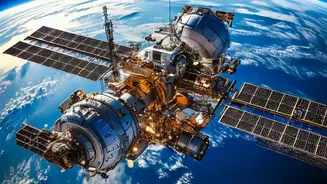
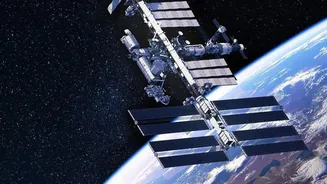
On Earth, our planet's vast ecosystem naturally cleans the air. In the confined environment of a spacecraft like the International Space Station (ISS), there's nowhere for pollutants to go. These toxic compounds come from two main sources: the crew and
the equipment. Humans naturally release carbon dioxide (CO2) when they breathe, as well as trace amounts of ammonia from sweat and methane. At high concentrations, even CO2 can cause symptoms from drowsiness to unconsciousness. Beyond that, hundreds of other volatile organic compounds (VOCs) are a constant concern. These are released through a process called 'off-gassing' from plastics, electronics, fabrics, and even personal items brought aboard by astronauts. These can include everything from formaldehyde and benzene to n-butanol and ethyl acetate, chemicals that could pose significant health risks over long-duration missions.
The First Line of Defence: Scrubbing and Filtering
The primary job of the Environmental Control and Life Support System (ECLSS) is to manage the air. The most abundant and immediate threat is carbon dioxide. On the ISS, systems like the US Carbon Dioxide Removal Assembly (CDRA) and the Russian Vozdukh system work tirelessly to pull CO2 from the air. The CDRA uses beds of tiny, porous zeolite crystals, known as molecular sieves, which trap CO2 molecules while letting oxygen and nitrogen pass through. For other particles and aerosols, the station relies on a network of High-Efficiency Particulate Air (HEPA) filters. In fact, the HEPA filters used on the ISS have been found to be even more efficient than standard terrestrial versions. These systems form the foundation of air quality control, handling the biggest and most obvious airborne threats.
Advanced Tech for Trace Contaminants
Removing the more complex and varied VOCs requires a more advanced approach. This is the job of the Trace Contaminant Control System (TCCS). This sophisticated piece of equipment uses a multi-stage process. First, air passes through a bed of activated charcoal, which is highly effective at absorbing a wide range of organic molecules, a process known as physical adsorption. But some compounds, like carbon monoxide and formaldehyde, are not easily trapped by charcoal. For these, the TCCS employs a high-temperature catalytic oxidizer. Air is heated to several hundred degrees and passed over a catalyst, which triggers a chemical reaction that breaks the toxic compounds down into harmless substances like water and carbon dioxide. This one-two punch of absorption and oxidation is critical for keeping the cocktail of trace chemicals at safe levels.
The Next Generation: Regenerative Systems and Photocatalysis
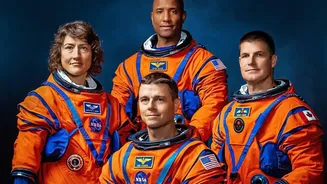
For missions to the Moon and Mars, resupplying filters and components from Earth won't be an option. This is driving the development of fully regenerative, or 'closed-loop,' systems. The Advanced Closed Loop System (ACLS) on the ISS is a major step in this direction. It not only captures CO2 but also uses a Sabatier reactor to combine it with hydrogen (a byproduct of oxygen generation) to create water, which can then be used to create more breathable oxygen. Looking further ahead, NASA and other agencies are investing in photocatalytic oxidation (PCO). This technology uses ultraviolet (UV) light to energize a catalyst, often titanium dioxide, which then releases reactive molecules that destroy pollutants at a molecular level, converting them into CO2 and water without extreme heat. This method is extremely effective against a very wide range of contaminants and could lead to smaller, more efficient, and more reliable air purifiers for the next generation of explorers.