


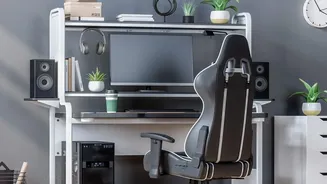

Why Your Desk Is a Pain in the Neck
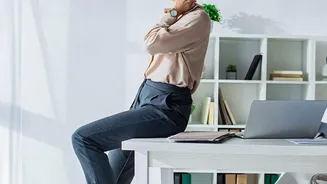
Spending long hours hunched over a computer or looking down at a screen often leads to what's known as 'tech neck'. This forward-head posture puts strain on the muscles in your neck, upper back, and shoulders as they work overtime to support your head.
Over time, this can cause muscle stiffness, tension headaches, and chronic pain. When muscles are held in one position for too long, they can become stiff and tight. This is why incorporating small, regular movements throughout your day is so effective. It increases blood flow, enhances flexibility, and can prevent the discomfort that builds up from prolonged sitting.
The Gentle Neck Tilt
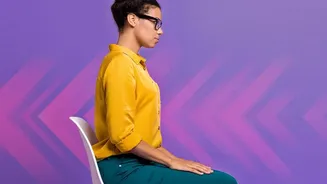
This is one of the simplest and most effective stretches for immediate relief. Sit tall in your chair with your feet flat on the floor and your shoulders relaxed away from your ears. Gently lower your right ear toward your right shoulder. You should feel a light stretch along the left side of your neck. To deepen the stretch, you can place your right hand on your head and apply very light pressure, but never force the movement. Hold for 15-30 seconds, breathing deeply. Slowly return your head to the center and repeat on the left side.
The Corrective Chin Tuck
The chin tuck is a powerful move for counteracting forward-head posture. Sit upright and look straight ahead. Gently draw your chin and head backward as if you are trying to make a double chin. You should feel a stretch at the back of your neck. Be careful not to tilt your head up or down; the movement is a straight glide backward. Hold this position for 5 seconds before releasing. Repeat the movement 5 to 10 times. This exercise helps strengthen the muscles that are responsible for maintaining proper head alignment.
Seated Cat-Cow for Spinal Mobility
Neck pain is often connected to a stiff spine. The seated cat-cow brings gentle movement to your back, which helps release tension all the way up to your neck. Sit at the edge of your chair with your hands on your knees. On an inhale, gently arch your spine, lift your chest, and look forward or slightly up, opening the front of your body (Cow pose). On an exhale, round your spine, tuck your chin toward your chest, and draw your navel in (Cat pose). Flow between these two poses for 8-10 breaths, letting your breath guide the movement.
Shoulder Shrugs and Rolls
We often hold tension in the trapezius muscles, which span from the neck to the shoulders. Releasing them can provide instant relief. On an inhale, slowly raise your shoulders up toward your ears, feeling the contraction. Hold for a moment, then exhale and let them drop down completely. Repeat this a few times. Follow up with shoulder rolls: lift your shoulders toward your ears and roll them backward in a circular motion for five repetitions, then reverse the direction and roll them forward.
Seated Spinal Twist
A gentle twist can help relieve tension in both the back and shoulders. Sit tall and turn your upper body to the left. You can use your right hand on the outside of your left knee and your left hand on the back or arm of the chair to gently deepen the twist. As you exhale, turn your head to look over your left shoulder. Hold for about 15 seconds, making sure to keep your spine long. Return to the center and repeat on the other side. This movement helps improve rotational mobility and eases stiffness.