

The Magic of Rolling: More Space, Fewer Wrinkles
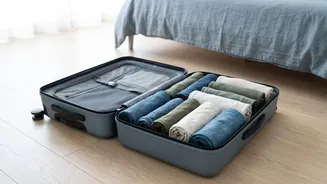
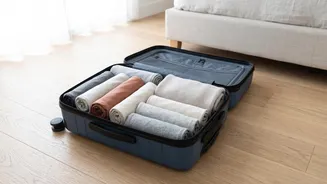
The core principle of efficient carry-on packing is simple: roll, don’t fold. While folding creates rectangular shapes that lead to wasted gaps and uneven layers in your suitcase, rolling compresses your clothes into tight, compact cylinders. This technique
dramatically reduces the space each garment occupies, allowing you to fit more into your bag. Many seasoned travellers swear by rolling because it helps maximise every inch of precious carry-on real estate. An added bonus is wrinkle prevention. For casual clothes made of lighter fabrics like cotton or polyester, rolling avoids the hard creases that folding can create, meaning your clothes are more likely to be ready to wear upon arrival.
The Basic Roll: Your Go-To Technique
The basic roll works perfectly for most of your casual items like t-shirts, tops, and pyjamas. Start by laying the garment flat on a surface. For a t-shirt or top, fold the sleeves inward to create a neat rectangle. Then, starting from the bottom hem, roll the fabric as tightly and evenly as you can until you reach the collar. You’ll be left with a small, dense log that can be easily slotted into your bag. For trousers or jeans, fold them in half vertically, leg on top of leg. Then, simply roll tightly from the cuff all the way up to the waistband.
Mastering the Ranger Roll for a Secure Pack
For an even more compact and secure bundle, the Ranger Roll, also known as the Army Roll, is a game-changer. This military-style technique creates a self-contained roll that won’t unravel in your bag. To roll a t-shirt this way, start by folding the bottom hem inside-out to create a cuff of a few inches. Next, fold the left and right sides of the shirt towards the centre to form a narrow rectangle. Then, starting from the collar, roll the shirt down tightly towards the cuff you created. Once you reach the bottom, take the inside-out cuff and wrap it back over the roll, locking it in place. This method creates an incredibly tight bundle that further maximizes space and organisation.
When to Fold: The Exceptions to the Rule
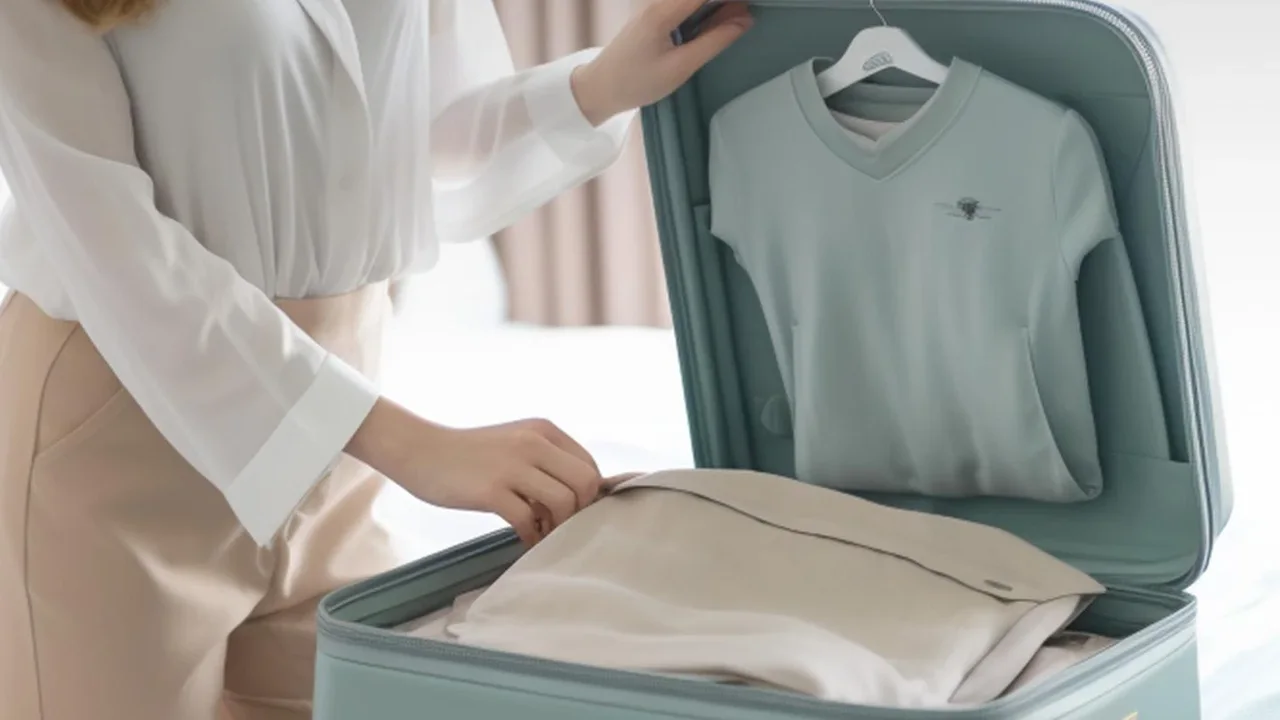
While rolling is superior for most items, there are exceptions. Bulky items like thick sweaters or hoodies can sometimes become awkward, space-hogging logs when rolled. For these, a neat, flat fold might be a better option. Similarly, structured garments like blazers, formal trousers, or dress shirts often travel best when carefully folded to preserve their shape and sharp lines. The best strategy is often a hybrid approach: roll your flexible, casual clothing and carefully fold the structured, bulky, or easily creased items, laying them on top of your rolled garments.
A Blueprint for Your Four-Day Carry-On
So, what does this look like for a four-day trip? Start with a versatile base of neutral colours. A sample list might include: four tops, one pair of jeans or versatile trousers, one additional bottom (like a skirt or shorts), one light jacket or cardigan, and one smarter outfit for an evening out. Add four sets of underwear and socks. Wear your bulkiest shoes and jacket on the plane to save space in your bag. Roll all your tops, underwear, socks, and casual bottoms. Fold your jacket and smarter outfit. Use packing cubes to categorise your rolled items—one for tops, one for bottoms and underwear—for ultimate organisation. This system makes it easy to see everything at a glance and pull out exactly what you need without disturbing the rest of your perfectly packed bag.