


A New Window on the Cosmos
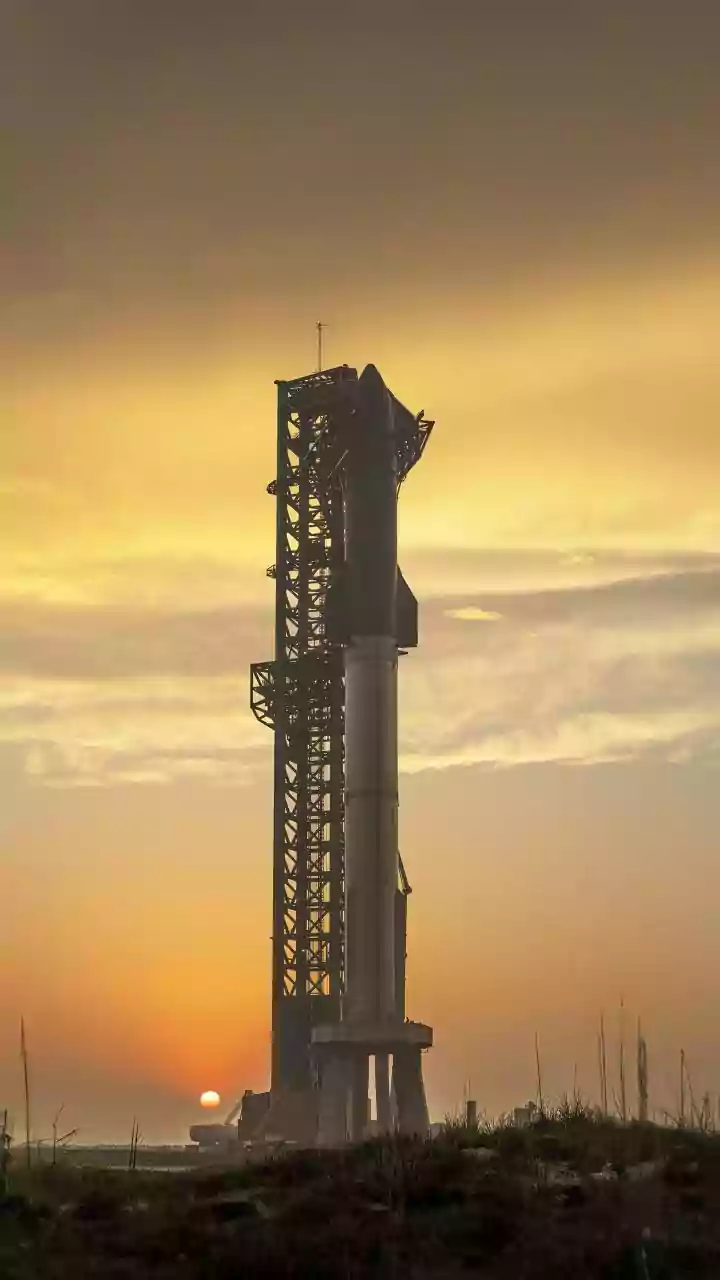
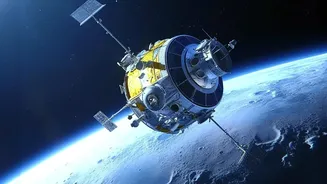
Set to launch aboard a SpaceX Falcon Heavy rocket on August 30, 2026, the Nancy Grace Roman Space Telescope is NASA's next flagship mission, on par with legends like the Hubble and James Webb Space Telescopes. Named after Nancy Grace Roman, NASA's first
chief of astronomy and the 'mother of Hubble', this observatory represents a new generation of cosmic exploration. Its primary mirror is the same size as Hubble's at 2.4 meters, but its capabilities are vastly different. After launch, it will travel to a stable orbit 1.5 million kilometres from Earth, a location it will share with the James Webb Space Telescope. The construction of the telescope was completed in late 2025, and it arrived at the Kennedy Space Center in June 2026, ready for its journey.
The Power of a Wider View
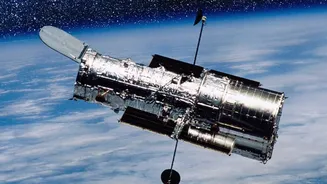
The key to Roman's revolutionary potential lies in its name's predecessor: the Wide-Field Infrared Survey Telescope (WFIRST). Its primary tool, the Wide Field Instrument (WFI), is a 300-megapixel camera that will capture images of the sky with the same sharp resolution as Hubble but with a field of view at least 100 times larger. This is the difference between looking at the sky through a narrow tube and seeing a grand, panoramic vista. Where Hubble created its iconic deep fields by painstakingly stitching together hundreds of observations, Roman could cover a similar area in just a couple of shots. This incredible efficiency means Roman will survey the sky between 100 and 1,500 times faster than Hubble, mapping more than 50 times the sky in its first five years than Hubble did in thirty.
Hunting for Cosmic Mysteries
With this powerful vision, Roman will tackle two of the biggest puzzles in modern astronomy: dark energy and exoplanets. Scientists believe a mysterious force called dark energy is causing the universe's expansion to accelerate, but they don't know what it is. Roman will conduct massive surveys, observing over a billion galaxies and thousands of exploding stars called supernovae. By creating a vast 3D map of the cosmos, it will trace how the universe's expansion has changed over time, giving us the most precise look yet at dark energy's effects. These same surveys will also allow scientists to map the distribution of dark matter, the invisible substance that structures galaxies, by studying how its gravity warps the light from distant objects.
A Census of Alien Worlds
While missions like Kepler have found thousands of planets, they are best at finding large planets close to their stars. Roman will pioneer a different technique called gravitational microlensing. This method can detect planets with masses as small as Mars, planets far from their stars, and even 'rogue' planets that wander through the galaxy without a parent star. A microlensing event happens when a star and its planet drift in front of a more distant star, and their combined gravity acts like a natural magnifying glass, briefly brightening the background star's light. Roman is expected to discover thousands of new exoplanets this way, creating a much more complete census of the worlds in our galaxy. Additionally, its Coronagraph Instrument will be a technology demonstrator, capable of directly imaging large planets by blocking their star's glare, a technique vital for future missions seeking habitable worlds.
When Can We See Its First Light?
Following its launch in August 2026, the Roman Space Telescope will undergo a 90-day commissioning phase to check out its systems. If all goes to plan, it will begin its primary five-year science mission at the beginning of 2027. Beyond its core goals of studying dark energy and exoplanets, Roman will also provide a wealth of data for all areas of astrophysics. It will study supermassive black holes, the stellar nurseries where stars are born, and even objects within our own solar system. The huge, high-resolution panoramas it produces will be a treasure trove for astronomers for decades to come, offering a spectacular new map of the cosmos and our place within it.