




The Age of the 'Forever' Vegetable
For a few decades, the Indian kitchen seemed to be drifting towards uniformity. Supermarket aisles, brightly lit and air-conditioned, offered a tempting promise: your favourite vegetables, available all year round. Perfectly round red tomatoes in December,
crisp capsicums in May, and cauliflower on the hottest summer days. This convenience came at a cost. We slowly forgot the distinct pleasure of waiting for winter carrots or the monsoon's bounty of fresh greens. The push for high-yield, durable crops meant that a vast, diverse library of regional and seasonal produce was pushed to the margins. These 'supermarket-friendly' vegetables were often bred for transportability and shelf life, not for flavour or peak nutritional value. The result was a monotonous diet, disconnected from the natural rhythms of our land.
A Return to the Roots
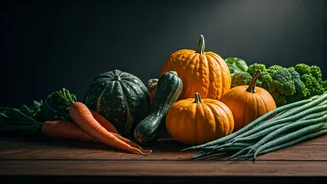
So, what’s driving this comeback? It's a powerful convergence of factors. Firstly, there's a growing health consciousness. Consumers and nutritionists alike are championing the idea that foods eaten in their natural season are more nutrient-dense. A winter carrot, for example, is packed with beta-carotene developed to withstand the cold. Secondly, there’s the undeniable factor of taste. A tomato ripened on the vine in its proper season has a sweetness and complexity that a cold-storage version simply cannot match. People are realising that what they thought was blandness was actually just a consequence of eating out of season. Finally, there's a rising awareness of sustainability. Supporting local, seasonal produce reduces food miles, lowers carbon footprints, and supports small-scale farmers who are the custodians of our agricultural biodiversity.
Stars of the Seasonal Show
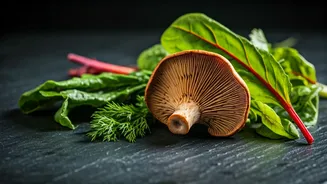
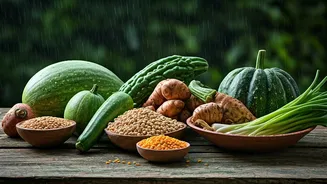
This movement is reintroducing us to some incredible, often-overlooked heroes of the Indian thali. Think of the humble moringa (drumstick), once a backyard staple, now celebrated as a superfood for its leaves and pods. Or consider the variety of gourds that appear with the monsoon – from the tender tinda (apple gourd) to the versatile parwal (pointed gourd), each offering a unique texture and flavour profile. We're also seeing a revival of indigenous greens like amaranth leaves (chaulai saag) and Malabar spinach (poi saag), which are not only delicious but also incredibly resilient and packed with micronutrients. These vegetables are not new; they are ancient. Their comeback is a rediscovery of the wisdom embedded in our grandmothers' kitchens, where menus were dictated by the calendar and the local farmer's harvest.
From the Farm to Your Fork
This comeback wouldn't be possible without a shift in how we buy our food. The rise of farmers' markets in cities like Mumbai, Delhi, and Bengaluru has been a game-changer. These markets create a direct link between the consumer and the grower, allowing farmers to sell a wider variety of produce that might not meet the cosmetic standards of large supermarket chains. Alongside this, numerous farm-to-table delivery services have emerged, offering curated boxes of seasonal, often organic, produce. This new ecosystem bypasses the long, complex supply chains of industrial agriculture, ensuring that the food on your plate is fresher, tastier, and that the farmer receives a fairer price for their hard work and expertise in growing these unique varieties.
How to Join the Seasonal Movement
Embracing this trend is simpler than it sounds. Start by being curious. The next time you visit your local sabzi mandi, ask the vendor what's fresh and in season. Look for vegetables you don't recognise and ask how to cook them. You might be surprised by the stories and recipes you'll hear. If you have access to a farmers' market, make it a weekend ritual. Talk to the farmers. Their passion is infectious, and they are the best guides to what's at its peak. Finally, be flexible with your cooking. Instead of starting with a fixed recipe, start with a beautiful bunch of seasonal greens or a unique local squash and build your meal around it. It's a more intuitive and ultimately more rewarding way to cook and eat.