






The Numbers Tell a Story
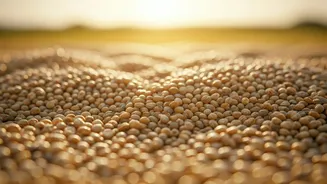
The early days of the Kharif 2026 sowing season are painting a compelling picture. Despite a delayed monsoon in some areas, the acreage for coarse cereals, especially millets, is showing significant growth. [14] According to data from the Ministry of Agriculture
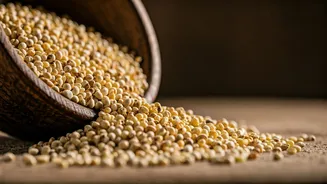
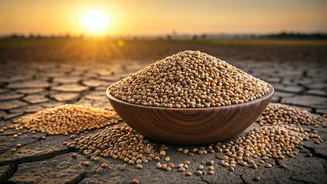
& Farmers Welfare as of June 19, 2026, the total area under Shri Anna (millets) and coarse cereals reached 12.43 lakh hectares, a substantial increase from 9.82 lakh hectares during the same period last year. [14] The standout performer is Bajra (pearl millet), with its acreage surging to 4.05 lakh hectares compared to 2.14 lakh hectares in the previous year. [14] This comes even as overall Kharif sowing has seen a mixed pattern, with crops like cotton seeing a sharp decline. [14] While these are early trends dependent on the monsoon's progress, they signal a decisive tilt towards climate-resilient crops. [3, 4]
A Major Government Push
This shift isn't happening in a vacuum. It is strongly supported by a multi-pronged government strategy that has gained momentum since the International Year of Millets in 2023. [2, 8] The government has been actively promoting millets through various schemes like the National Food Security Mission (NFSM) and the Rashtriya Krishi Vikas Yojana (RKVY). [10] In early 2026, the Ministry of Agriculture unveiled a comprehensive Millet Export Promotion Plan to brand India as a leading global supplier. [2] Furthermore, the Production Linked Incentive Scheme for the Food Processing Industry (PLISFPI) has a dedicated component worth Rs. 800 crores for millet-based products, encouraging value addition and market creation. [7] This policy framework provides farmers with the confidence that there will be guaranteed demand, moving millets from the fringes to the mainstream. [8]
The Climate-Smart Calculation
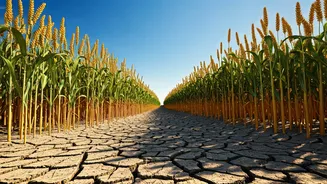
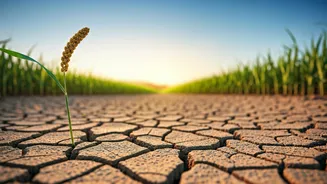
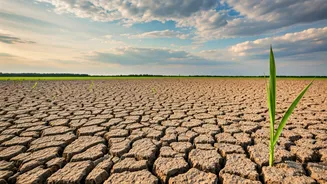
For farmers on the ground, the decision is increasingly a pragmatic one rooted in climate reality and economics. Millets are famously hardy, requiring significantly less water than crops like rice and sugarcane. [5] For instance, Foxtail millet needs 70% less water than rice. [20] In a year marked by concerns over a potential El Niño and erratic rainfall, this resilience is a massive advantage. [3, 13] Many farmers are turning away from water-guzzling and input-heavy crops like cotton, which have also been hit by pest attacks, making them economically risky. [12] Millets, by contrast, offer a lower-risk, lower-input alternative that thrives in the very conditions where other crops fail, making them a smart choice for ensuring food security and farmer incomes in a changing climate. [5, 12]
From Farm to Urban Fork
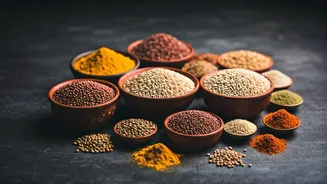
The revival is also being fuelled by a pull from the consumer end. A growing health consciousness among urban Indians has transformed millets from a 'poor man's grain' into a 'superfood'. [5, 16] Rich in protein, fibre, and essential minerals like calcium and iron, millets like Ragi and Jowar are now staples in health-food aisles and modern kitchens. [20] This demand is being met by a burgeoning market of ready-to-eat and value-added millet products, from breakfast cereals to bakery items. [10] The government's focus on including millets in the Public Distribution System (PDS) and mid-day meal schemes further strengthens this demand loop, ensuring a steady market that benefits both farmers and consumers. [8, 10]
Hurdles on the Horizon
Despite the positive momentum, the path to a full-fledged millet revolution is not without its challenges. One of the biggest hurdles is the gap in procurement. While the government sets a Minimum Support Price (MSP) for millets like Bajra and Jowar, the actual procurement is negligible compared to the massive quantities of rice and wheat that are bought. [19] This means farmers are often subject to market price volatility. [12, 18] Additionally, there are challenges related to the availability of high-yielding variety seeds, a shortage of labour during peak season, and inadequate processing and storage infrastructure. [5, 9] For the shift to be truly sustainable, these supply chain and market linkage issues must be addressed to ensure that the farmer's hard work translates into consistent and profitable returns.