






Starting a fitness journey at home is convenient, but knowing where to begin can feel overwhelming. This guide will show you how to adapt foundational bodyweight exercises to match your current ability, helping you build strength and confidence safely.
The Secret: Master Modification
The key to building a lasting fitness habit isn't forcing yourself to do exercises that feel impossible; it's about making them work for you. Instead of an all-or-nothing approach, focus on modifying movements to suit your current strength level. The two easiest ways to do this are by changing the incline and reducing the range of motion. By performing an exercise like a push-up against a wall instead of the floor, you reduce the amount of body weight you have to lift. Similarly, performing a partial squat instead of a full one allows your muscles to adapt without excessive strain. This principle of progression empowers you to start safely and get stronger with every workout.
The Push-Up: From the Wall to the Floor
The push-up is a powerhouse for upper-body strength, working the chest, shoulders, and triceps. But many beginners struggle with the floor version. The solution is to start vertically and work your way down. Begin with wall push-ups: stand facing a wall, place your hands on it, and perform the push-up motion. As you get stronger, move to an incline push-up by placing your hands on a sturdy table or the arm of a sofa. The lower the incline, the more challenging the exercise becomes. From there, you can progress to push-ups on your knees before eventually tackling a full push-up on your toes. This gradual approach builds strength systematically and protects your shoulders.
The Squat: Building a Solid Foundation
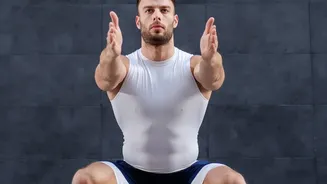
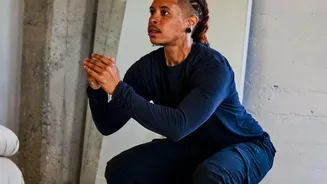
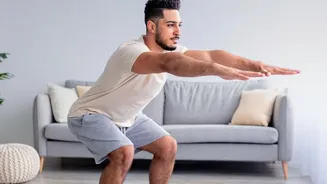
Squats are a fundamental movement for lower-body strength and are incredibly functional, mimicking the motion of sitting and standing. To master the form, start with chair squats. Stand in front of a sturdy chair, lower yourself until you are seated, and then stand back up, focusing on control. This teaches the proper hip-hinge movement. Once you feel comfortable, remove the chair and perform squats with a limited range of motion, going down only as far as you can with good form. You can hold onto a wall or doorframe for balance. As your strength and mobility improve, work on increasing your depth until you can comfortably lower your hips to knee level or below.
The Plank: Developing a Strong Core
A strong core is the foundation of almost every movement, and planks are one of the safest and most effective ways to build it. If holding a standard plank on your elbows and toes is too difficult, start with a modified version on your knees. Focus on keeping a straight line from your head to your knees, engaging your abdominal muscles. Begin by holding this position for 15-20 seconds with good form. As you build endurance, you can progress to a standard plank on your toes, gradually increasing the duration of your hold. The goal is to maintain a stable, straight body without letting your hips sag or rise too high.
The Lunge: Improving Balance and Strength
Lunges are excellent for targeting each leg individually, which helps improve balance and address strength imbalances. However, the standard lunge can feel wobbly for beginners. Start by performing static or stationary lunges, where you get into the lunge position and move up and down without stepping. For extra stability, hold onto a wall or the back of a chair. Another great modification is the reverse lunge, where you step backward instead of forward. This variation is often easier to control and puts less stress on the knee. Focus on slow, controlled movements to build both strength and stability.