




A Trailblazer in a Unique Orbit
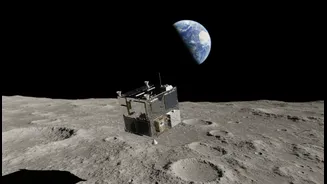
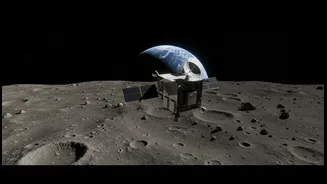
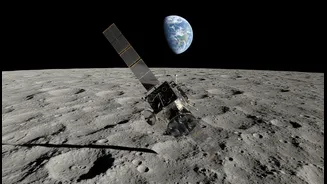
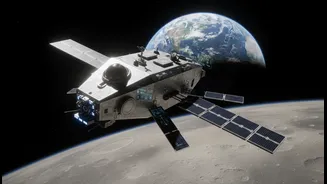
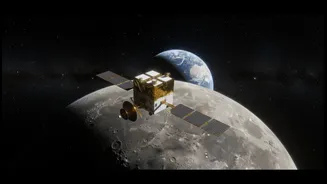
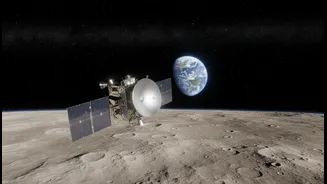
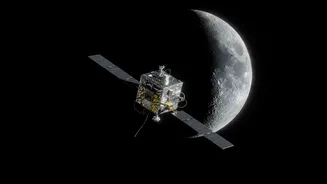
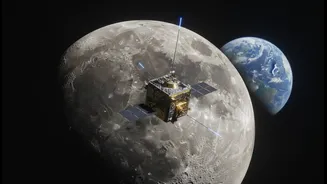
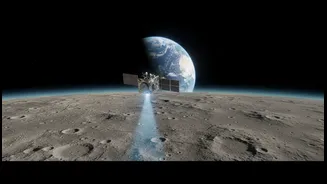
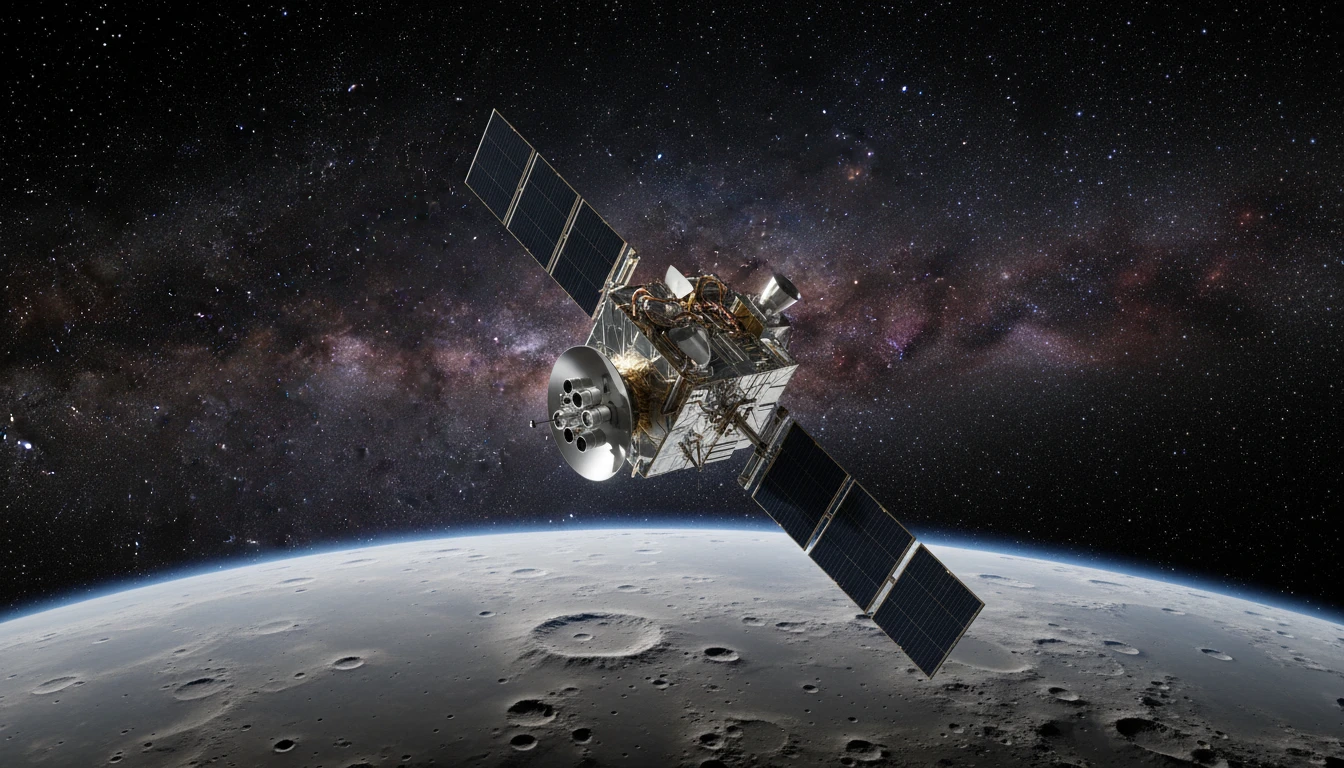
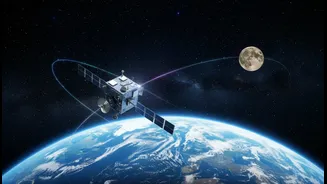
Launched in June 2022, the Cislunar Autonomous Positioning System Technology Operations and Navigation Experiment, or CAPSTONE, is a small satellite with a big job. Weighing only 55 pounds, the microwave oven-sized CubeSat was sent on a pathfinder mission
for NASA's Artemis program. Its primary goal was to test a special, highly elliptical path around the Moon called a Near-Rectilinear Halo Orbit (NRHO). This specific orbit is a gravitational sweet spot, balanced between the pull of the Earth and the Moon, which allows a spacecraft to stay in a stable, fuel-efficient path. CAPSTONE became the first spacecraft to ever successfully operate in this orbit, proving its viability for the future Gateway lunar space station.
Breaking Free from Earth's Control
For decades, navigating in deep space has meant a constant conversation with Earth. Spacecraft rely on NASA's Deep Space Network (DSN), a global system of large radio antennas, to determine their precise location. This method is reliable but has limitations. It creates a bottleneck, as a growing number of missions must compete for limited DSN time. For a future with constant traffic to and from the Moon—including crewed missions, robotic landers, and commercial cargo—relying solely on ground control is not sustainable. A sustained lunar presence requires spacecraft that can figure out where they are on their own, a capability known as autonomous navigation.
A 'GPS' System for the Moon
This is where CAPSTONE's main experiment, the Cislunar Autonomous Positioning System (CAPS), comes in. The mission successfully tested a new software system that allows a spacecraft to determine its position without phoning home. It achieved this through a clever peer-to-peer demonstration. CAPSTONE sent a signal to NASA's Lunar Reconnaissance Orbiter (LRO), which has been circling the Moon since 2009. LRO then sent a signal back. By measuring the time it took for this round trip, CAPSTONE's onboard software was able to calculate its own position in space relative to LRO. This successful test proved that spacecraft can navigate in the lunar environment by communicating with each other, creating a foundation for a local 'GPS-like' network.
Why This Matters for Artemis
The success of CAPSTONE's autonomous navigation is a game-changer for NASA’s Artemis program, which aims to establish a long-term human presence on the Moon. The future Gateway space station will be placed in the same NRHO orbit that CAPSTONE validated. Astronauts and supply missions traveling to Gateway will need to navigate safely and efficiently. The technology demonstrated by CAPSTONE reduces the risk for these future, more complex missions by proving that spacecraft can operate with greater independence. It lightens the load on Earth-based tracking systems and provides a crucial layer of redundancy, making lunar operations safer and more scalable. By achieving all its primary and extended mission goals by June 2026, CAPSTONE has provided the essential data needed to plan these future missions with confidence.
Building the Future of Lunar Logistics
While NASA concluded its official activities with the mission in mid-2026, the privately-owned spacecraft will continue to operate as a testbed. The mission was a triumph of public-private partnership, with companies like Advanced Space, Terran Orbital, and Rocket Lab playing crucial roles. The technologies it validated are not just for NASA; they lay the groundwork for a bustling cislunar economy. Future commercial activities, from delivering cargo to mining lunar resources, will depend on this kind of robust and independent navigation infrastructure. Small, cost-effective pathfinder missions like CAPSTONE show how foundational technologies can be proven in space, paving the way for giant leaps in exploration.