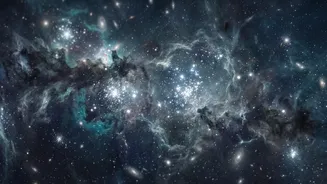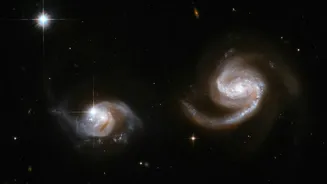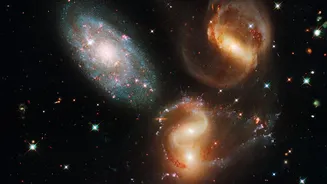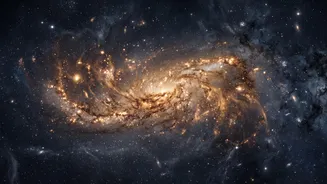

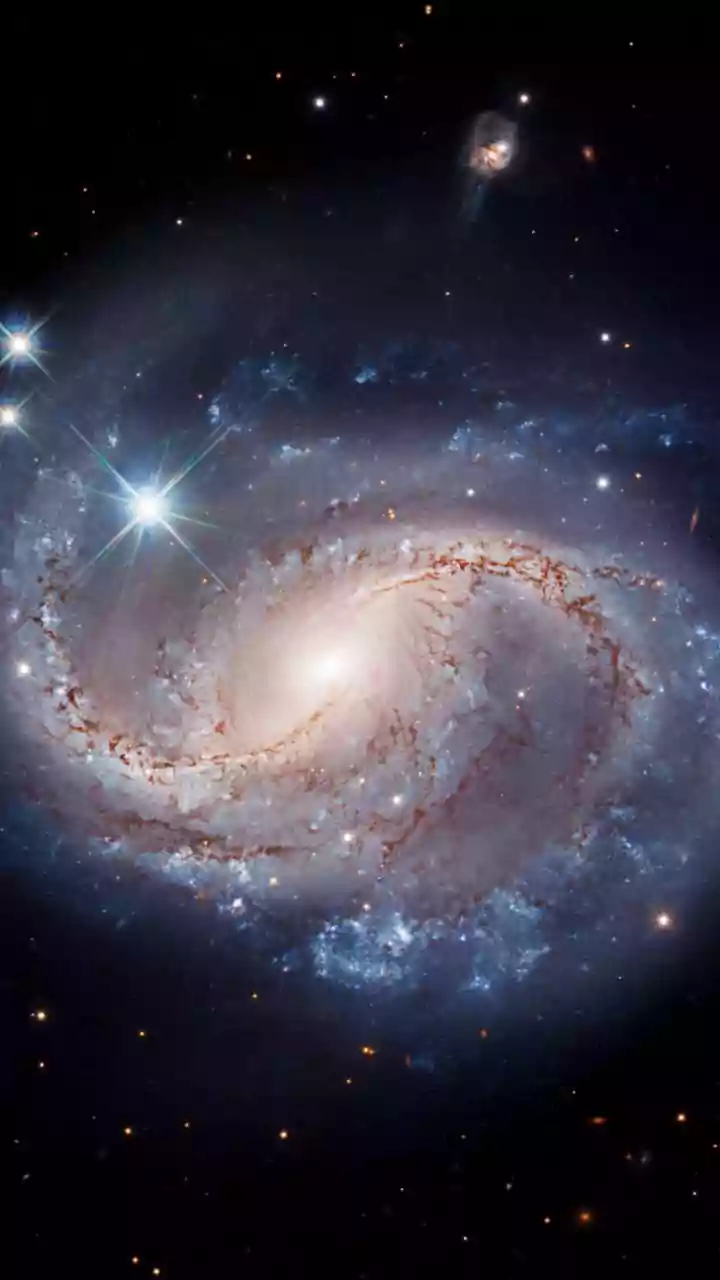

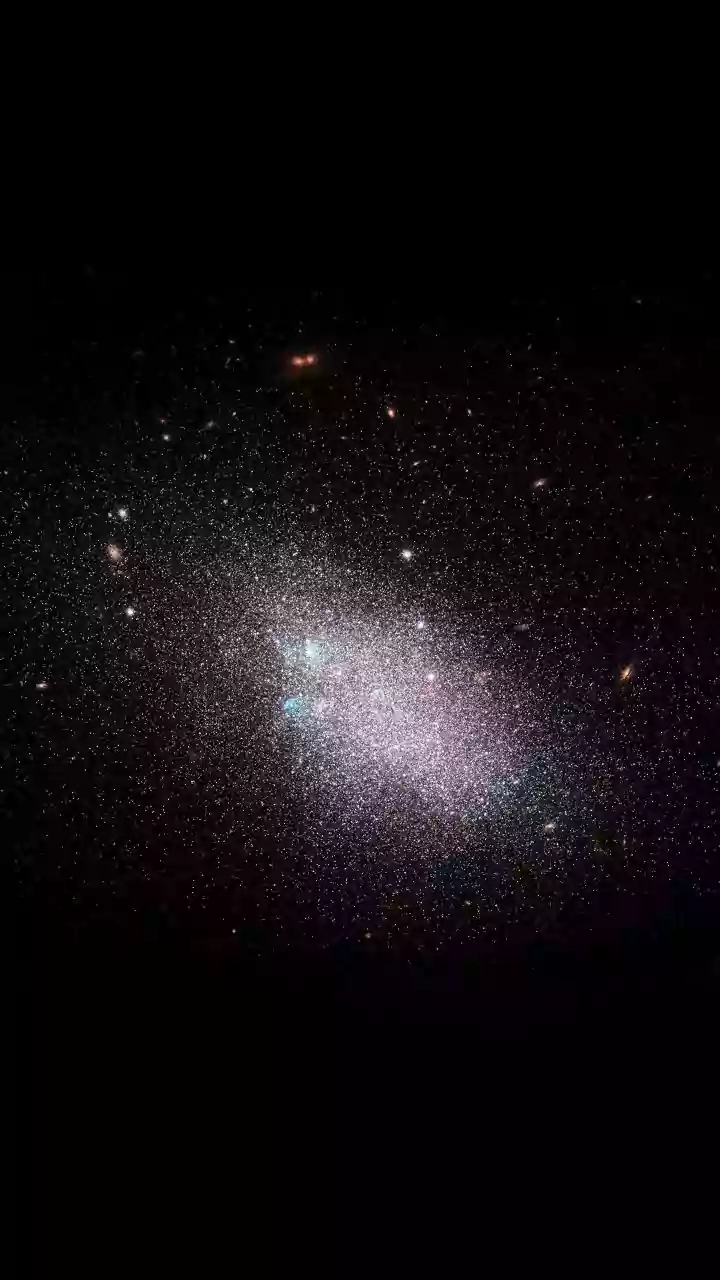



For decades, the Big Bang has been the accepted story of our cosmic origins. But science never stops questioning. Now, a Canadian study offers a bold alternative, suggesting our universe might be older and stranger than we ever imagined.
The Universe We Thought We Knew
The standard model
of cosmology, known as the Big Bang theory, posits that everything we see began around 13.8 billion years ago from an infinitely hot, dense point called a singularity. From that explosive start, the universe has been expanding and cooling ever since. This theory successfully explains many cosmic observations, from the leftover heat of the Big Bang, known as the cosmic microwave background, to the distribution of galaxies. However, the model isn't perfect. It requires the existence of two mysterious components: dark matter and dark energy. Dark matter is an invisible substance whose gravity seemingly holds galaxies together, while dark energy is a strange force causing the expansion of the universe to accelerate. Despite decades of searching, neither has been directly detected, leading some scientists to explore other possibilities.
A New Cosmic Story
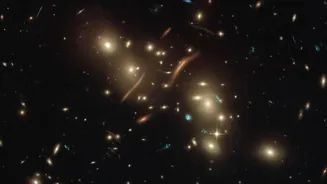
Enter a new perspective from researchers in Canada. One provocative new model, developed at the University of Ottawa, challenges the need for dark matter and dark energy. This theory, known as the Covarying Coupling Constants and Tired Light (CCC+TL) model, suggests the universe could be much older than previously thought—a staggering 26.7 billion years old. This additional time could explain some recent perplexing observations from the James Webb Space Telescope, which has spotted galaxies in the early universe that appear more mature than the standard Big Bang timeline should allow. In this view, the universe had billions more years for these complex structures to form.
What About a 'Big Bounce'?
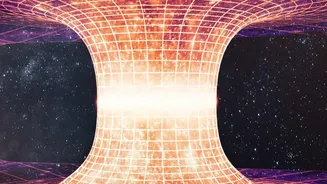
Other Canadian researchers, including those at the prestigious Perimeter Institute for Theoretical Physics, have been developing another alternative: the 'Big Bounce'. This idea proposes that the Big Bang wasn't a beginning from nothing, but rather a moment of transition from a previous, contracting universe. Imagine a universe that collapses in on itself in a 'Big Crunch', reaches a point of maximum density, and then 'bounces' back, starting a new cycle of expansion. This cyclic model elegantly avoids the problem of the singularity—that moment of infinite density where the laws of physics break down. Instead of an absolute beginning, the universe could be part of an endless series of cycles of collapse and rebirth.
Solving Cosmic Puzzles
These alternative models aren't just intellectual exercises; they attempt to solve real puzzles that the standard model struggles with. A 'bouncing' universe, for instance, provides a mechanism to smooth itself out during the contracting phase, potentially explaining the remarkable uniformity we see across the cosmos without requiring the period of hyper-fast 'inflation' that the standard Big Bang theory needs. Similarly, the CCC+TL model from Ottawa claims to explain the rotation of galaxies without invoking invisible dark matter. Proponents argue these new frameworks provide a more complete picture, extending physics beyond the limits of the current standard model.
The Cosmic Debate Continues
It's crucial to understand that these are still developing theories. The Big Bang model is supported by a mountain of evidence gathered over nearly a century and remains the consensus view. Alternative ideas face a high bar for acceptance and must be rigorously tested against all available observational data, from the cosmic microwave background to the distribution of elements in the universe. Some of these new models, like the one from the University of Ottawa, have reportedly passed initial tests. Others, such as certain 'bounce' scenarios, make specific predictions about gravitational waves that future experiments might be able to detect, offering a clear way to either support or falsify them.