




The Ultimate Packing Problem
A round trip to Mars could take two to three years. The weight and volume of pre-packaged food required for a crew over that period is staggering. According to NASA estimates, it takes several tons of supplies to support just a few astronauts on the International
Space Station for six months. A Mars mission would require exponentially more. Launching that much mass from Earth is prohibitively expensive and complex. Every kilogram launched into space costs a fortune, meaning that a spacecraft filled with freeze-dried meals becomes an economic and engineering nightmare. Furthermore, the nutritional value of pre-packaged food degrades over time. Vitamins C and B1, for example, break down, and after a couple of years, what's left might not provide the nutrients astronauts need to stay healthy millions of kilometres from home.
Living Off the Land
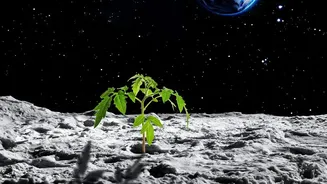
The solution is as old as humanity itself: farming. Space agencies are heavily invested in a concept called In-Situ Resource Utilization (ISRU), which essentially means using local materials to become self-sufficient. Instead of bringing everything from Earth, astronauts would harvest resources on Mars. While ISRU is often discussed for producing rocket propellant or water, its most vital application might be agriculture. Growing food on-site dramatically reduces the mission's initial launch mass and provides a continuous, fresh supply of nutrients. It's a fundamental shift from being a visitor who brings a packed lunch to a settler who cultivates the land. Experiments like NASA's Veggie program on the International Space Station have already proven that plants like lettuce can be successfully grown and consumed in microgravity, setting the stage for more ambitious projects.
Gardening on the Red Planet
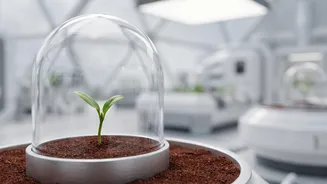
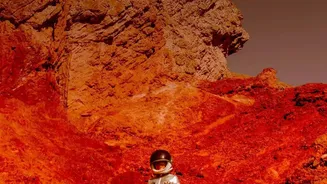
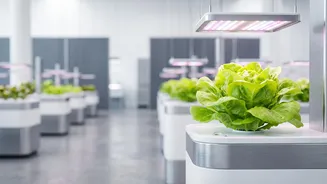
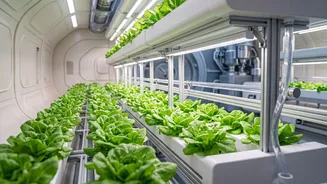
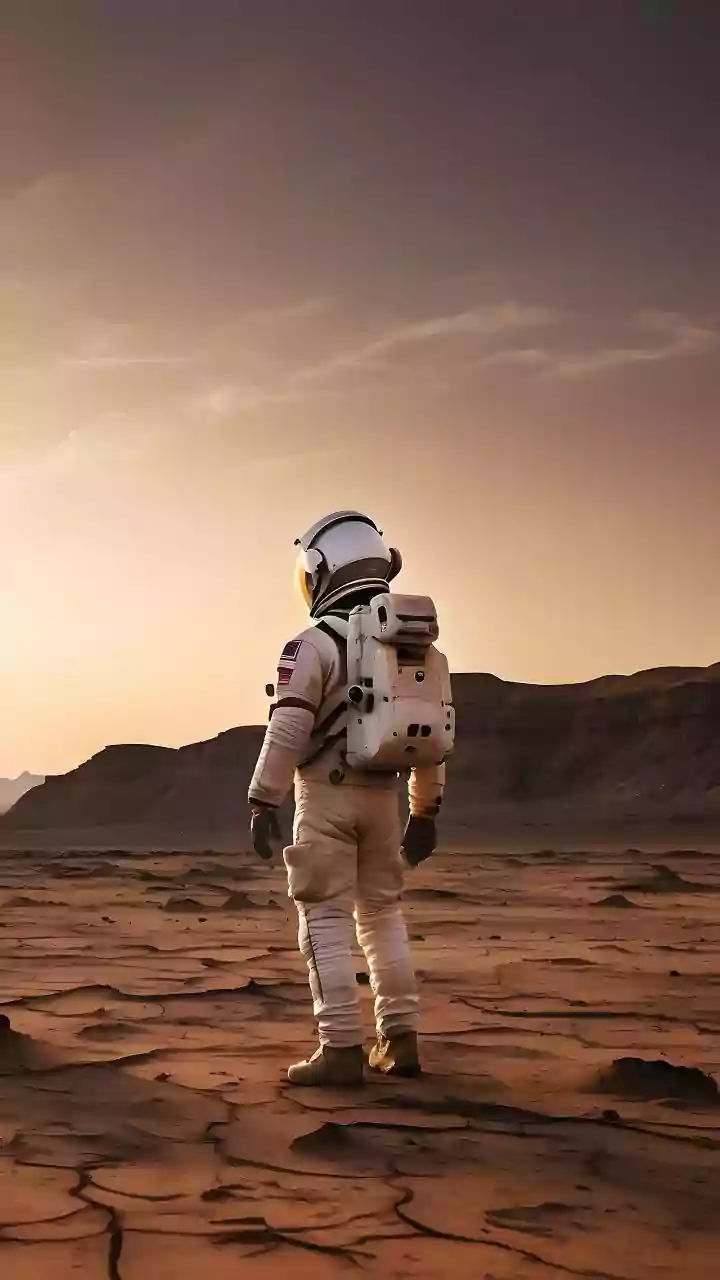
Farming on Mars won't be easy. The planet presents a host of challenges. Its soil, or regolith, is essentially crushed rock, lacking the organic matter and essential nutrients plants need to thrive. The atmosphere is thin, offering little protection from intense solar radiation. Water is scarce and mostly exists as ice, while the average temperature is a frigid -80°F. To overcome this, astronauts would need to create controlled environment agriculture (CEA) systems—essentially high-tech greenhouses. These structures would have to be pressurized, shielded from radiation, and equipped with artificial lighting, since Martian dust storms can block sunlight for weeks. Techniques like hydroponics and aeroponics, which grow plants without soil, are promising solutions being tested by NASA, as they use less water and space.
More Than Just a Meal
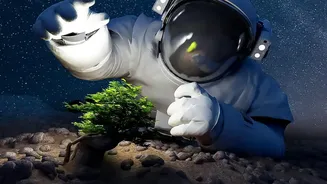
The benefits of a Martian farm extend far beyond nutrition. Plants perform vital life-support functions, absorbing carbon dioxide and releasing breathable oxygen through photosynthesis—a natural air-recycling system. This could significantly reduce the reliance on mechanical life support systems. But perhaps just as important are the psychological benefits. Astronauts on long-duration missions face extreme isolation and monotony in a sterile, mechanical environment. Studies and astronaut testimonials have shown that the simple act of gardening—caring for a living thing and seeing green growth—provides a powerful morale boost and a connection back to Earth. In the vast emptiness of space, a small garden can be a crucial anchor for mental well-being.
From Lab to Launchpad
The technology being developed for space farming is already having an impact back on Earth. NASA's research into controlled environments, water recycling, and efficient LED lighting helped pioneer the vertical farming industry, which promises to grow more food with fewer resources in urban areas. By pushing the boundaries of what's possible in the harshest environment imaginable, scientists are creating innovations that can help address food security and sustainability challenges on our own planet. The quest to feed astronauts on Mars could ultimately help us feed ourselves more efficiently. The work continues, with researchers selecting specific crop varieties—like dwarf plums or nutrient-dense lettuces—that are best suited for the rigors of space travel and cultivation.