



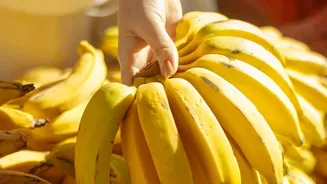


The humble banana is a staple in fruit bowls across India, loved for its convenience and natural sweetness. But as it turns from green to yellow, its nutritional profile changes dramatically. Which one is truly better for you?
The Familiar Ripe Yellow Banana
The ripe yellow banana is
the version most of us know and love. It’s soft, sweet, and easy to digest, making it a perfect snack for a quick energy boost. As a banana ripens, enzymes convert its complex starches into simple sugars like sucrose, fructose, and glucose. This is why a yellow banana tastes so much sweeter than a green one. This high sugar content makes it an ideal food for athletes needing rapid energy replenishment or for anyone looking for a quick pick-me-up. Ripe bananas are also rich in antioxidants, which help protect the body from damage, and these antioxidant levels actually increase as the banana ripens further. While the total amount of carbohydrates stays roughly the same throughout the ripening process, the form they take is what makes all the difference.
The Power of the Raw Green Banana
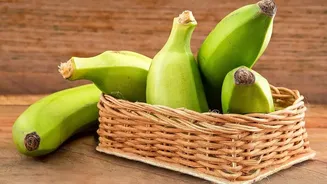
A green, or unripe, banana is a completely different experience. It’s firmer, less sweet, and has a texture some describe as waxy or starchy. The key to the green banana's unique health benefits is its high concentration of resistant starch. This type of starch 'resists' digestion in the small intestine and travels to the large intestine, where it acts as a prebiotic. Essentially, it becomes food for the good bacteria in your gut. This process promotes a healthy gut microbiome and the production of beneficial short-chain fatty acids. Because it's not easily broken down into sugar, resistant starch does not cause a rapid spike in blood glucose levels, making green bananas an excellent choice for people managing their blood sugar. They have a much lower glycemic index (GI) — around 30-42, compared to a ripe banana's 51-62.
The Great Fibre Debate
So, which banana has more fibre? The answer is complex. Traditionally measured, the total fibre content of a banana doesn't change much as it ripens, staying at around 2-3 grams per medium fruit. However, newer testing methods that account for resistant starch tell a different story. Since resistant starch acts like a type of dietary fibre, green bananas are functionally much higher in fibre. Some studies show an unripe banana can have a functional fibre content as high as 18 grams per 100g, which drops to around 2 grams in an overripe one. As the banana ripens, this resistant starch breaks down, but the amount of pectin, a type of soluble fibre, increases slightly. Pectin is what helps give ripe bananas their soft, sometimes mushy texture and can aid in slowing digestion.
Fibre in Other Banana Forms
The nutritional profile of bananas changes again when they are processed. Dried bananas, for instance, are a concentrated source of nutrients because the water has been removed. By weight, they contain significantly more fibre, sugar, and potassium than their fresh counterparts. This makes them a great, energy-dense snack for activities like hiking, but portion control is key due to the concentrated sugar. Banana flour, which is typically made from green bananas, is a powerhouse of resistant starch and fibre. It has gained popularity as a glutenfree flour alternative and a functional food for improving gut health and managing blood sugar, since it retains the prebiotic benefits of the raw green fruit. Ripe banana powder, on the other hand, is used more for its sweet flavour in smoothies and baking.