


Your New Gym is Free and Outdoors
Forget expensive gym memberships and crowded weight rooms. A playground offers all the equipment you need for a fantastic full-body workout in the fresh air. From monkey bars and benches to steps and climbing structures, these spaces are perfect for calisthenics—a
form of strength training that uses your own body weight as resistance. The benefits go beyond your wallet; exercising outdoors can boost your mood and make your fitness routine feel less like a chore and more like play. It's an accessible and convenient way to build strength, stability, and balance, especially for those just starting their fitness journey.
The Key to Getting Stronger: Progressive Overload
To build muscle and strength, you need to consistently challenge your body. This core principle is called progressive overload. It simply means that you gradually increase the demand placed on your muscles over time. In a gym, that might mean adding more weight to a barbell. In a playground workout, you achieve this without weights by manipulating other variables. The goal is to make the exercises slightly harder as your body adapts and gets stronger, ensuring you continue to see results from your efforts. This methodical approach is safer and more effective than trying to do too much too soon.
Foundational Exercises for Beginners
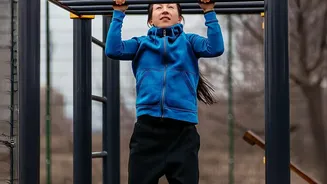
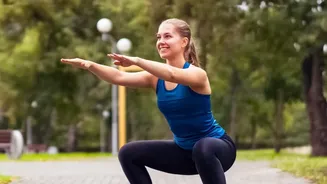
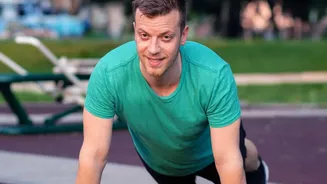
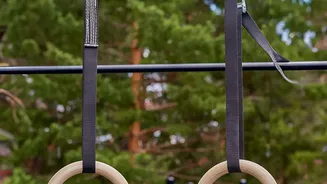
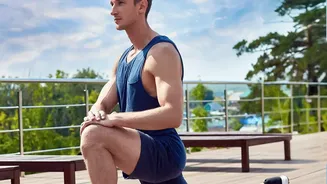
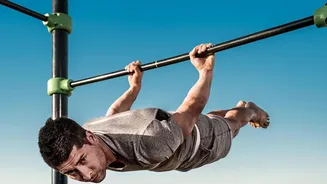
Start with basic movements that target major muscle groups. Don't worry about advanced skills yet; mastering the fundamentals is crucial. A good starting routine includes a push, a pull, a squat, and a core exercise. Incline Push-Ups: Find a park bench. Place your hands on the back of it, wider than your shoulders, and walk your feet back into a plank position. Lower your chest to the bench, then push back up. The higher the surface, the easier the exercise. Inverted Rows: Find a low bar or the edge of a sturdy play structure, about hip height. Lie underneath it, grab the bar with an overhand grip, and pull your chest towards it while keeping your body in a straight line. To make it easier, bend your knees. Bodyweight Squats: Stand with your feet shoulder-width apart. Hinge at your hips and bend your knees as if sitting in a chair, keeping your chest up and back straight. Use a bench for support or to limit your depth at first. Hanging Knee Raises: Hang from the monkey bars. With your core engaged, slowly raise your knees toward your chest, then lower them back down with control.
How to Make Progress (Without Adding Weight)
Once you can comfortably perform an exercise, it's time to make it more challenging. This is how you apply progressive overload to bodyweight training. Instead of just doing more and more reps, which builds endurance, you can use these methods to build strength. 1. Add Repetitions or Sets: The most straightforward method. If you did 3 sets of 8 reps last week, aim for 3 sets of 10 this week. Once you can do 12-15 reps with good form, it's time to try a harder progression. 2. Decrease Your Incline (For Pushing): For push-ups, moving your hands from the back of a bench to the seat makes the exercise harder. Progressing to the floor is the next step. The more horizontal your body is, the more of your body weight you're lifting. 3. Increase Your Incline (For Pulling): For inverted rows, making your body more parallel to the ground increases the difficulty. You can do this by finding a lower bar or elevating your feet on a step or bench. 4. Slow Down the Movement (Tempo): Try a 3-1-3 tempo on your push-ups: take three seconds to lower your body, pause for one second at the bottom, and take three seconds to push back up. This increases the time your muscles are under tension, a key driver of growth. 5. Reduce Rest Time: Cutting your rest between sets from 90 seconds to 60 seconds makes the workout more demanding without changing the exercises themselves.
Putting It All Together: A Sample Plan
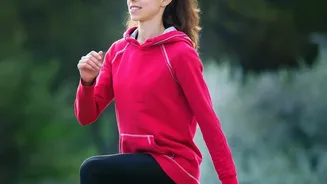
Consistency is more important than intensity. Aim for two to three full-body workouts per week on non-consecutive days to allow for recovery. Always start with a 5-10 minute warm-up of light cardio and dynamic stretches like arm circles and leg swings to prepare your body for movement. Workout A & B (Alternate each session): Incline Push-Ups: 3 sets of 8-12 reps Inverted Rows: 3 sets of 8-12 reps Bodyweight Squats: 3 sets of 10-15 reps Hanging Knee Raises: 3 sets of 10-15 reps Stick with a variation until you can hit the top of the rep range for all sets with good form. Then, and only then, move to a slightly harder variation in your next session. Listen to your body, focus on your form, and don't rush the process.