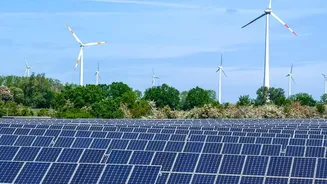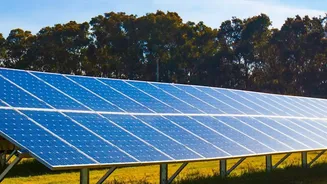





As India chases ambitious renewable energy goals, a conflict for land between solar developers and farmers is growing. Agrivoltaics, the practice of farming under elevated solar panels, offers a tantalising solution, but does it make financial sense?
The Promise of Two Harvests
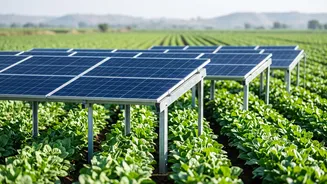
Agrivoltaics, or dual-use solar farming, is the simultaneous use of land for both agriculture and solar power generation. Instead of choosing between food and fuel, this model stacks them. Solar panels are mounted on structures high enough to allow farming activities—including the movement of machinery—to continue underneath. This elegant solution addresses one of India's biggest challenges in its green energy transition: land scarcity. With nearly 55% of its land used for agriculture, expanding solar parks often means taking fertile land out of production. Agrivoltaics proposes a win-win: farmers continue to grow crops while also earning a second, stable income from selling electricity, effectively harvesting both sunlight and produce from the same acre. Government officials believe this approach could be a cornerstone of the upcoming PM-KUSUM 2.0 scheme, aiming to solve land-use conflicts and boost rural incomes.
The Steep Price of Innovation
The primary barrier to widespread adoption is the significant upfront cost. Agrivoltaic systems are 25-30% more expensive to install than conventional ground-mounted solar projects. This premium comes from the need for taller, sturdier mounting structures to elevate the panels, which require more steel and a more complex civil engineering design. The estimated cost for a typical agrivoltaic setup is between ₹3.5 and ₹4.5 crore per megawatt (MW), a daunting figure for individual farmers. This higher capital expenditure directly translates to a more expensive cost of power generation, estimated at around ₹3.20 to ₹3.30 per unit, compared to ₹2.50 to ₹2.60 for traditional solar farms. This cost difference must be bridged through subsidies or other financial mechanisms to make the model commercially attractive and competitive.
The Payoff: Long-Term and Multi-Faceted
Despite the high entry cost, the long-term returns are compelling. The most obvious benefit is a diversified income stream. Farmers can earn from selling crops and from selling surplus electricity to distribution companies (DISCOMs) through power purchase agreements (PPAs). This provides a predictable, weather-independent income that can buffer against volatile crop prices. Some estimates suggest farm earnings could increase from around ₹60,000 per acre to over ₹1 lakh per acre annually. With strong government support, the payback period for the initial investment can be as short as four to seven years. Beyond direct income, agrivoltaics offers significant agricultural co-benefits. The partial shade from the panels reduces heat stress on crops, lowers soil temperature, and cuts water evaporation by up to 30-40%. This not only improves water-use efficiency—a critical advantage in drought-prone regions—but can also boost the yield of certain shade-tolerant crops like leafy greens, tomatoes, spices, and berries.
Government Support and The Path Forward
The Indian government sees immense potential in agrivoltaics and is actively working to create a supportive policy framework. The Pradhan Mantri Kisan Urja Suraksha evam Utthan Mahabhiyan (PMKUSUM) scheme is the primary vehicle for this push. While the initial phase focused on barren land and solar pumps, the upcoming PMKUSUM 2.0 is expected to include a dedicated component for agrivoltaics, potentially offering a 25% subsidy to neutralize the higher setup cost. The scheme provides a mix of central financial assistance, state subsidies, and access to loans, often requiring the farmer to contribute only 10% of the upfront cost. Officials are targeting an initial 5 GW of agrivoltaic capacity in the next few years. However, success hinges on more than just financial aid. It requires careful planning around crop selection, standardized design guidelines to prevent yield loss, and streamlined approvals for grid connection.