




From a Snapshot to a Movie
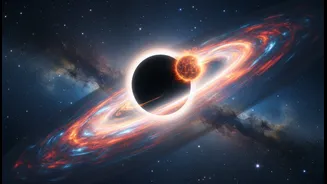
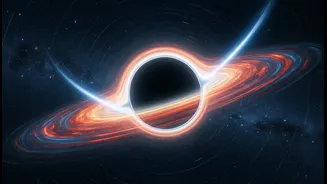
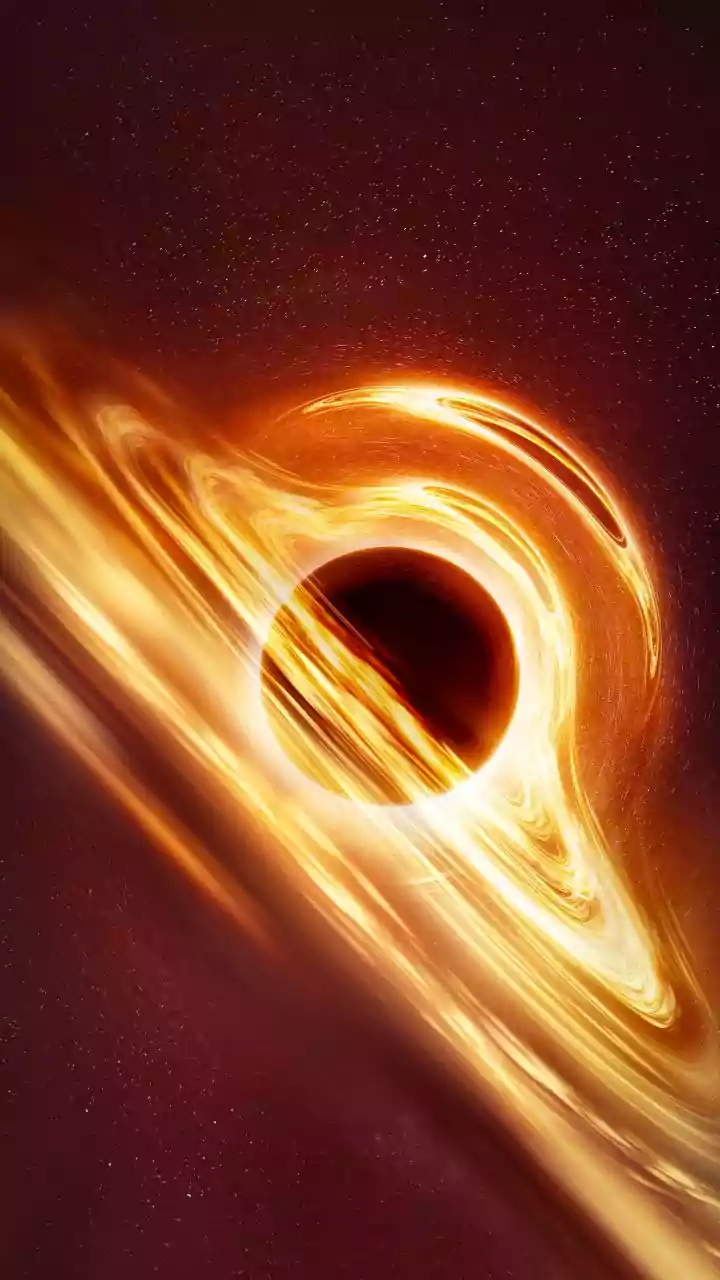
Not long ago, the world was stunned by the first-ever direct image of a black hole. First, M87 in 2019, then our own galaxy's Sagittarius A (Sgr A) in 2022. These were incredible achievements, but they were essentially still photographs of a dynamic process.
The next great leap is to move from a single snapshot to a movie. That's what astronomers with the Event Horizon Telescope (EHT) collaboration are now accomplishing. The term "real-time" in this context means capturing changes over short periods—minutes to hours—giving us a time-lapse view of the chaos unfolding at the event horizon. This allows scientists to observe not just what the area around a black hole looks like, but how it behaves and evolves. These dynamic observations are revealing that the magnetic fields, long theorized to be important, are even more complex and influential than previously imagined.
How to See a Magnetic Field
You can't see a magnetic field directly, but you can see its effects on the matter around it. Black holes are surrounded by superheated gas and dust called plasma. The charged particles in this plasma are wrangled by magnetic fields, causing them to swirl and spiral. As these particles accelerate, they emit light. Critically, this light is polarized—meaning the light waves oscillate in a specific direction. By measuring the orientation of this polarized light, astronomers can map the structure and strength of the magnetic fields that are pulling the strings. Recent EHT images have, for the first time, shown Sagittarius A in polarized light, unveiling strong, organized magnetic fields spiraling from its edge. This gives us a direct window into the invisible forces governing the black hole's environment.
A Tale of Two Black Holes
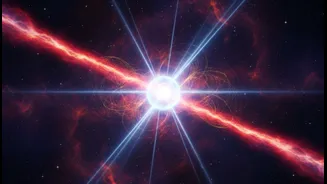
One of the most striking early findings from these new observations is how similar the magnetic fields around Sgr A are to those around M87, the black hole at the center of the M87 galaxy. This is surprising because the two are vastly different. M87 is more than a thousand times larger and more massive, and it actively fires a colossal jet of material into space. Sgr A is comparatively quiet. The fact that their magnetic field structures are so alike suggests that powerful, ordered magnetic fields may be a universal feature for all supermassive black holes. This universality allows scientists to refine their models for how all black holes work, regardless of their size or how active they are.
The Engine That Feeds the Beast
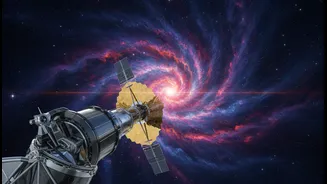
So why do these magnetic fields matter? They are the gatekeepers that control how a black hole feeds. The fields can become so strong that they push back against the gas that is falling in, a phenomenon known as a 'magnetically arrested disk' or MAD. This cosmic tug-of-war between gravity pulling matter in and magnetic fields pushing it out determines everything. Recent observations with the James Webb Space Telescope have even visualized long filaments of gas, guided by magnetic fields, channeling material from the galaxy towards the black hole's feeding disk. It’s a complete cycle: the fields guide the fuel in, and they also provide the power to launch powerful jets out. The complexity—the tangled, spiraling, and sometimes flipping fields—is the key to understanding this entire process.
A Hidden Jet and Future Mysteries
The strong, organized magnetic structure around Sagittarius A hints at a fascinating possibility: our galaxy's black hole may have a hidden, or dormant, jet. The magnetic architecture appears capable of launching a jet, just like M87, even if one isn't currently active. Future observations may be able to confirm if Sgr A* is merely sleeping. These real-time observations are just the beginning. As the EHT network expands and technology improves, astronomers hope to create higher-fidelity movies of the action around black holes. These will test Einstein's theories of general relativity in extreme environments and could reveal even more secrets about the fundamental forces that shape our universe.